
Home
3.17 Hz: The Consequence of Silence
Barnes and Noble
Loading Inventory...
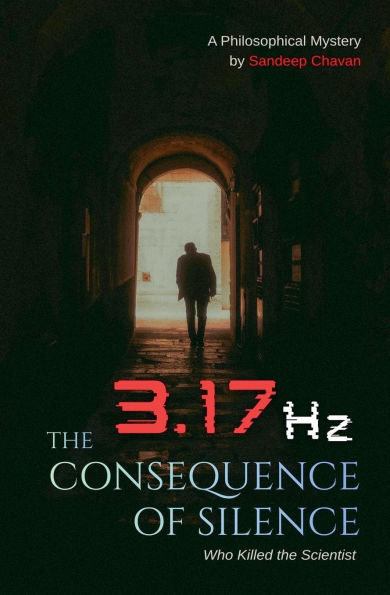
3.17 Hz: The Consequence of Silence in Franklin, TN
Current price: $44.99
Barnes and Noble
3.17 Hz: The Consequence of Silence in Franklin, TN
Current price: $44.99
Loading Inventory...
Size: Paperback
At precisely
3:17 a.m.
, Professor Aravind Rao stopped breathing inside the Meditation Lab of Vedanta University. The biometric door was locked from within. His eyes were open. His face - serene. And on the floor beneath him, an equation shimmered faintly in chalk:
Ψ = A e^(kx - ωt)
intertwined with Sanskrit symbols of
Om
and
Tat Tvam Asi.
To the world, it was a heart failure. To his student,
Arjun Mehta
, it was a message - a frequency left behind.
As the investigation unfolds inside a hilltop university built upon the ruins of an ancient monastery, science and spirituality begin to blur. Arjun, a young scholar devoted to Rao's work, finds himself pulled into the most dangerous pursuit of all - not of a murderer, but of
truth itself
. The deeper he searches, the quieter the world around him becomes.
Every silence hides a consequence.
The faculty closes ranks. The Dean calls for "dignified restraint." And the whispers begin - of a forbidden experiment that sought to
measure consciousness
, to make stillness itself a scientific reality.
When
Dr. Mira Sen
, the university's ethics professor, joins Arjun's search, they decrypt Rao's lost files - diagrams of resonating circles, coded mantras, and a chilling formula:
"The moment of coherence equals the moment of death."
The revelation is devastating. Rao had built a machine to align the mind's frequencies - to collapse thought into pure awareness. A machine designed not to kill, but to
listen
. And yet, someone had increased its power beyond safe limits.
Was it accident, sabotage, or something far more deliberate - a collective silence protecting knowledge too dangerous to reveal?
Across monasteries and laboratories, across encrypted code and whispered prayer, Arjun traces the final truth:
Rao's death was not a murder, nor a suicide. It was a
sacrifice
- the culmination of his theory that
awareness, when absolute, erases its observer.
But the real question remains -
why did everyone who knew, stay silent?
Blending psychological suspense, philosophical depth, and haunting science,
3.17 Hz: The Consequence of Silence
unravels the boundary between intellect and existence. It's a mystery where every discovery hums with consequence, where machines meditate, and silence itself begins to think.
"Truth wasn't murdered - only those who mistook silence for peace."
For readers of
The Name of the Rose
,
Anathem
, and
Blake Crouch's Recursion
, this novel is both a cerebral thriller and a spiritual riddle - a story of faith, fear, and the price of listening too deeply.
At 3.17 Hz, the Earth hums its quietest resonance. Now, it's listening back.
3:17 a.m.
, Professor Aravind Rao stopped breathing inside the Meditation Lab of Vedanta University. The biometric door was locked from within. His eyes were open. His face - serene. And on the floor beneath him, an equation shimmered faintly in chalk:
Ψ = A e^(kx - ωt)
intertwined with Sanskrit symbols of
Om
and
Tat Tvam Asi.
To the world, it was a heart failure. To his student,
Arjun Mehta
, it was a message - a frequency left behind.
As the investigation unfolds inside a hilltop university built upon the ruins of an ancient monastery, science and spirituality begin to blur. Arjun, a young scholar devoted to Rao's work, finds himself pulled into the most dangerous pursuit of all - not of a murderer, but of
truth itself
. The deeper he searches, the quieter the world around him becomes.
Every silence hides a consequence.
The faculty closes ranks. The Dean calls for "dignified restraint." And the whispers begin - of a forbidden experiment that sought to
measure consciousness
, to make stillness itself a scientific reality.
When
Dr. Mira Sen
, the university's ethics professor, joins Arjun's search, they decrypt Rao's lost files - diagrams of resonating circles, coded mantras, and a chilling formula:
"The moment of coherence equals the moment of death."
The revelation is devastating. Rao had built a machine to align the mind's frequencies - to collapse thought into pure awareness. A machine designed not to kill, but to
listen
. And yet, someone had increased its power beyond safe limits.
Was it accident, sabotage, or something far more deliberate - a collective silence protecting knowledge too dangerous to reveal?
Across monasteries and laboratories, across encrypted code and whispered prayer, Arjun traces the final truth:
Rao's death was not a murder, nor a suicide. It was a
sacrifice
- the culmination of his theory that
awareness, when absolute, erases its observer.
But the real question remains -
why did everyone who knew, stay silent?
Blending psychological suspense, philosophical depth, and haunting science,
3.17 Hz: The Consequence of Silence
unravels the boundary between intellect and existence. It's a mystery where every discovery hums with consequence, where machines meditate, and silence itself begins to think.
"Truth wasn't murdered - only those who mistook silence for peace."
For readers of
The Name of the Rose
,
Anathem
, and
Blake Crouch's Recursion
, this novel is both a cerebral thriller and a spiritual riddle - a story of faith, fear, and the price of listening too deeply.
At 3.17 Hz, the Earth hums its quietest resonance. Now, it's listening back.
At precisely
3:17 a.m.
, Professor Aravind Rao stopped breathing inside the Meditation Lab of Vedanta University. The biometric door was locked from within. His eyes were open. His face - serene. And on the floor beneath him, an equation shimmered faintly in chalk:
Ψ = A e^(kx - ωt)
intertwined with Sanskrit symbols of
Om
and
Tat Tvam Asi.
To the world, it was a heart failure. To his student,
Arjun Mehta
, it was a message - a frequency left behind.
As the investigation unfolds inside a hilltop university built upon the ruins of an ancient monastery, science and spirituality begin to blur. Arjun, a young scholar devoted to Rao's work, finds himself pulled into the most dangerous pursuit of all - not of a murderer, but of
truth itself
. The deeper he searches, the quieter the world around him becomes.
Every silence hides a consequence.
The faculty closes ranks. The Dean calls for "dignified restraint." And the whispers begin - of a forbidden experiment that sought to
measure consciousness
, to make stillness itself a scientific reality.
When
Dr. Mira Sen
, the university's ethics professor, joins Arjun's search, they decrypt Rao's lost files - diagrams of resonating circles, coded mantras, and a chilling formula:
"The moment of coherence equals the moment of death."
The revelation is devastating. Rao had built a machine to align the mind's frequencies - to collapse thought into pure awareness. A machine designed not to kill, but to
listen
. And yet, someone had increased its power beyond safe limits.
Was it accident, sabotage, or something far more deliberate - a collective silence protecting knowledge too dangerous to reveal?
Across monasteries and laboratories, across encrypted code and whispered prayer, Arjun traces the final truth:
Rao's death was not a murder, nor a suicide. It was a
sacrifice
- the culmination of his theory that
awareness, when absolute, erases its observer.
But the real question remains -
why did everyone who knew, stay silent?
Blending psychological suspense, philosophical depth, and haunting science,
3.17 Hz: The Consequence of Silence
unravels the boundary between intellect and existence. It's a mystery where every discovery hums with consequence, where machines meditate, and silence itself begins to think.
"Truth wasn't murdered - only those who mistook silence for peace."
For readers of
The Name of the Rose
,
Anathem
, and
Blake Crouch's Recursion
, this novel is both a cerebral thriller and a spiritual riddle - a story of faith, fear, and the price of listening too deeply.
At 3.17 Hz, the Earth hums its quietest resonance. Now, it's listening back.
3:17 a.m.
, Professor Aravind Rao stopped breathing inside the Meditation Lab of Vedanta University. The biometric door was locked from within. His eyes were open. His face - serene. And on the floor beneath him, an equation shimmered faintly in chalk:
Ψ = A e^(kx - ωt)
intertwined with Sanskrit symbols of
Om
and
Tat Tvam Asi.
To the world, it was a heart failure. To his student,
Arjun Mehta
, it was a message - a frequency left behind.
As the investigation unfolds inside a hilltop university built upon the ruins of an ancient monastery, science and spirituality begin to blur. Arjun, a young scholar devoted to Rao's work, finds himself pulled into the most dangerous pursuit of all - not of a murderer, but of
truth itself
. The deeper he searches, the quieter the world around him becomes.
Every silence hides a consequence.
The faculty closes ranks. The Dean calls for "dignified restraint." And the whispers begin - of a forbidden experiment that sought to
measure consciousness
, to make stillness itself a scientific reality.
When
Dr. Mira Sen
, the university's ethics professor, joins Arjun's search, they decrypt Rao's lost files - diagrams of resonating circles, coded mantras, and a chilling formula:
"The moment of coherence equals the moment of death."
The revelation is devastating. Rao had built a machine to align the mind's frequencies - to collapse thought into pure awareness. A machine designed not to kill, but to
listen
. And yet, someone had increased its power beyond safe limits.
Was it accident, sabotage, or something far more deliberate - a collective silence protecting knowledge too dangerous to reveal?
Across monasteries and laboratories, across encrypted code and whispered prayer, Arjun traces the final truth:
Rao's death was not a murder, nor a suicide. It was a
sacrifice
- the culmination of his theory that
awareness, when absolute, erases its observer.
But the real question remains -
why did everyone who knew, stay silent?
Blending psychological suspense, philosophical depth, and haunting science,
3.17 Hz: The Consequence of Silence
unravels the boundary between intellect and existence. It's a mystery where every discovery hums with consequence, where machines meditate, and silence itself begins to think.
"Truth wasn't murdered - only those who mistook silence for peace."
For readers of
The Name of the Rose
,
Anathem
, and
Blake Crouch's Recursion
, this novel is both a cerebral thriller and a spiritual riddle - a story of faith, fear, and the price of listening too deeply.
At 3.17 Hz, the Earth hums its quietest resonance. Now, it's listening back.
You May Also Like














More About Barnes and Noble at CoolSprings Galleria
Barnes & Noble is the world’s largest retail bookseller and a leading retailer of content, digital media and educational products. Our Nook Digital business offers a lineup of NOOK® tablets and e-Readers and an expansive collection of digital reading content through the NOOK Store®. Barnes & Noble’s mission is to operate the best omni-channel specialty retail business in America, helping both our customers and booksellers reach their aspirations, while being a credit to the communities we serve.
1800 Galleria Blvd #1310, Franklin, TN 37067, United States
Find Barnes and Noble at CoolSprings Galleria in Franklin, TN
Visit Barnes and Noble at CoolSprings Galleria in Franklin, TN
