
Home
A Course the Large Sample Theory of Statistical Inference
Barnes and Noble
Loading Inventory...
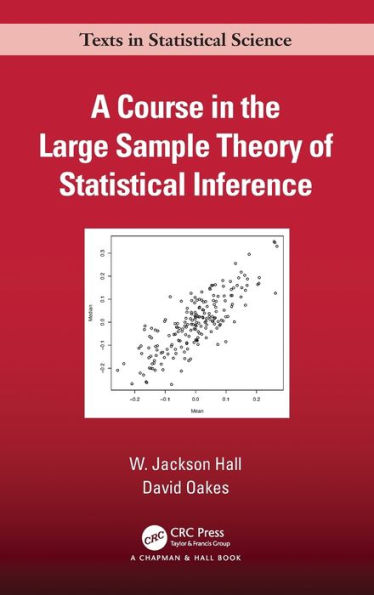
A Course the Large Sample Theory of Statistical Inference in Franklin, TN
Current price: $115.00
Barnes and Noble
A Course the Large Sample Theory of Statistical Inference in Franklin, TN
Current price: $115.00
Loading Inventory...
Size: Hardcover
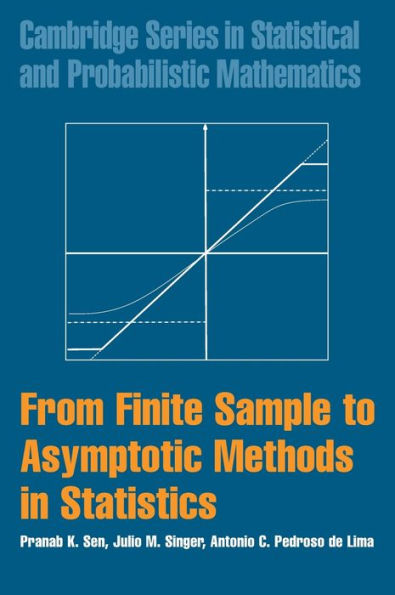
This book provides an accessible but rigorous introduction to asymptotic theory in parametric statistical models. Asymptotic results for estimation and testing are derived using the “moving alternative” formulation due to R. A. Fisher and L. Le Cam. Later chapters include discussions of linear rank statistics and of chi-squared tests for contingency table analysis, including situations where parameters are estimated from the complete ungrouped data. This book is based on lecture notes prepared by the first author, subsequently edited, expanded and updated by the second author.
Key features:
Succinct account of the concept of “asymptotic linearity” and its uses
Simplified derivations of the major results, under an assumption of joint asymptotic normality
Inclusion of numerical illustrations, practical examples and advice
Highlighting some unexpected consequences of the theory
Large number of exercises, many with hints to solutions
Some facility with linear algebra and with real analysis including ‘epsilon-delta’ arguments is required. Concepts and results from measure theory are explained when used. Familiarity with undergraduate probability and statistics including basic concepts of estimation and hypothesis testing is necessary, and experience with applying these concepts to data analysis would be very helpful.
Key features:
Succinct account of the concept of “asymptotic linearity” and its uses
Simplified derivations of the major results, under an assumption of joint asymptotic normality
Inclusion of numerical illustrations, practical examples and advice
Highlighting some unexpected consequences of the theory
Large number of exercises, many with hints to solutions
Some facility with linear algebra and with real analysis including ‘epsilon-delta’ arguments is required. Concepts and results from measure theory are explained when used. Familiarity with undergraduate probability and statistics including basic concepts of estimation and hypothesis testing is necessary, and experience with applying these concepts to data analysis would be very helpful.
This book provides an accessible but rigorous introduction to asymptotic theory in parametric statistical models. Asymptotic results for estimation and testing are derived using the “moving alternative” formulation due to R. A. Fisher and L. Le Cam. Later chapters include discussions of linear rank statistics and of chi-squared tests for contingency table analysis, including situations where parameters are estimated from the complete ungrouped data. This book is based on lecture notes prepared by the first author, subsequently edited, expanded and updated by the second author.
Key features:
Succinct account of the concept of “asymptotic linearity” and its uses
Simplified derivations of the major results, under an assumption of joint asymptotic normality
Inclusion of numerical illustrations, practical examples and advice
Highlighting some unexpected consequences of the theory
Large number of exercises, many with hints to solutions
Some facility with linear algebra and with real analysis including ‘epsilon-delta’ arguments is required. Concepts and results from measure theory are explained when used. Familiarity with undergraduate probability and statistics including basic concepts of estimation and hypothesis testing is necessary, and experience with applying these concepts to data analysis would be very helpful.
Key features:
Succinct account of the concept of “asymptotic linearity” and its uses
Simplified derivations of the major results, under an assumption of joint asymptotic normality
Inclusion of numerical illustrations, practical examples and advice
Highlighting some unexpected consequences of the theory
Large number of exercises, many with hints to solutions
Some facility with linear algebra and with real analysis including ‘epsilon-delta’ arguments is required. Concepts and results from measure theory are explained when used. Familiarity with undergraduate probability and statistics including basic concepts of estimation and hypothesis testing is necessary, and experience with applying these concepts to data analysis would be very helpful.
You May Also Like









More About Barnes and Noble at CoolSprings Galleria
Barnes & Noble is the world’s largest retail bookseller and a leading retailer of content, digital media and educational products. Our Nook Digital business offers a lineup of NOOK® tablets and e-Readers and an expansive collection of digital reading content through the NOOK Store®. Barnes & Noble’s mission is to operate the best omni-channel specialty retail business in America, helping both our customers and booksellers reach their aspirations, while being a credit to the communities we serve.
1800 Galleria Blvd #1310, Franklin, TN 37067, United States
Find Barnes and Noble at CoolSprings Galleria in Franklin, TN
Visit Barnes and Noble at CoolSprings Galleria in Franklin, TN
