
Home
A Genre Analysis of Social Change: Uptake the Housing-First Solution to Homelessness Canada
Barnes and Noble
Loading Inventory...
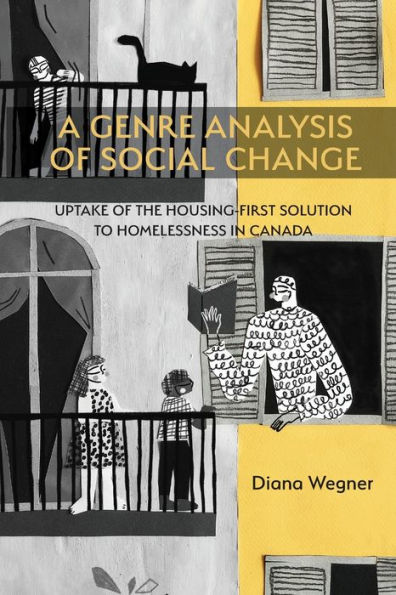
A Genre Analysis of Social Change: Uptake the Housing-First Solution to Homelessness Canada in Franklin, TN
Current price: $17.95
Barnes and Noble
A Genre Analysis of Social Change: Uptake the Housing-First Solution to Homelessness Canada in Franklin, TN
Current price: $17.95
Loading Inventory...
Size: Paperback
A Genre Analysis of Social Change
contributes to current scholarship in rhetorical genre studies and discourse analysis in contexts of social change. Diana Wegner explores the ways that historical genre systems can be transformed through the process of discursive uptake across genres and their spheres of activity. In this study such cross-genre uptake is pursued from its beginning in advocacy genres to its incorporation into higher-level, institutional genres. It represents the summation of Wegner's work over many years on how systems of genre can adapt to change as groups and institutional systems negotiate the uptake of solutions to major social challenges, in this case study the Canadian "Housing First" solution to ending homelessness. Her study shows how rhetorical genre analysis can offer insight into issues related to social justice for marginal groups within society.
Introducing the concepts of "deep" and "shallow" genre memory, Wegner analyzes why uptake is problematic and disturbing for those participants in the homelessness genre system who find that the receiving genre does not "remember" the historical moorings of its antecedent contexts. Genre provides an explanatory framework for these uptake dynamics, and for both the re-inscription of power relations and the incremental progress of the shared struggle to help homeless people.
The book includes an introduction by Heather Graves.
Diana Wegner
taught in Arts Studies in Research and Writing at the University of British Columbia (2012-2019) and is a faculty emerita (Professional Writing Program, English, and Communications) at Douglas College, New Westminster, BC. She continues to pursue scholarship in the analysis and theory of language and power in contexts of social struggle (environmentalism, homelessness, and Indigenous women's rights). Her work has been published in the
Journal of Business and Technical Communication
,
Rhetor
Canadian Journal for the Study of Discourse
, and
Writing
(formerly
Technostyle
) and in edited collections on language and communication.
contributes to current scholarship in rhetorical genre studies and discourse analysis in contexts of social change. Diana Wegner explores the ways that historical genre systems can be transformed through the process of discursive uptake across genres and their spheres of activity. In this study such cross-genre uptake is pursued from its beginning in advocacy genres to its incorporation into higher-level, institutional genres. It represents the summation of Wegner's work over many years on how systems of genre can adapt to change as groups and institutional systems negotiate the uptake of solutions to major social challenges, in this case study the Canadian "Housing First" solution to ending homelessness. Her study shows how rhetorical genre analysis can offer insight into issues related to social justice for marginal groups within society.
Introducing the concepts of "deep" and "shallow" genre memory, Wegner analyzes why uptake is problematic and disturbing for those participants in the homelessness genre system who find that the receiving genre does not "remember" the historical moorings of its antecedent contexts. Genre provides an explanatory framework for these uptake dynamics, and for both the re-inscription of power relations and the incremental progress of the shared struggle to help homeless people.
The book includes an introduction by Heather Graves.
Diana Wegner
taught in Arts Studies in Research and Writing at the University of British Columbia (2012-2019) and is a faculty emerita (Professional Writing Program, English, and Communications) at Douglas College, New Westminster, BC. She continues to pursue scholarship in the analysis and theory of language and power in contexts of social struggle (environmentalism, homelessness, and Indigenous women's rights). Her work has been published in the
Journal of Business and Technical Communication
,
Rhetor
Canadian Journal for the Study of Discourse
, and
Writing
(formerly
Technostyle
) and in edited collections on language and communication.
A Genre Analysis of Social Change
contributes to current scholarship in rhetorical genre studies and discourse analysis in contexts of social change. Diana Wegner explores the ways that historical genre systems can be transformed through the process of discursive uptake across genres and their spheres of activity. In this study such cross-genre uptake is pursued from its beginning in advocacy genres to its incorporation into higher-level, institutional genres. It represents the summation of Wegner's work over many years on how systems of genre can adapt to change as groups and institutional systems negotiate the uptake of solutions to major social challenges, in this case study the Canadian "Housing First" solution to ending homelessness. Her study shows how rhetorical genre analysis can offer insight into issues related to social justice for marginal groups within society.
Introducing the concepts of "deep" and "shallow" genre memory, Wegner analyzes why uptake is problematic and disturbing for those participants in the homelessness genre system who find that the receiving genre does not "remember" the historical moorings of its antecedent contexts. Genre provides an explanatory framework for these uptake dynamics, and for both the re-inscription of power relations and the incremental progress of the shared struggle to help homeless people.
The book includes an introduction by Heather Graves.
Diana Wegner
taught in Arts Studies in Research and Writing at the University of British Columbia (2012-2019) and is a faculty emerita (Professional Writing Program, English, and Communications) at Douglas College, New Westminster, BC. She continues to pursue scholarship in the analysis and theory of language and power in contexts of social struggle (environmentalism, homelessness, and Indigenous women's rights). Her work has been published in the
Journal of Business and Technical Communication
,
Rhetor
Canadian Journal for the Study of Discourse
, and
Writing
(formerly
Technostyle
) and in edited collections on language and communication.
contributes to current scholarship in rhetorical genre studies and discourse analysis in contexts of social change. Diana Wegner explores the ways that historical genre systems can be transformed through the process of discursive uptake across genres and their spheres of activity. In this study such cross-genre uptake is pursued from its beginning in advocacy genres to its incorporation into higher-level, institutional genres. It represents the summation of Wegner's work over many years on how systems of genre can adapt to change as groups and institutional systems negotiate the uptake of solutions to major social challenges, in this case study the Canadian "Housing First" solution to ending homelessness. Her study shows how rhetorical genre analysis can offer insight into issues related to social justice for marginal groups within society.
Introducing the concepts of "deep" and "shallow" genre memory, Wegner analyzes why uptake is problematic and disturbing for those participants in the homelessness genre system who find that the receiving genre does not "remember" the historical moorings of its antecedent contexts. Genre provides an explanatory framework for these uptake dynamics, and for both the re-inscription of power relations and the incremental progress of the shared struggle to help homeless people.
The book includes an introduction by Heather Graves.
Diana Wegner
taught in Arts Studies in Research and Writing at the University of British Columbia (2012-2019) and is a faculty emerita (Professional Writing Program, English, and Communications) at Douglas College, New Westminster, BC. She continues to pursue scholarship in the analysis and theory of language and power in contexts of social struggle (environmentalism, homelessness, and Indigenous women's rights). Her work has been published in the
Journal of Business and Technical Communication
,
Rhetor
Canadian Journal for the Study of Discourse
, and
Writing
(formerly
Technostyle
) and in edited collections on language and communication.
You May Also Like














More About Barnes and Noble at CoolSprings Galleria
Barnes & Noble is the world’s largest retail bookseller and a leading retailer of content, digital media and educational products. Our Nook Digital business offers a lineup of NOOK® tablets and e-Readers and an expansive collection of digital reading content through the NOOK Store®. Barnes & Noble’s mission is to operate the best omni-channel specialty retail business in America, helping both our customers and booksellers reach their aspirations, while being a credit to the communities we serve.
1800 Galleria Blvd #1310, Franklin, TN 37067, United States
Find Barnes and Noble at CoolSprings Galleria in Franklin, TN
Visit Barnes and Noble at CoolSprings Galleria in Franklin, TN
