
Home
A Visual Learner's Guide to Pharmacology: Learn Pharmacology with Visual Mnemonics
Barnes and Noble
Loading Inventory...
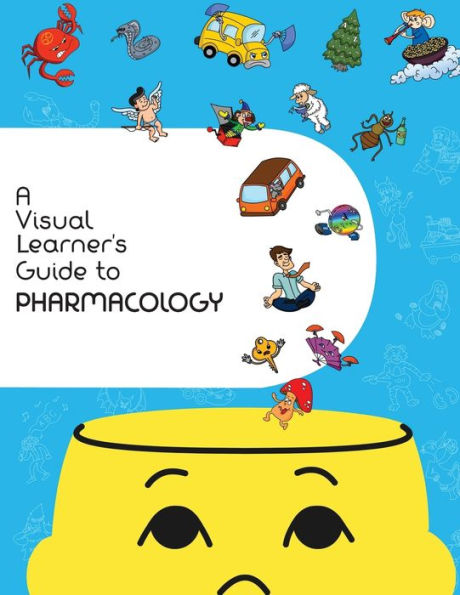
A Visual Learner's Guide to Pharmacology: Learn Pharmacology with Visual Mnemonics in Franklin, TN
Current price: $35.00
Barnes and Noble
A Visual Learner's Guide to Pharmacology: Learn Pharmacology with Visual Mnemonics in Franklin, TN
Current price: $35.00
Loading Inventory...
Size: OS
THE VISUAL LEARNER'S GUIDE TO PHARMACOLOGY.
Take a video tour of the book on YouTube: https: //www.youtube.com/watch?v=wc2giDdSRy0
This book was created with the student in mind, and its purpose is to make studying more efficient and effective. Pharmacology is a huge branch of medicine, with hundreds of difficult drug names and concepts. Students are given the tough task of memorizing large amounts of information in a short amount of time, and often look for supplemental study aids for help. An important part of these aids are mnemonics, which are devices that aid memorization.Mnemonics are used by students because they work. Typically, text-based mnemonics have been used as they are the easy to create and implement. However, with multiple word-mnemonics with the same letters, it becomes more and more difficult to remember what each letter means. We've taken mnemonics to the next level by adding a visual component. Empirical research suggests that the majority of the population have a visual learning style, and studies have shown that absorption and retention of material are significantly improved in students who revise in a format that complements their learning style. So we've combined the most important learning style with the power of mnemonics, to bring you a new tool in learning: "visual mnemonics".
Our book contains:
Beautiful illustrated
full-colour
pages
Full pharmacology course
with over 40 chapters covering:
Allergy and anaphylaxis
Antihistamines
Anaphylaxis
Analgesics
NSAIDs and acetaminophen
Opioids
Anesthetics
Local
General
Cardiovascular
Antihypertensives
Antiarrhythmics class I
Antiarrhythmics class II-V
Heart failure
Diuretics
Angina
Lipid lowering agents
Endocrine
Antidiabetic
Steroids
Gastrointestinal
PUD
IBD
Laxatives and antidiarrhoeals
Haematology
Anemia
Anticoagulants
Antiplatelets and fibrinolytics
Infections
Antibacterial drugs: inhibit cell wall synthesis
Antibacterial drugs: inhibit nucleic acid synthesis
Antibacterial drugs: inhibit protein synthesis
Antivirals
Antihelmintics
Antifungals
Antimalarials
Nervous System
Antiepileptics
Neuromuscular
Antiparkinson
Drugs acting at cholinergic Synapse
Antiemetics
Psychotropic
Antidepressants
Antipsychotics
Anxiolytics and hypnotics
Respiratory
Asthma
Other
Cancer Drugs
Immunosuppresants and antirheumatic Drugs
Drug Misuse and Dependence
For more information, please visit our website at VisualLearner.net, or visit our YouTube channel at: https: //www.youtube.com/channel/UCPMkBGdBJf9lw12vJ4GxNtw.
Take a video tour of the book on YouTube: https: //www.youtube.com/watch?v=wc2giDdSRy0
This book was created with the student in mind, and its purpose is to make studying more efficient and effective. Pharmacology is a huge branch of medicine, with hundreds of difficult drug names and concepts. Students are given the tough task of memorizing large amounts of information in a short amount of time, and often look for supplemental study aids for help. An important part of these aids are mnemonics, which are devices that aid memorization.Mnemonics are used by students because they work. Typically, text-based mnemonics have been used as they are the easy to create and implement. However, with multiple word-mnemonics with the same letters, it becomes more and more difficult to remember what each letter means. We've taken mnemonics to the next level by adding a visual component. Empirical research suggests that the majority of the population have a visual learning style, and studies have shown that absorption and retention of material are significantly improved in students who revise in a format that complements their learning style. So we've combined the most important learning style with the power of mnemonics, to bring you a new tool in learning: "visual mnemonics".
Our book contains:
Beautiful illustrated
full-colour
pages
Full pharmacology course
with over 40 chapters covering:
Allergy and anaphylaxis
Antihistamines
Anaphylaxis
Analgesics
NSAIDs and acetaminophen
Opioids
Anesthetics
Local
General
Cardiovascular
Antihypertensives
Antiarrhythmics class I
Antiarrhythmics class II-V
Heart failure
Diuretics
Angina
Lipid lowering agents
Endocrine
Antidiabetic
Steroids
Gastrointestinal
PUD
IBD
Laxatives and antidiarrhoeals
Haematology
Anemia
Anticoagulants
Antiplatelets and fibrinolytics
Infections
Antibacterial drugs: inhibit cell wall synthesis
Antibacterial drugs: inhibit nucleic acid synthesis
Antibacterial drugs: inhibit protein synthesis
Antivirals
Antihelmintics
Antifungals
Antimalarials
Nervous System
Antiepileptics
Neuromuscular
Antiparkinson
Drugs acting at cholinergic Synapse
Antiemetics
Psychotropic
Antidepressants
Antipsychotics
Anxiolytics and hypnotics
Respiratory
Asthma
Other
Cancer Drugs
Immunosuppresants and antirheumatic Drugs
Drug Misuse and Dependence
For more information, please visit our website at VisualLearner.net, or visit our YouTube channel at: https: //www.youtube.com/channel/UCPMkBGdBJf9lw12vJ4GxNtw.
THE VISUAL LEARNER'S GUIDE TO PHARMACOLOGY.
Take a video tour of the book on YouTube: https: //www.youtube.com/watch?v=wc2giDdSRy0
This book was created with the student in mind, and its purpose is to make studying more efficient and effective. Pharmacology is a huge branch of medicine, with hundreds of difficult drug names and concepts. Students are given the tough task of memorizing large amounts of information in a short amount of time, and often look for supplemental study aids for help. An important part of these aids are mnemonics, which are devices that aid memorization.Mnemonics are used by students because they work. Typically, text-based mnemonics have been used as they are the easy to create and implement. However, with multiple word-mnemonics with the same letters, it becomes more and more difficult to remember what each letter means. We've taken mnemonics to the next level by adding a visual component. Empirical research suggests that the majority of the population have a visual learning style, and studies have shown that absorption and retention of material are significantly improved in students who revise in a format that complements their learning style. So we've combined the most important learning style with the power of mnemonics, to bring you a new tool in learning: "visual mnemonics".
Our book contains:
Beautiful illustrated
full-colour
pages
Full pharmacology course
with over 40 chapters covering:
Allergy and anaphylaxis
Antihistamines
Anaphylaxis
Analgesics
NSAIDs and acetaminophen
Opioids
Anesthetics
Local
General
Cardiovascular
Antihypertensives
Antiarrhythmics class I
Antiarrhythmics class II-V
Heart failure
Diuretics
Angina
Lipid lowering agents
Endocrine
Antidiabetic
Steroids
Gastrointestinal
PUD
IBD
Laxatives and antidiarrhoeals
Haematology
Anemia
Anticoagulants
Antiplatelets and fibrinolytics
Infections
Antibacterial drugs: inhibit cell wall synthesis
Antibacterial drugs: inhibit nucleic acid synthesis
Antibacterial drugs: inhibit protein synthesis
Antivirals
Antihelmintics
Antifungals
Antimalarials
Nervous System
Antiepileptics
Neuromuscular
Antiparkinson
Drugs acting at cholinergic Synapse
Antiemetics
Psychotropic
Antidepressants
Antipsychotics
Anxiolytics and hypnotics
Respiratory
Asthma
Other
Cancer Drugs
Immunosuppresants and antirheumatic Drugs
Drug Misuse and Dependence
For more information, please visit our website at VisualLearner.net, or visit our YouTube channel at: https: //www.youtube.com/channel/UCPMkBGdBJf9lw12vJ4GxNtw.
Take a video tour of the book on YouTube: https: //www.youtube.com/watch?v=wc2giDdSRy0
This book was created with the student in mind, and its purpose is to make studying more efficient and effective. Pharmacology is a huge branch of medicine, with hundreds of difficult drug names and concepts. Students are given the tough task of memorizing large amounts of information in a short amount of time, and often look for supplemental study aids for help. An important part of these aids are mnemonics, which are devices that aid memorization.Mnemonics are used by students because they work. Typically, text-based mnemonics have been used as they are the easy to create and implement. However, with multiple word-mnemonics with the same letters, it becomes more and more difficult to remember what each letter means. We've taken mnemonics to the next level by adding a visual component. Empirical research suggests that the majority of the population have a visual learning style, and studies have shown that absorption and retention of material are significantly improved in students who revise in a format that complements their learning style. So we've combined the most important learning style with the power of mnemonics, to bring you a new tool in learning: "visual mnemonics".
Our book contains:
Beautiful illustrated
full-colour
pages
Full pharmacology course
with over 40 chapters covering:
Allergy and anaphylaxis
Antihistamines
Anaphylaxis
Analgesics
NSAIDs and acetaminophen
Opioids
Anesthetics
Local
General
Cardiovascular
Antihypertensives
Antiarrhythmics class I
Antiarrhythmics class II-V
Heart failure
Diuretics
Angina
Lipid lowering agents
Endocrine
Antidiabetic
Steroids
Gastrointestinal
PUD
IBD
Laxatives and antidiarrhoeals
Haematology
Anemia
Anticoagulants
Antiplatelets and fibrinolytics
Infections
Antibacterial drugs: inhibit cell wall synthesis
Antibacterial drugs: inhibit nucleic acid synthesis
Antibacterial drugs: inhibit protein synthesis
Antivirals
Antihelmintics
Antifungals
Antimalarials
Nervous System
Antiepileptics
Neuromuscular
Antiparkinson
Drugs acting at cholinergic Synapse
Antiemetics
Psychotropic
Antidepressants
Antipsychotics
Anxiolytics and hypnotics
Respiratory
Asthma
Other
Cancer Drugs
Immunosuppresants and antirheumatic Drugs
Drug Misuse and Dependence
For more information, please visit our website at VisualLearner.net, or visit our YouTube channel at: https: //www.youtube.com/channel/UCPMkBGdBJf9lw12vJ4GxNtw.
You May Also Like











More About Barnes and Noble at CoolSprings Galleria
Barnes & Noble is the world’s largest retail bookseller and a leading retailer of content, digital media and educational products. Our Nook Digital business offers a lineup of NOOK® tablets and e-Readers and an expansive collection of digital reading content through the NOOK Store®. Barnes & Noble’s mission is to operate the best omni-channel specialty retail business in America, helping both our customers and booksellers reach their aspirations, while being a credit to the communities we serve.
1800 Galleria Blvd #1310, Franklin, TN 37067, United States
Find Barnes and Noble at CoolSprings Galleria in Franklin, TN
Visit Barnes and Noble at CoolSprings Galleria in Franklin, TN
