
Home
Accounting and Debt Markets: Four Pieces on the Role of Information Markets
Barnes and Noble
Loading Inventory...
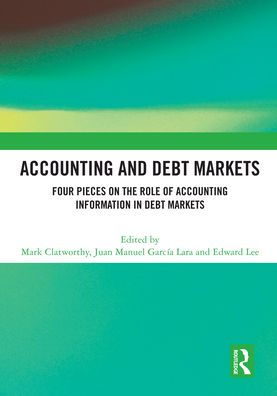
Accounting and Debt Markets: Four Pieces on the Role of Information Markets in Franklin, TN
Current price: $190.00
Barnes and Noble
Accounting and Debt Markets: Four Pieces on the Role of Information Markets in Franklin, TN
Current price: $190.00
Loading Inventory...
Size: Hardcover
Accounting and Debt Markets: Four Pieces on the Role of Accounting Information in Debt Markets
provides novel and up-to-date evidence on the role of accounting information in debt markets
Companies and organisations worldwide rely heavily on debt markets for short, medium and long-term financing, and debt markets and financial intermediaries have significant effects on the real economy. Accounting information has various functions in debt markets, including inter alia, informing pricing decisions and credit ratings, determining the allocation of creditor control rights and establishing bank capital adequacy requirements. The chapters in this book provide illustrative discussion, analysis and evidence on the importance of accounting information in credit markets. The first of the four pieces reflects on how a conservative financial reporting system helps firms obtain debt funds and with better conditions, and why this is the case. The second examines the effects of accounting disclosure on credit ratings of private companies and shows that accounting information is useful for credit rating agencies. The two final pieces reflect on how banks should account for credit losses, and on how regulators are tackling this issue.
The chapters in this book were originally published as a special issue of
Accounting and Business Research
.
provides novel and up-to-date evidence on the role of accounting information in debt markets
Companies and organisations worldwide rely heavily on debt markets for short, medium and long-term financing, and debt markets and financial intermediaries have significant effects on the real economy. Accounting information has various functions in debt markets, including inter alia, informing pricing decisions and credit ratings, determining the allocation of creditor control rights and establishing bank capital adequacy requirements. The chapters in this book provide illustrative discussion, analysis and evidence on the importance of accounting information in credit markets. The first of the four pieces reflects on how a conservative financial reporting system helps firms obtain debt funds and with better conditions, and why this is the case. The second examines the effects of accounting disclosure on credit ratings of private companies and shows that accounting information is useful for credit rating agencies. The two final pieces reflect on how banks should account for credit losses, and on how regulators are tackling this issue.
The chapters in this book were originally published as a special issue of
Accounting and Business Research
.
Accounting and Debt Markets: Four Pieces on the Role of Accounting Information in Debt Markets
provides novel and up-to-date evidence on the role of accounting information in debt markets
Companies and organisations worldwide rely heavily on debt markets for short, medium and long-term financing, and debt markets and financial intermediaries have significant effects on the real economy. Accounting information has various functions in debt markets, including inter alia, informing pricing decisions and credit ratings, determining the allocation of creditor control rights and establishing bank capital adequacy requirements. The chapters in this book provide illustrative discussion, analysis and evidence on the importance of accounting information in credit markets. The first of the four pieces reflects on how a conservative financial reporting system helps firms obtain debt funds and with better conditions, and why this is the case. The second examines the effects of accounting disclosure on credit ratings of private companies and shows that accounting information is useful for credit rating agencies. The two final pieces reflect on how banks should account for credit losses, and on how regulators are tackling this issue.
The chapters in this book were originally published as a special issue of
Accounting and Business Research
.
provides novel and up-to-date evidence on the role of accounting information in debt markets
Companies and organisations worldwide rely heavily on debt markets for short, medium and long-term financing, and debt markets and financial intermediaries have significant effects on the real economy. Accounting information has various functions in debt markets, including inter alia, informing pricing decisions and credit ratings, determining the allocation of creditor control rights and establishing bank capital adequacy requirements. The chapters in this book provide illustrative discussion, analysis and evidence on the importance of accounting information in credit markets. The first of the four pieces reflects on how a conservative financial reporting system helps firms obtain debt funds and with better conditions, and why this is the case. The second examines the effects of accounting disclosure on credit ratings of private companies and shows that accounting information is useful for credit rating agencies. The two final pieces reflect on how banks should account for credit losses, and on how regulators are tackling this issue.
The chapters in this book were originally published as a special issue of
Accounting and Business Research
.
You May Also Like

















More About Barnes and Noble at CoolSprings Galleria
Barnes & Noble is the world’s largest retail bookseller and a leading retailer of content, digital media and educational products. Our Nook Digital business offers a lineup of NOOK® tablets and e-Readers and an expansive collection of digital reading content through the NOOK Store®. Barnes & Noble’s mission is to operate the best omni-channel specialty retail business in America, helping both our customers and booksellers reach their aspirations, while being a credit to the communities we serve.
1800 Galleria Blvd #1310, Franklin, TN 37067, United States
Find Barnes and Noble at CoolSprings Galleria in Franklin, TN
Visit Barnes and Noble at CoolSprings Galleria in Franklin, TN
