
Home
Activity Anorexia: Theory, Research, and Treatment
Barnes and Noble
Loading Inventory...
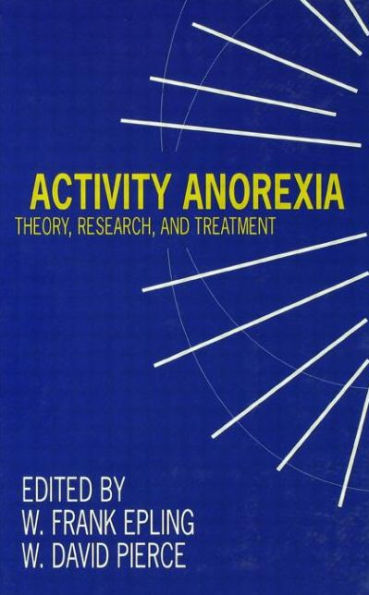
Activity Anorexia: Theory, Research, and Treatment in Franklin, TN
Current price: $190.00
Barnes and Noble
Activity Anorexia: Theory, Research, and Treatment in Franklin, TN
Current price: $190.00
Loading Inventory...
Size: Hardcover
This volume provides researchers and clinicians with an insight into recent developments in activity anorexia. Much of the basic information on the topic has come from animal literature; the theory of activity anorexia is built on an animal model of self-starvation (rats placed on a single daily feeding run more and more, over days stop eating, and die of starvation). Additionally, experiments that for ethical or practical reasons could not be done with humans may be conducted with other animals. The animal research is extending the understanding of biologically-based reward mechanisms that regulate eating and exercise, environment-behavior interactions that affect anorexia, and the biochemical changes that accompany physical activity and starvation.
Increasingly, however, the impact of physical activity on human anorexia is being directly investigatedeight out of fourteen research chapters in this volume are based on human research. Some researchers are interested in the impact of hyperactivity and caloric restriction on human reproductive function. Other authors are investigating physically active subgroups of people considered to be at risk for anorexia. Finally, several clinician/researchers suggest how physical activity and extreme dieting interact for anorexia nervosa patients.
Chapter authors were asked to present their views independent of the editors' argument that, when it is present, physical activity is central to anorexia. Many of the contributors disagree with the editors about the details of activity anorexia. A few suggest that excessive physical activity is either incidental to, or an epiphenomenon of, anorexia. Most authors are, however, in accord with the view that physical activity reduces food consumption which further drives up activity that results in even less caloric intake. No matter what their perspective, all contributors agree that hyperactivity frequently accompanies self-starvation in humans and other animals. The end result is a lively book that provides a source of ideas for both researchers and practitioners.
Increasingly, however, the impact of physical activity on human anorexia is being directly investigatedeight out of fourteen research chapters in this volume are based on human research. Some researchers are interested in the impact of hyperactivity and caloric restriction on human reproductive function. Other authors are investigating physically active subgroups of people considered to be at risk for anorexia. Finally, several clinician/researchers suggest how physical activity and extreme dieting interact for anorexia nervosa patients.
Chapter authors were asked to present their views independent of the editors' argument that, when it is present, physical activity is central to anorexia. Many of the contributors disagree with the editors about the details of activity anorexia. A few suggest that excessive physical activity is either incidental to, or an epiphenomenon of, anorexia. Most authors are, however, in accord with the view that physical activity reduces food consumption which further drives up activity that results in even less caloric intake. No matter what their perspective, all contributors agree that hyperactivity frequently accompanies self-starvation in humans and other animals. The end result is a lively book that provides a source of ideas for both researchers and practitioners.
This volume provides researchers and clinicians with an insight into recent developments in activity anorexia. Much of the basic information on the topic has come from animal literature; the theory of activity anorexia is built on an animal model of self-starvation (rats placed on a single daily feeding run more and more, over days stop eating, and die of starvation). Additionally, experiments that for ethical or practical reasons could not be done with humans may be conducted with other animals. The animal research is extending the understanding of biologically-based reward mechanisms that regulate eating and exercise, environment-behavior interactions that affect anorexia, and the biochemical changes that accompany physical activity and starvation.
Increasingly, however, the impact of physical activity on human anorexia is being directly investigatedeight out of fourteen research chapters in this volume are based on human research. Some researchers are interested in the impact of hyperactivity and caloric restriction on human reproductive function. Other authors are investigating physically active subgroups of people considered to be at risk for anorexia. Finally, several clinician/researchers suggest how physical activity and extreme dieting interact for anorexia nervosa patients.
Chapter authors were asked to present their views independent of the editors' argument that, when it is present, physical activity is central to anorexia. Many of the contributors disagree with the editors about the details of activity anorexia. A few suggest that excessive physical activity is either incidental to, or an epiphenomenon of, anorexia. Most authors are, however, in accord with the view that physical activity reduces food consumption which further drives up activity that results in even less caloric intake. No matter what their perspective, all contributors agree that hyperactivity frequently accompanies self-starvation in humans and other animals. The end result is a lively book that provides a source of ideas for both researchers and practitioners.
Increasingly, however, the impact of physical activity on human anorexia is being directly investigatedeight out of fourteen research chapters in this volume are based on human research. Some researchers are interested in the impact of hyperactivity and caloric restriction on human reproductive function. Other authors are investigating physically active subgroups of people considered to be at risk for anorexia. Finally, several clinician/researchers suggest how physical activity and extreme dieting interact for anorexia nervosa patients.
Chapter authors were asked to present their views independent of the editors' argument that, when it is present, physical activity is central to anorexia. Many of the contributors disagree with the editors about the details of activity anorexia. A few suggest that excessive physical activity is either incidental to, or an epiphenomenon of, anorexia. Most authors are, however, in accord with the view that physical activity reduces food consumption which further drives up activity that results in even less caloric intake. No matter what their perspective, all contributors agree that hyperactivity frequently accompanies self-starvation in humans and other animals. The end result is a lively book that provides a source of ideas for both researchers and practitioners.
You May Also Like









More About Barnes and Noble at CoolSprings Galleria
Barnes & Noble is the world’s largest retail bookseller and a leading retailer of content, digital media and educational products. Our Nook Digital business offers a lineup of NOOK® tablets and e-Readers and an expansive collection of digital reading content through the NOOK Store®. Barnes & Noble’s mission is to operate the best omni-channel specialty retail business in America, helping both our customers and booksellers reach their aspirations, while being a credit to the communities we serve.
1800 Galleria Blvd #1310, Franklin, TN 37067, United States
Find Barnes and Noble at CoolSprings Galleria in Franklin, TN
Visit Barnes and Noble at CoolSprings Galleria in Franklin, TN
