
Home
Additive Manufacturing in Orthodontics
Barnes and Noble
Loading Inventory...
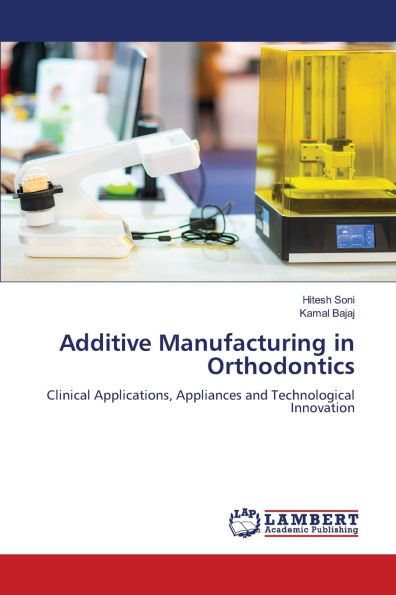
Additive Manufacturing in Orthodontics in Franklin, TN
Current price: $80.00
Barnes and Noble
Additive Manufacturing in Orthodontics in Franklin, TN
Current price: $80.00
Loading Inventory...
Size: OS
Three-dimensional (3D) printing, also known as additive manufacturing, has emerged as a transformative technology reshaping the landscape of dentistry and orthodontics. This book presents a comprehensive exploration of 3D printing, tracing its evolution, working principles, and modalities including stereolithography, fused deposition modeling, selective laser sintering, and digital light processing. It highlights the shift from conventional methods to digital workflows, emphasizing advantages of precision, customization, efficiency, and patient comfort. Detailed insights cover orthodontic applications ranging from diagnostic models, aligners, surgical guides, and indirect bonding trays to innovations such as directly printed clear aligners. The text also examines critical factors influencing print quality, materials science, and clinical outcomes, while addressing limitations and future research directions. Serving as both reference and guide, this book bridges technology with clinical practice, making it an essential resource for students, researchers, and orthodontists in the digital era.
Three-dimensional (3D) printing, also known as additive manufacturing, has emerged as a transformative technology reshaping the landscape of dentistry and orthodontics. This book presents a comprehensive exploration of 3D printing, tracing its evolution, working principles, and modalities including stereolithography, fused deposition modeling, selective laser sintering, and digital light processing. It highlights the shift from conventional methods to digital workflows, emphasizing advantages of precision, customization, efficiency, and patient comfort. Detailed insights cover orthodontic applications ranging from diagnostic models, aligners, surgical guides, and indirect bonding trays to innovations such as directly printed clear aligners. The text also examines critical factors influencing print quality, materials science, and clinical outcomes, while addressing limitations and future research directions. Serving as both reference and guide, this book bridges technology with clinical practice, making it an essential resource for students, researchers, and orthodontists in the digital era.
You May Also Like














More About Barnes and Noble at CoolSprings Galleria
Barnes & Noble is the world’s largest retail bookseller and a leading retailer of content, digital media and educational products. Our Nook Digital business offers a lineup of NOOK® tablets and e-Readers and an expansive collection of digital reading content through the NOOK Store®. Barnes & Noble’s mission is to operate the best omni-channel specialty retail business in America, helping both our customers and booksellers reach their aspirations, while being a credit to the communities we serve.
1800 Galleria Blvd #1310, Franklin, TN 37067, United States
Find Barnes and Noble at CoolSprings Galleria in Franklin, TN
Visit Barnes and Noble at CoolSprings Galleria in Franklin, TN
