
Home
Afghan Endgames: Strategy and Policy Choices for America's Longest War
Barnes and Noble
Loading Inventory...
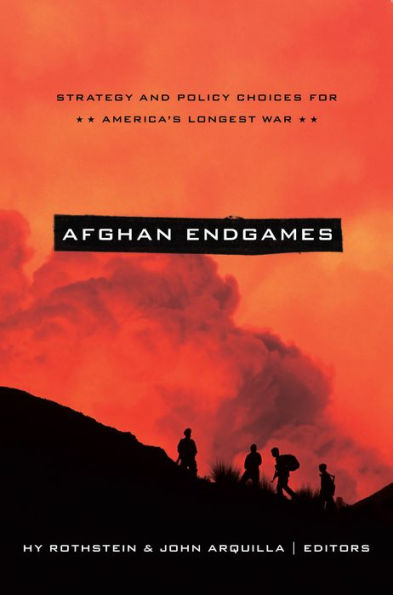
Afghan Endgames: Strategy and Policy Choices for America's Longest War in Franklin, TN
Current price: $59.95
Barnes and Noble
Afghan Endgames: Strategy and Policy Choices for America's Longest War in Franklin, TN
Current price: $59.95
Loading Inventory...
Size: Paperback
The United States and its allies have been fighting the Taliban and alQaeda in Afghanistan for a decade in a war that either side could still win. While a gradual drawdown has begun, significant numbers of US combat troops will remain in Afghanistan until at least 2014, perhaps longer, depending on the situation on the ground and the outcome of the US presidential election in 2012. Given the realities of the Taliban’s persistence and the desire of US policymakers—and the public—to find a way out, what can and should be the goals of the US and its allies in Afghanistan?
Afghan Endgames brings together some of the finest minds in the fields of history, strategy, anthropology, ethics, and mass communications to provide a clear, balanced, and comprehensive assessment of the alternatives for restoring peace and stability to Afghanistan. Presenting a range of options—from immediate withdrawal of all coalition forces to the maintenance of an openended, but greatly reduced military presence—the contributors weigh the many costs, risks, and benefits of each alternative.
This important book boldly pursues several strands of thought suggesting that a strong, legitimate central government is far from likely to emerge in Kabul; that fewer coalition forces, used in creative ways, may have better effects on the ground than a larger, more conventional presence; and that, even though Pakistan should not be pushed too hard, so as to avoid sparking social chaos there, Afghanistan’s other neighbors can and should be encouraged to become more actively involved. The volume’s editors conclude that while there may never be complete peace in Afghanistan, a selfsustaining security system able to restore order swiftly in the wake of violence is attainable.
Afghan Endgames brings together some of the finest minds in the fields of history, strategy, anthropology, ethics, and mass communications to provide a clear, balanced, and comprehensive assessment of the alternatives for restoring peace and stability to Afghanistan. Presenting a range of options—from immediate withdrawal of all coalition forces to the maintenance of an openended, but greatly reduced military presence—the contributors weigh the many costs, risks, and benefits of each alternative.
This important book boldly pursues several strands of thought suggesting that a strong, legitimate central government is far from likely to emerge in Kabul; that fewer coalition forces, used in creative ways, may have better effects on the ground than a larger, more conventional presence; and that, even though Pakistan should not be pushed too hard, so as to avoid sparking social chaos there, Afghanistan’s other neighbors can and should be encouraged to become more actively involved. The volume’s editors conclude that while there may never be complete peace in Afghanistan, a selfsustaining security system able to restore order swiftly in the wake of violence is attainable.
The United States and its allies have been fighting the Taliban and alQaeda in Afghanistan for a decade in a war that either side could still win. While a gradual drawdown has begun, significant numbers of US combat troops will remain in Afghanistan until at least 2014, perhaps longer, depending on the situation on the ground and the outcome of the US presidential election in 2012. Given the realities of the Taliban’s persistence and the desire of US policymakers—and the public—to find a way out, what can and should be the goals of the US and its allies in Afghanistan?
Afghan Endgames brings together some of the finest minds in the fields of history, strategy, anthropology, ethics, and mass communications to provide a clear, balanced, and comprehensive assessment of the alternatives for restoring peace and stability to Afghanistan. Presenting a range of options—from immediate withdrawal of all coalition forces to the maintenance of an openended, but greatly reduced military presence—the contributors weigh the many costs, risks, and benefits of each alternative.
This important book boldly pursues several strands of thought suggesting that a strong, legitimate central government is far from likely to emerge in Kabul; that fewer coalition forces, used in creative ways, may have better effects on the ground than a larger, more conventional presence; and that, even though Pakistan should not be pushed too hard, so as to avoid sparking social chaos there, Afghanistan’s other neighbors can and should be encouraged to become more actively involved. The volume’s editors conclude that while there may never be complete peace in Afghanistan, a selfsustaining security system able to restore order swiftly in the wake of violence is attainable.
Afghan Endgames brings together some of the finest minds in the fields of history, strategy, anthropology, ethics, and mass communications to provide a clear, balanced, and comprehensive assessment of the alternatives for restoring peace and stability to Afghanistan. Presenting a range of options—from immediate withdrawal of all coalition forces to the maintenance of an openended, but greatly reduced military presence—the contributors weigh the many costs, risks, and benefits of each alternative.
This important book boldly pursues several strands of thought suggesting that a strong, legitimate central government is far from likely to emerge in Kabul; that fewer coalition forces, used in creative ways, may have better effects on the ground than a larger, more conventional presence; and that, even though Pakistan should not be pushed too hard, so as to avoid sparking social chaos there, Afghanistan’s other neighbors can and should be encouraged to become more actively involved. The volume’s editors conclude that while there may never be complete peace in Afghanistan, a selfsustaining security system able to restore order swiftly in the wake of violence is attainable.
You May Also Like









More About Barnes and Noble at CoolSprings Galleria
Barnes & Noble is the world’s largest retail bookseller and a leading retailer of content, digital media and educational products. Our Nook Digital business offers a lineup of NOOK® tablets and e-Readers and an expansive collection of digital reading content through the NOOK Store®. Barnes & Noble’s mission is to operate the best omni-channel specialty retail business in America, helping both our customers and booksellers reach their aspirations, while being a credit to the communities we serve.
1800 Galleria Blvd #1310, Franklin, TN 37067, United States
Find Barnes and Noble at CoolSprings Galleria in Franklin, TN
Visit Barnes and Noble at CoolSprings Galleria in Franklin, TN
