
Home
Against Inequality: Contributions to a Discourse of Social Emancipation
Barnes and Noble
Loading Inventory...
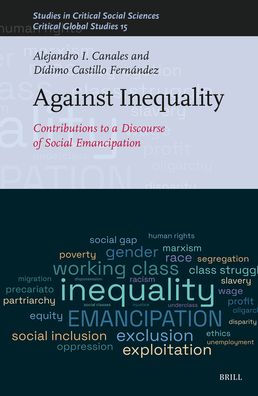
Against Inequality: Contributions to a Discourse of Social Emancipation in Franklin, TN
Current price: $168.00
Barnes and Noble
Against Inequality: Contributions to a Discourse of Social Emancipation in Franklin, TN
Current price: $168.00
Loading Inventory...
Size: OS
In
Against Inequality
, the authors offer a theoretical and political proposal for social emancipation, seen as an opportunity to build conditions of equality in contexts of freedom, not only for ethical but essentially political foundations. To achieve this, the authors confront inequality in two ways: as a social phenomenon (and, therefore, historically situated and structured) and through critical reflection on the concepts, categories, indicators and frameworks of its understanding. In this sense, they propose a critical reflection of the ways in which it has been thought theoretically and politically at various times, with special reference to the way in which it has been conceived in modern, capitalist society.
Against Inequality
, the authors offer a theoretical and political proposal for social emancipation, seen as an opportunity to build conditions of equality in contexts of freedom, not only for ethical but essentially political foundations. To achieve this, the authors confront inequality in two ways: as a social phenomenon (and, therefore, historically situated and structured) and through critical reflection on the concepts, categories, indicators and frameworks of its understanding. In this sense, they propose a critical reflection of the ways in which it has been thought theoretically and politically at various times, with special reference to the way in which it has been conceived in modern, capitalist society.
In
Against Inequality
, the authors offer a theoretical and political proposal for social emancipation, seen as an opportunity to build conditions of equality in contexts of freedom, not only for ethical but essentially political foundations. To achieve this, the authors confront inequality in two ways: as a social phenomenon (and, therefore, historically situated and structured) and through critical reflection on the concepts, categories, indicators and frameworks of its understanding. In this sense, they propose a critical reflection of the ways in which it has been thought theoretically and politically at various times, with special reference to the way in which it has been conceived in modern, capitalist society.
Against Inequality
, the authors offer a theoretical and political proposal for social emancipation, seen as an opportunity to build conditions of equality in contexts of freedom, not only for ethical but essentially political foundations. To achieve this, the authors confront inequality in two ways: as a social phenomenon (and, therefore, historically situated and structured) and through critical reflection on the concepts, categories, indicators and frameworks of its understanding. In this sense, they propose a critical reflection of the ways in which it has been thought theoretically and politically at various times, with special reference to the way in which it has been conceived in modern, capitalist society.
You May Also Like











More About Barnes and Noble at CoolSprings Galleria
Barnes & Noble is the world’s largest retail bookseller and a leading retailer of content, digital media and educational products. Our Nook Digital business offers a lineup of NOOK® tablets and e-Readers and an expansive collection of digital reading content through the NOOK Store®. Barnes & Noble’s mission is to operate the best omni-channel specialty retail business in America, helping both our customers and booksellers reach their aspirations, while being a credit to the communities we serve.
1800 Galleria Blvd #1310, Franklin, TN 37067, United States
Find Barnes and Noble at CoolSprings Galleria in Franklin, TN
Visit Barnes and Noble at CoolSprings Galleria in Franklin, TN
