
Home
Agnes's Final Afternoon: An Essay on the Work of Milan Kundera
Barnes and Noble
Loading Inventory...
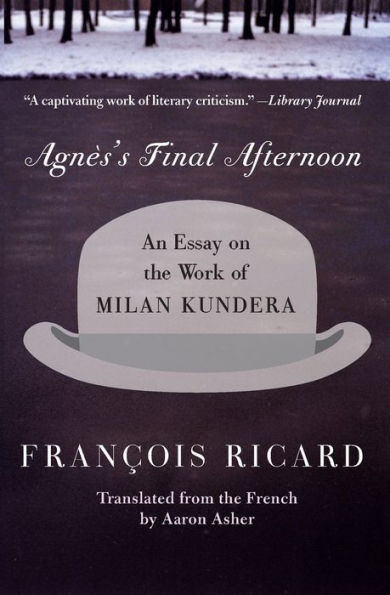
Agnes's Final Afternoon: An Essay on the Work of Milan Kundera in Franklin, TN
Current price: $14.99
Barnes and Noble
Agnes's Final Afternoon: An Essay on the Work of Milan Kundera in Franklin, TN
Current price: $14.99
Loading Inventory...
Size: OS
Agnès's Final Afternoon
imitates the protagonist of Milan Kundera's novel
Immortality
on the last afternoon of her life. Like all readers of fiction, Agnès steps out of the world of planned routes, responsibilities, and social self and gives herself up to the discovery of a new landscape, an experience that will transform her. François Ricard's essay enters into the writings of Milan Kundera in much the same way. The landscape he explores includes a chain of ten novels, composed between 1959 and 1999, and two books containing one of the most lucid reflections on the novel.
imitates the protagonist of Milan Kundera's novel
Immortality
on the last afternoon of her life. Like all readers of fiction, Agnès steps out of the world of planned routes, responsibilities, and social self and gives herself up to the discovery of a new landscape, an experience that will transform her. François Ricard's essay enters into the writings of Milan Kundera in much the same way. The landscape he explores includes a chain of ten novels, composed between 1959 and 1999, and two books containing one of the most lucid reflections on the novel.
Agnès's Final Afternoon
imitates the protagonist of Milan Kundera's novel
Immortality
on the last afternoon of her life. Like all readers of fiction, Agnès steps out of the world of planned routes, responsibilities, and social self and gives herself up to the discovery of a new landscape, an experience that will transform her. François Ricard's essay enters into the writings of Milan Kundera in much the same way. The landscape he explores includes a chain of ten novels, composed between 1959 and 1999, and two books containing one of the most lucid reflections on the novel.
imitates the protagonist of Milan Kundera's novel
Immortality
on the last afternoon of her life. Like all readers of fiction, Agnès steps out of the world of planned routes, responsibilities, and social self and gives herself up to the discovery of a new landscape, an experience that will transform her. François Ricard's essay enters into the writings of Milan Kundera in much the same way. The landscape he explores includes a chain of ten novels, composed between 1959 and 1999, and two books containing one of the most lucid reflections on the novel.
You May Also Like












More About Barnes and Noble at CoolSprings Galleria
Barnes & Noble is the world’s largest retail bookseller and a leading retailer of content, digital media and educational products. Our Nook Digital business offers a lineup of NOOK® tablets and e-Readers and an expansive collection of digital reading content through the NOOK Store®. Barnes & Noble’s mission is to operate the best omni-channel specialty retail business in America, helping both our customers and booksellers reach their aspirations, while being a credit to the communities we serve.
1800 Galleria Blvd #1310, Franklin, TN 37067, United States
Find Barnes and Noble at CoolSprings Galleria in Franklin, TN
Visit Barnes and Noble at CoolSprings Galleria in Franklin, TN
