
Home
Agricultural Drainage Techniques Using Alternative Materials
Barnes and Noble
Loading Inventory...
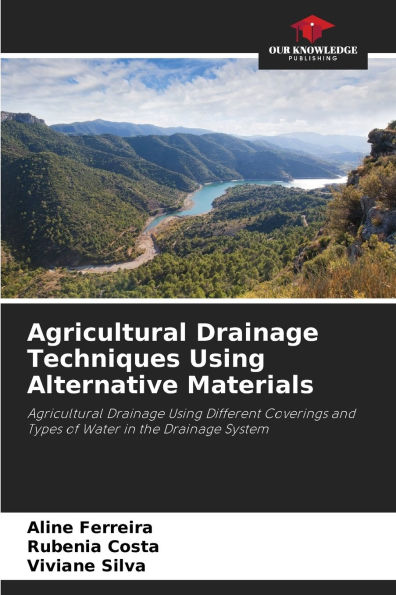
Agricultural Drainage Techniques Using Alternative Materials in Franklin, TN
Current price: $46.00
Barnes and Noble
Agricultural Drainage Techniques Using Alternative Materials in Franklin, TN
Current price: $46.00
Loading Inventory...
Size: OS
Mello (2008) states that in an area intended for agricultural exploitation, it is essential that the soil has a moisture content suitable for crop germination and development. Therefore, it is necessary to establish and maintain an optimal balance of water, oxygen, and salts in the root zone in order to provide ideal conditions for crop survival. If rainfall in the region is not sufficient at the appropriate times to maintain adequate soil moisture content, irrigation is the recommended technique to compensate for this deficiency. On the other hand, if the soil remains excessively moist for long periods, the adoption of a drainage system is the solution to the problem. In irrigated regions, where water with high salt content is used, drainage is used to control the rise of the water table and eliminate leaching water, in order to prevent soil salinization. Therefore, the main benefits of agricultural drainage are: incorporation of new areas into agricultural production, increased agricultural productivity, control of soil salinity, recovery of saline and/or alkaline soils, and public and animal health.
Mello (2008) states that in an area intended for agricultural exploitation, it is essential that the soil has a moisture content suitable for crop germination and development. Therefore, it is necessary to establish and maintain an optimal balance of water, oxygen, and salts in the root zone in order to provide ideal conditions for crop survival. If rainfall in the region is not sufficient at the appropriate times to maintain adequate soil moisture content, irrigation is the recommended technique to compensate for this deficiency. On the other hand, if the soil remains excessively moist for long periods, the adoption of a drainage system is the solution to the problem. In irrigated regions, where water with high salt content is used, drainage is used to control the rise of the water table and eliminate leaching water, in order to prevent soil salinization. Therefore, the main benefits of agricultural drainage are: incorporation of new areas into agricultural production, increased agricultural productivity, control of soil salinity, recovery of saline and/or alkaline soils, and public and animal health.
You May Also Like










More About Barnes and Noble at CoolSprings Galleria
Barnes & Noble is the world’s largest retail bookseller and a leading retailer of content, digital media and educational products. Our Nook Digital business offers a lineup of NOOK® tablets and e-Readers and an expansive collection of digital reading content through the NOOK Store®. Barnes & Noble’s mission is to operate the best omni-channel specialty retail business in America, helping both our customers and booksellers reach their aspirations, while being a credit to the communities we serve.
1800 Galleria Blvd #1310, Franklin, TN 37067, United States
Find Barnes and Noble at CoolSprings Galleria in Franklin, TN
Visit Barnes and Noble at CoolSprings Galleria in Franklin, TN
