
Home
An Army of Brigadiers: British Brigade Commanders at the Battle of Arras 1917
Barnes and Noble
Loading Inventory...
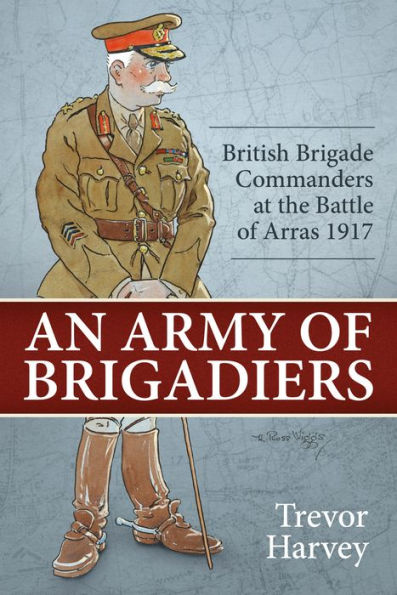
An Army of Brigadiers: British Brigade Commanders at the Battle of Arras 1917 in Franklin, TN
Current price: $69.95
Barnes and Noble
An Army of Brigadiers: British Brigade Commanders at the Battle of Arras 1917 in Franklin, TN
Current price: $69.95
Loading Inventory...
Size: OS
There have been two major studies in recent years that have explored the roles and responsibilities of British generals at different levels within the British Expeditionary Force’s command structure. Dr Simon InnesRobbins has written about the generals at predominantly GHQ and Army levels while Dr Andy Simpson has explored the development of the role of corps commanders during the Great War. For the first time Dr Trevor Harvey’s study provides an analysis of command at the level of the infantry brigade. His study is based on a critical period during the Great War, the period from late in the Battle of the Somme to the end of the Battle of Arras in midMay 1917.Dr Harvey’s analysis is based on the service records of 116 brigadiergenerals whose brigades played some part in the Battle of Arras. He explores their roles, responsibilities and backgrounds, both in theory and in practice, in the leadup to and during the battle to explain and illustrate the range and limitations of their commands. Based on this analysis, Dr Harvey presents case studies of five brigadiergenerals, their staff officers and their battalion commanders. Each brigadiergeneral has been selected from one of the five corps that participated in the Battle of Arras which provides an operational backdrop to the exploration of their roles. The brigadiergenerals exhibit ,in different combinations, their different operational experiences, their different career paths and their different personal characteristics. In undertaking his research, Dr Harvey has drawn on a wide variety sources, including diaries, letters and personal papers privately held by descendants of his chosen subjects. From the evidence drawn from the case studies, Dr Harvey identifies a series of threads about the responsibilities and actions which these brigade commanders share. He argues that the application of these threads enables the orthodox ‘administration and training’ interpretation of the role of brigadiergenerals to be successfully challenged as both unnecessarily narrow and unduly limited. Dr Harvey’s study has been praised by his examiners because ‘it provides unique and original insights on British operations on the Western Front in 191617 which will be of great interest to scholars interested in British generalship during the First World War. This groundbreaking study is a significant addition to the historiography of generalship during the Great War.
There have been two major studies in recent years that have explored the roles and responsibilities of British generals at different levels within the British Expeditionary Force’s command structure. Dr Simon InnesRobbins has written about the generals at predominantly GHQ and Army levels while Dr Andy Simpson has explored the development of the role of corps commanders during the Great War. For the first time Dr Trevor Harvey’s study provides an analysis of command at the level of the infantry brigade. His study is based on a critical period during the Great War, the period from late in the Battle of the Somme to the end of the Battle of Arras in midMay 1917.Dr Harvey’s analysis is based on the service records of 116 brigadiergenerals whose brigades played some part in the Battle of Arras. He explores their roles, responsibilities and backgrounds, both in theory and in practice, in the leadup to and during the battle to explain and illustrate the range and limitations of their commands. Based on this analysis, Dr Harvey presents case studies of five brigadiergenerals, their staff officers and their battalion commanders. Each brigadiergeneral has been selected from one of the five corps that participated in the Battle of Arras which provides an operational backdrop to the exploration of their roles. The brigadiergenerals exhibit ,in different combinations, their different operational experiences, their different career paths and their different personal characteristics. In undertaking his research, Dr Harvey has drawn on a wide variety sources, including diaries, letters and personal papers privately held by descendants of his chosen subjects. From the evidence drawn from the case studies, Dr Harvey identifies a series of threads about the responsibilities and actions which these brigade commanders share. He argues that the application of these threads enables the orthodox ‘administration and training’ interpretation of the role of brigadiergenerals to be successfully challenged as both unnecessarily narrow and unduly limited. Dr Harvey’s study has been praised by his examiners because ‘it provides unique and original insights on British operations on the Western Front in 191617 which will be of great interest to scholars interested in British generalship during the First World War. This groundbreaking study is a significant addition to the historiography of generalship during the Great War.
You May Also Like








More About Barnes and Noble at CoolSprings Galleria
Barnes & Noble is the world’s largest retail bookseller and a leading retailer of content, digital media and educational products. Our Nook Digital business offers a lineup of NOOK® tablets and e-Readers and an expansive collection of digital reading content through the NOOK Store®. Barnes & Noble’s mission is to operate the best omni-channel specialty retail business in America, helping both our customers and booksellers reach their aspirations, while being a credit to the communities we serve.
1800 Galleria Blvd #1310, Franklin, TN 37067, United States
Find Barnes and Noble at CoolSprings Galleria in Franklin, TN
Visit Barnes and Noble at CoolSprings Galleria in Franklin, TN
