
Home
Architecture from the Indonesian Past: Life and Work of Fermont-Cuypers, 1927-1957
Barnes and Noble
Loading Inventory...
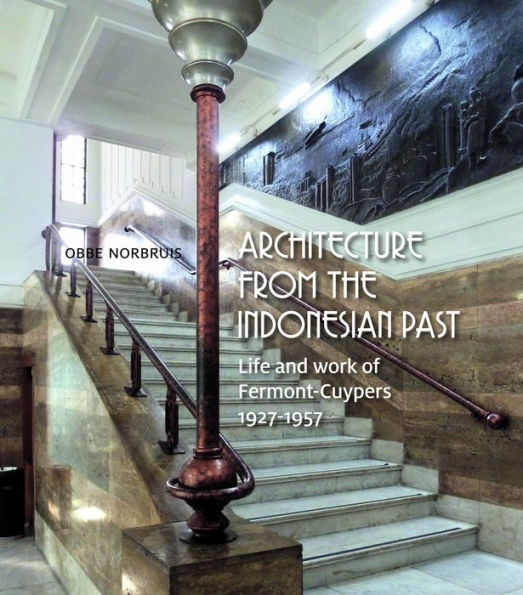
Architecture from the Indonesian Past: Life and Work of Fermont-Cuypers, 1927-1957 in Franklin, TN
Current price: $69.50
Barnes and Noble
Architecture from the Indonesian Past: Life and Work of Fermont-Cuypers, 1927-1957 in Franklin, TN
Current price: $69.50
Loading Inventory...
Size: OS
In
Architecture from the Indonesian Past
, Obbe H. Norbruis tells the story of a celebrated Dutch architecture firm, its unique buildings, and their designers. FermontCuypers designed many buildings significant in Indonesia’s history beginning in 1927 when an uprising broke out against the Dutch in the colony. In the early 1930s, the firm drew up plans for many schools, churches, villas, and offices. At the end of the 1930s the firm began to design hospitals, head offices, hotels, and even a passenger terminal in Tanjung Priok. The expected tourism boom never materialized due to the German invasion of the Netherlands, and World War II soon had an impact on the region. After Indonesian independence, FermontCuypers experienced a resurgence through 1958, designing many buildings that still exist today in cities such as Jakarta, Surabaya, Medan, Bandung, Makassar, and Palembang.
Architecture from the Indonesian Past
, Obbe H. Norbruis tells the story of a celebrated Dutch architecture firm, its unique buildings, and their designers. FermontCuypers designed many buildings significant in Indonesia’s history beginning in 1927 when an uprising broke out against the Dutch in the colony. In the early 1930s, the firm drew up plans for many schools, churches, villas, and offices. At the end of the 1930s the firm began to design hospitals, head offices, hotels, and even a passenger terminal in Tanjung Priok. The expected tourism boom never materialized due to the German invasion of the Netherlands, and World War II soon had an impact on the region. After Indonesian independence, FermontCuypers experienced a resurgence through 1958, designing many buildings that still exist today in cities such as Jakarta, Surabaya, Medan, Bandung, Makassar, and Palembang.
In
Architecture from the Indonesian Past
, Obbe H. Norbruis tells the story of a celebrated Dutch architecture firm, its unique buildings, and their designers. FermontCuypers designed many buildings significant in Indonesia’s history beginning in 1927 when an uprising broke out against the Dutch in the colony. In the early 1930s, the firm drew up plans for many schools, churches, villas, and offices. At the end of the 1930s the firm began to design hospitals, head offices, hotels, and even a passenger terminal in Tanjung Priok. The expected tourism boom never materialized due to the German invasion of the Netherlands, and World War II soon had an impact on the region. After Indonesian independence, FermontCuypers experienced a resurgence through 1958, designing many buildings that still exist today in cities such as Jakarta, Surabaya, Medan, Bandung, Makassar, and Palembang.
Architecture from the Indonesian Past
, Obbe H. Norbruis tells the story of a celebrated Dutch architecture firm, its unique buildings, and their designers. FermontCuypers designed many buildings significant in Indonesia’s history beginning in 1927 when an uprising broke out against the Dutch in the colony. In the early 1930s, the firm drew up plans for many schools, churches, villas, and offices. At the end of the 1930s the firm began to design hospitals, head offices, hotels, and even a passenger terminal in Tanjung Priok. The expected tourism boom never materialized due to the German invasion of the Netherlands, and World War II soon had an impact on the region. After Indonesian independence, FermontCuypers experienced a resurgence through 1958, designing many buildings that still exist today in cities such as Jakarta, Surabaya, Medan, Bandung, Makassar, and Palembang.
You May Also Like










![A Cyclopã�]dia Of Works Of Architecture In Italy, Greece](https://prodimage.images-bn.com/pimages/9781024522044_p0_v2_s600x595.jpg)







More About Barnes and Noble at CoolSprings Galleria
Barnes & Noble is the world’s largest retail bookseller and a leading retailer of content, digital media and educational products. Our Nook Digital business offers a lineup of NOOK® tablets and e-Readers and an expansive collection of digital reading content through the NOOK Store®. Barnes & Noble’s mission is to operate the best omni-channel specialty retail business in America, helping both our customers and booksellers reach their aspirations, while being a credit to the communities we serve.
1800 Galleria Blvd #1310, Franklin, TN 37067, United States
Find Barnes and Noble at CoolSprings Galleria in Franklin, TN
Visit Barnes and Noble at CoolSprings Galleria in Franklin, TN
