
Home
ARM Assembly Language: Fundamentals and Techniques
Barnes and Noble
Loading Inventory...
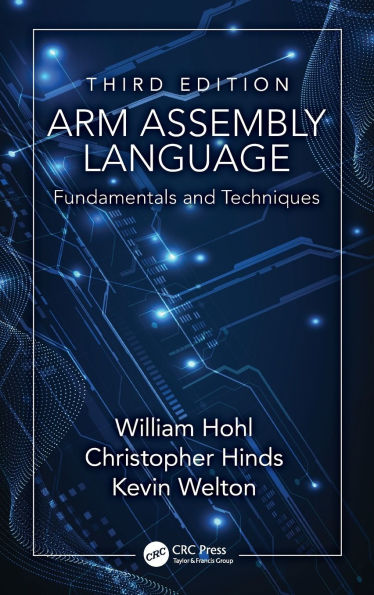
ARM Assembly Language: Fundamentals and Techniques in Franklin, TN
Current price: $84.99
Barnes and Noble
ARM Assembly Language: Fundamentals and Techniques in Franklin, TN
Current price: $84.99
Loading Inventory...
Size: Hardcover
ARM Assembly Language: Fundamentals and Techniques, Third Edition
explains in clear terms how ARM processors are programmed at the most fundamental level. While earlier editions covered much older architectures, the Third Edition moves entirely into the Cortex-M space, using the Armv8-M instruction set to illustrate how assembly code for the most modern Arm processors is written. Even if you are writing in JavaScript, Python, C++, C#, or Rust, these high-level programming languages require a compiler or interpreter to transform the code into machine-executable instructions, so software and hardware engineers will gain valuable insight into how their code is executing from knowing how the underlying processor functions.
Featuring chapters updated to Armv8-M throughout this book, this edition:
Moves all examples into the Keil MDK environment, which uses armclang and a GNU-like syntax that is very popular in the industry
Includes an appendix that helps students set up the Keil tools for use throughout this book
Describes the IEEE 754 floating-point arithmetic supported by the Armv8-M processors implementing the optional Floating-Point Unit (FPU)
Features an updated chapter on mixing C and assembly code together
Discusses features and concepts found in the most advanced Arm processors, such as the Cortex-A and Cortex-X families using Armv9 architectures
Written by authors who each have more than 35 years of experience in the semiconductor industry,
makes an ideal textbook for students wanting to learn about microprocessors but who may possess only a basic knowledge of programming and logic.
explains in clear terms how ARM processors are programmed at the most fundamental level. While earlier editions covered much older architectures, the Third Edition moves entirely into the Cortex-M space, using the Armv8-M instruction set to illustrate how assembly code for the most modern Arm processors is written. Even if you are writing in JavaScript, Python, C++, C#, or Rust, these high-level programming languages require a compiler or interpreter to transform the code into machine-executable instructions, so software and hardware engineers will gain valuable insight into how their code is executing from knowing how the underlying processor functions.
Featuring chapters updated to Armv8-M throughout this book, this edition:
Moves all examples into the Keil MDK environment, which uses armclang and a GNU-like syntax that is very popular in the industry
Includes an appendix that helps students set up the Keil tools for use throughout this book
Describes the IEEE 754 floating-point arithmetic supported by the Armv8-M processors implementing the optional Floating-Point Unit (FPU)
Features an updated chapter on mixing C and assembly code together
Discusses features and concepts found in the most advanced Arm processors, such as the Cortex-A and Cortex-X families using Armv9 architectures
Written by authors who each have more than 35 years of experience in the semiconductor industry,
makes an ideal textbook for students wanting to learn about microprocessors but who may possess only a basic knowledge of programming and logic.
ARM Assembly Language: Fundamentals and Techniques, Third Edition
explains in clear terms how ARM processors are programmed at the most fundamental level. While earlier editions covered much older architectures, the Third Edition moves entirely into the Cortex-M space, using the Armv8-M instruction set to illustrate how assembly code for the most modern Arm processors is written. Even if you are writing in JavaScript, Python, C++, C#, or Rust, these high-level programming languages require a compiler or interpreter to transform the code into machine-executable instructions, so software and hardware engineers will gain valuable insight into how their code is executing from knowing how the underlying processor functions.
Featuring chapters updated to Armv8-M throughout this book, this edition:
Moves all examples into the Keil MDK environment, which uses armclang and a GNU-like syntax that is very popular in the industry
Includes an appendix that helps students set up the Keil tools for use throughout this book
Describes the IEEE 754 floating-point arithmetic supported by the Armv8-M processors implementing the optional Floating-Point Unit (FPU)
Features an updated chapter on mixing C and assembly code together
Discusses features and concepts found in the most advanced Arm processors, such as the Cortex-A and Cortex-X families using Armv9 architectures
Written by authors who each have more than 35 years of experience in the semiconductor industry,
makes an ideal textbook for students wanting to learn about microprocessors but who may possess only a basic knowledge of programming and logic.
explains in clear terms how ARM processors are programmed at the most fundamental level. While earlier editions covered much older architectures, the Third Edition moves entirely into the Cortex-M space, using the Armv8-M instruction set to illustrate how assembly code for the most modern Arm processors is written. Even if you are writing in JavaScript, Python, C++, C#, or Rust, these high-level programming languages require a compiler or interpreter to transform the code into machine-executable instructions, so software and hardware engineers will gain valuable insight into how their code is executing from knowing how the underlying processor functions.
Featuring chapters updated to Armv8-M throughout this book, this edition:
Moves all examples into the Keil MDK environment, which uses armclang and a GNU-like syntax that is very popular in the industry
Includes an appendix that helps students set up the Keil tools for use throughout this book
Describes the IEEE 754 floating-point arithmetic supported by the Armv8-M processors implementing the optional Floating-Point Unit (FPU)
Features an updated chapter on mixing C and assembly code together
Discusses features and concepts found in the most advanced Arm processors, such as the Cortex-A and Cortex-X families using Armv9 architectures
Written by authors who each have more than 35 years of experience in the semiconductor industry,
makes an ideal textbook for students wanting to learn about microprocessors but who may possess only a basic knowledge of programming and logic.
You May Also Like








More About Barnes and Noble at CoolSprings Galleria
Barnes & Noble is the world’s largest retail bookseller and a leading retailer of content, digital media and educational products. Our Nook Digital business offers a lineup of NOOK® tablets and e-Readers and an expansive collection of digital reading content through the NOOK Store®. Barnes & Noble’s mission is to operate the best omni-channel specialty retail business in America, helping both our customers and booksellers reach their aspirations, while being a credit to the communities we serve.
1800 Galleria Blvd #1310, Franklin, TN 37067, United States
Find Barnes and Noble at CoolSprings Galleria in Franklin, TN
Visit Barnes and Noble at CoolSprings Galleria in Franklin, TN
