
Home
Arrested Mobility: Overcoming the Threat to Black Movement
Barnes and Noble
Loading Inventory...
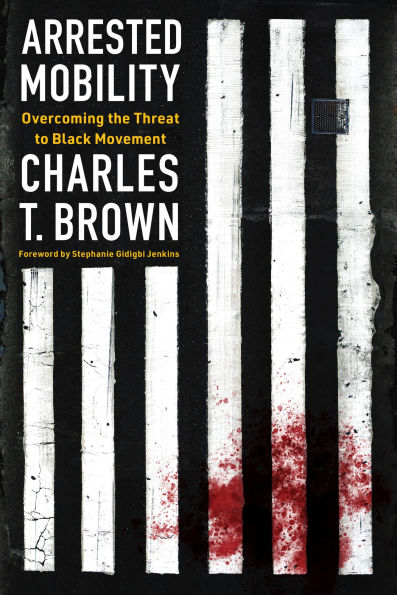
Arrested Mobility: Overcoming the Threat to Black Movement in Franklin, TN
Current price: $34.00
Barnes and Noble
Arrested Mobility: Overcoming the Threat to Black Movement in Franklin, TN
Current price: $34.00
Loading Inventory...
Size: Paperback
In the US, police conduct millions of traffic stops for reasons unrelated to safety. Study after study confirm that Black drivers experience higher rates of non-safety stops, searches, and use of force than White drivers.
In
Arrested Mobility: Overcoming the Threat to Black Movement
, Charles T. Brown, founder and CEO of Equitable Cities, examines why mobility is not afforded in the same way to everyone. He argues that the legacy of structural racism and White supremacy has led to disinvestment and over-policing in Black communities and communities of color, thwarting opportunity, as physical mobility and social mobility are intrinsically linked. This experience for Black people around the world is what Brown refers to as arrested mobility.
Mobility embodies freedom and allows people, places, and cities to thrive. In the US, freedomsynonymous with national identityis so often represented by acts of movement such as walking, cycling, driving a car or traveling to a different city. However, for Black Americans, exercising freedom of mobility continues to mean confronting the harsh reality of White fear, fragility, and violence.
Understanding the causes of arrested mobility, will help us to develop solutions to increase mobility for Black people and other marginalized groups, Brown explains. The conditions society has created have their roots in what Brown calls “The Four Ps”: Polity, Policy, Planning, and Policing. He examines the four P’s, drawing from research, his own experience and the experience of other Black Americans. Brown then suggests solutions, some of which are already being implemented in the US.
Arrested Mobility
, Brown shows how un-arresting mobility creates an opportunity not just for a better society for Black people, but for all people. Arrested mobility is detrimental to our society as a whole, not just the people it directly harms. By not providing equitable access to jobs, community resources, and public spaces, we are limiting the potential of a large percentage of our population to participate and contribute to society. Change is possible. We can un-arrest mobility together. Charles T. Brown shows us how.
In
Arrested Mobility: Overcoming the Threat to Black Movement
, Charles T. Brown, founder and CEO of Equitable Cities, examines why mobility is not afforded in the same way to everyone. He argues that the legacy of structural racism and White supremacy has led to disinvestment and over-policing in Black communities and communities of color, thwarting opportunity, as physical mobility and social mobility are intrinsically linked. This experience for Black people around the world is what Brown refers to as arrested mobility.
Mobility embodies freedom and allows people, places, and cities to thrive. In the US, freedomsynonymous with national identityis so often represented by acts of movement such as walking, cycling, driving a car or traveling to a different city. However, for Black Americans, exercising freedom of mobility continues to mean confronting the harsh reality of White fear, fragility, and violence.
Understanding the causes of arrested mobility, will help us to develop solutions to increase mobility for Black people and other marginalized groups, Brown explains. The conditions society has created have their roots in what Brown calls “The Four Ps”: Polity, Policy, Planning, and Policing. He examines the four P’s, drawing from research, his own experience and the experience of other Black Americans. Brown then suggests solutions, some of which are already being implemented in the US.
Arrested Mobility
, Brown shows how un-arresting mobility creates an opportunity not just for a better society for Black people, but for all people. Arrested mobility is detrimental to our society as a whole, not just the people it directly harms. By not providing equitable access to jobs, community resources, and public spaces, we are limiting the potential of a large percentage of our population to participate and contribute to society. Change is possible. We can un-arrest mobility together. Charles T. Brown shows us how.
In the US, police conduct millions of traffic stops for reasons unrelated to safety. Study after study confirm that Black drivers experience higher rates of non-safety stops, searches, and use of force than White drivers.
In
Arrested Mobility: Overcoming the Threat to Black Movement
, Charles T. Brown, founder and CEO of Equitable Cities, examines why mobility is not afforded in the same way to everyone. He argues that the legacy of structural racism and White supremacy has led to disinvestment and over-policing in Black communities and communities of color, thwarting opportunity, as physical mobility and social mobility are intrinsically linked. This experience for Black people around the world is what Brown refers to as arrested mobility.
Mobility embodies freedom and allows people, places, and cities to thrive. In the US, freedomsynonymous with national identityis so often represented by acts of movement such as walking, cycling, driving a car or traveling to a different city. However, for Black Americans, exercising freedom of mobility continues to mean confronting the harsh reality of White fear, fragility, and violence.
Understanding the causes of arrested mobility, will help us to develop solutions to increase mobility for Black people and other marginalized groups, Brown explains. The conditions society has created have their roots in what Brown calls “The Four Ps”: Polity, Policy, Planning, and Policing. He examines the four P’s, drawing from research, his own experience and the experience of other Black Americans. Brown then suggests solutions, some of which are already being implemented in the US.
Arrested Mobility
, Brown shows how un-arresting mobility creates an opportunity not just for a better society for Black people, but for all people. Arrested mobility is detrimental to our society as a whole, not just the people it directly harms. By not providing equitable access to jobs, community resources, and public spaces, we are limiting the potential of a large percentage of our population to participate and contribute to society. Change is possible. We can un-arrest mobility together. Charles T. Brown shows us how.
In
Arrested Mobility: Overcoming the Threat to Black Movement
, Charles T. Brown, founder and CEO of Equitable Cities, examines why mobility is not afforded in the same way to everyone. He argues that the legacy of structural racism and White supremacy has led to disinvestment and over-policing in Black communities and communities of color, thwarting opportunity, as physical mobility and social mobility are intrinsically linked. This experience for Black people around the world is what Brown refers to as arrested mobility.
Mobility embodies freedom and allows people, places, and cities to thrive. In the US, freedomsynonymous with national identityis so often represented by acts of movement such as walking, cycling, driving a car or traveling to a different city. However, for Black Americans, exercising freedom of mobility continues to mean confronting the harsh reality of White fear, fragility, and violence.
Understanding the causes of arrested mobility, will help us to develop solutions to increase mobility for Black people and other marginalized groups, Brown explains. The conditions society has created have their roots in what Brown calls “The Four Ps”: Polity, Policy, Planning, and Policing. He examines the four P’s, drawing from research, his own experience and the experience of other Black Americans. Brown then suggests solutions, some of which are already being implemented in the US.
Arrested Mobility
, Brown shows how un-arresting mobility creates an opportunity not just for a better society for Black people, but for all people. Arrested mobility is detrimental to our society as a whole, not just the people it directly harms. By not providing equitable access to jobs, community resources, and public spaces, we are limiting the potential of a large percentage of our population to participate and contribute to society. Change is possible. We can un-arrest mobility together. Charles T. Brown shows us how.
You May Also Like











More About Barnes and Noble at CoolSprings Galleria
Barnes & Noble is the world’s largest retail bookseller and a leading retailer of content, digital media and educational products. Our Nook Digital business offers a lineup of NOOK® tablets and e-Readers and an expansive collection of digital reading content through the NOOK Store®. Barnes & Noble’s mission is to operate the best omni-channel specialty retail business in America, helping both our customers and booksellers reach their aspirations, while being a credit to the communities we serve.
1800 Galleria Blvd #1310, Franklin, TN 37067, United States
Find Barnes and Noble at CoolSprings Galleria in Franklin, TN
Visit Barnes and Noble at CoolSprings Galleria in Franklin, TN
