
Home
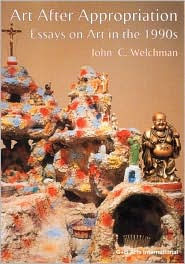
Art After Appropriation: Essays on the 1990s
Barnes and Noble
Loading Inventory...
Art After Appropriation: Essays on the 1990s in Franklin, TN
Current price: $210.00
Barnes and Noble
Art After Appropriation: Essays on the 1990s in Franklin, TN
Current price: $210.00
Loading Inventory...
Size: Hardcover
Beginning with the first comprehensive account of the discourse of appropriation that dominated the art world in the late 1970s and 1980s,
Art After Appropriation
suggests a matrix of inflections and refusals around the culture of taking or citation, each chapter loosely correlated with one year of the decade between 1989 and 1999. The opening chapters show how the Second World culture of the USSR gave rise to a new visibility for photography during the dissolution of the Soviet Union around 1989. Welchman examines how genres of ethnography, documentary and travel are crossed with fictive performance and social improvisation in the videos of Steve Fagin. He discusses how hybrid forms of subjectivity are delivered by a new critical narcissism, and how the Korean-American artist, Cody Choi converts diffident gestures of appropriation from the logic of material or stylistic annexation into continuous incorporated events.
also examines the creation of public art from covert actions and social feedback, and how bodies participate in their own appropriation.
concludes with the advent of the rainbow net, an imaginary icon that governs the spaces of interactivity, proliferation and media piracy at the end of the millennium.
John Welchman is Professor of Modern Art History, Theory and Criticism at the University of California, San Diego. He is the author of
Modernism Relocated
(1995) and
Invisible Colors
(1997); and editor of
Rethinking Borders
(1996), and a forthcoming three-volume anthology of the writings of LA artist MIke Kelley. Welchman has contributed to numerous journals, magazines, museum catalogues and newspapers, including Artforum; New York Times; Los Angeles Times; International Herald Tribune; Los Angeles County Museum of Art; Tate Gallery; Museum of Contemporary Art, Los Angeles; Reina Sofia, Madrid; Haus der Kunst, Munich
Art After Appropriation
suggests a matrix of inflections and refusals around the culture of taking or citation, each chapter loosely correlated with one year of the decade between 1989 and 1999. The opening chapters show how the Second World culture of the USSR gave rise to a new visibility for photography during the dissolution of the Soviet Union around 1989. Welchman examines how genres of ethnography, documentary and travel are crossed with fictive performance and social improvisation in the videos of Steve Fagin. He discusses how hybrid forms of subjectivity are delivered by a new critical narcissism, and how the Korean-American artist, Cody Choi converts diffident gestures of appropriation from the logic of material or stylistic annexation into continuous incorporated events.
also examines the creation of public art from covert actions and social feedback, and how bodies participate in their own appropriation.
concludes with the advent of the rainbow net, an imaginary icon that governs the spaces of interactivity, proliferation and media piracy at the end of the millennium.
John Welchman is Professor of Modern Art History, Theory and Criticism at the University of California, San Diego. He is the author of
Modernism Relocated
(1995) and
Invisible Colors
(1997); and editor of
Rethinking Borders
(1996), and a forthcoming three-volume anthology of the writings of LA artist MIke Kelley. Welchman has contributed to numerous journals, magazines, museum catalogues and newspapers, including Artforum; New York Times; Los Angeles Times; International Herald Tribune; Los Angeles County Museum of Art; Tate Gallery; Museum of Contemporary Art, Los Angeles; Reina Sofia, Madrid; Haus der Kunst, Munich
Beginning with the first comprehensive account of the discourse of appropriation that dominated the art world in the late 1970s and 1980s,
Art After Appropriation
suggests a matrix of inflections and refusals around the culture of taking or citation, each chapter loosely correlated with one year of the decade between 1989 and 1999. The opening chapters show how the Second World culture of the USSR gave rise to a new visibility for photography during the dissolution of the Soviet Union around 1989. Welchman examines how genres of ethnography, documentary and travel are crossed with fictive performance and social improvisation in the videos of Steve Fagin. He discusses how hybrid forms of subjectivity are delivered by a new critical narcissism, and how the Korean-American artist, Cody Choi converts diffident gestures of appropriation from the logic of material or stylistic annexation into continuous incorporated events.
also examines the creation of public art from covert actions and social feedback, and how bodies participate in their own appropriation.
concludes with the advent of the rainbow net, an imaginary icon that governs the spaces of interactivity, proliferation and media piracy at the end of the millennium.
John Welchman is Professor of Modern Art History, Theory and Criticism at the University of California, San Diego. He is the author of
Modernism Relocated
(1995) and
Invisible Colors
(1997); and editor of
Rethinking Borders
(1996), and a forthcoming three-volume anthology of the writings of LA artist MIke Kelley. Welchman has contributed to numerous journals, magazines, museum catalogues and newspapers, including Artforum; New York Times; Los Angeles Times; International Herald Tribune; Los Angeles County Museum of Art; Tate Gallery; Museum of Contemporary Art, Los Angeles; Reina Sofia, Madrid; Haus der Kunst, Munich
Art After Appropriation
suggests a matrix of inflections and refusals around the culture of taking or citation, each chapter loosely correlated with one year of the decade between 1989 and 1999. The opening chapters show how the Second World culture of the USSR gave rise to a new visibility for photography during the dissolution of the Soviet Union around 1989. Welchman examines how genres of ethnography, documentary and travel are crossed with fictive performance and social improvisation in the videos of Steve Fagin. He discusses how hybrid forms of subjectivity are delivered by a new critical narcissism, and how the Korean-American artist, Cody Choi converts diffident gestures of appropriation from the logic of material or stylistic annexation into continuous incorporated events.
also examines the creation of public art from covert actions and social feedback, and how bodies participate in their own appropriation.
concludes with the advent of the rainbow net, an imaginary icon that governs the spaces of interactivity, proliferation and media piracy at the end of the millennium.
John Welchman is Professor of Modern Art History, Theory and Criticism at the University of California, San Diego. He is the author of
Modernism Relocated
(1995) and
Invisible Colors
(1997); and editor of
Rethinking Borders
(1996), and a forthcoming three-volume anthology of the writings of LA artist MIke Kelley. Welchman has contributed to numerous journals, magazines, museum catalogues and newspapers, including Artforum; New York Times; Los Angeles Times; International Herald Tribune; Los Angeles County Museum of Art; Tate Gallery; Museum of Contemporary Art, Los Angeles; Reina Sofia, Madrid; Haus der Kunst, Munich
You May Also Like










More About Barnes and Noble at CoolSprings Galleria
Barnes & Noble is the world’s largest retail bookseller and a leading retailer of content, digital media and educational products. Our Nook Digital business offers a lineup of NOOK® tablets and e-Readers and an expansive collection of digital reading content through the NOOK Store®. Barnes & Noble’s mission is to operate the best omni-channel specialty retail business in America, helping both our customers and booksellers reach their aspirations, while being a credit to the communities we serve.
1800 Galleria Blvd #1310, Franklin, TN 37067, United States
Find Barnes and Noble at CoolSprings Galleria in Franklin, TN
Visit Barnes and Noble at CoolSprings Galleria in Franklin, TN
