
Home
Assemblage Theory
Barnes and Noble
Loading Inventory...
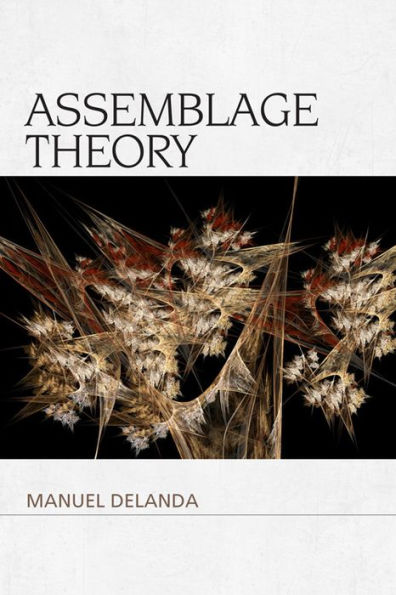
Assemblage Theory in Franklin, TN
Current price: $29.95
Barnes and Noble
Assemblage Theory in Franklin, TN
Current price: $29.95
Loading Inventory...
Size: OS
Examines the concept of an assemblage of heterogeneous components
Gilles Deleuze considered his concept of "assemblage" to be one of his most important contributions to philosophy. Yet he never developed it consistently and systematically, whether in his own books or those co-authored with Félix Guattari.
In this book Manuel DeLanda provides the first detailed overview of the assemblage theory found in germ in Deleuze and Guattari's writings. Through a series of case studies, DeLanda shows how the concept can be applied to economic, linguistic, and military history as well as to metaphysics, science, and mathematics.
DeLanda then presents the real power of assemblage theory by advancing it beyond its original formulation. This allows for the integration of communities, institutional organizations, cities, and urban regions, while challenging Marxist orthodoxy with a Leftist politics of assemblages.
Gilles Deleuze considered his concept of "assemblage" to be one of his most important contributions to philosophy. Yet he never developed it consistently and systematically, whether in his own books or those co-authored with Félix Guattari.
In this book Manuel DeLanda provides the first detailed overview of the assemblage theory found in germ in Deleuze and Guattari's writings. Through a series of case studies, DeLanda shows how the concept can be applied to economic, linguistic, and military history as well as to metaphysics, science, and mathematics.
DeLanda then presents the real power of assemblage theory by advancing it beyond its original formulation. This allows for the integration of communities, institutional organizations, cities, and urban regions, while challenging Marxist orthodoxy with a Leftist politics of assemblages.
Examines the concept of an assemblage of heterogeneous components
Gilles Deleuze considered his concept of "assemblage" to be one of his most important contributions to philosophy. Yet he never developed it consistently and systematically, whether in his own books or those co-authored with Félix Guattari.
In this book Manuel DeLanda provides the first detailed overview of the assemblage theory found in germ in Deleuze and Guattari's writings. Through a series of case studies, DeLanda shows how the concept can be applied to economic, linguistic, and military history as well as to metaphysics, science, and mathematics.
DeLanda then presents the real power of assemblage theory by advancing it beyond its original formulation. This allows for the integration of communities, institutional organizations, cities, and urban regions, while challenging Marxist orthodoxy with a Leftist politics of assemblages.
Gilles Deleuze considered his concept of "assemblage" to be one of his most important contributions to philosophy. Yet he never developed it consistently and systematically, whether in his own books or those co-authored with Félix Guattari.
In this book Manuel DeLanda provides the first detailed overview of the assemblage theory found in germ in Deleuze and Guattari's writings. Through a series of case studies, DeLanda shows how the concept can be applied to economic, linguistic, and military history as well as to metaphysics, science, and mathematics.
DeLanda then presents the real power of assemblage theory by advancing it beyond its original formulation. This allows for the integration of communities, institutional organizations, cities, and urban regions, while challenging Marxist orthodoxy with a Leftist politics of assemblages.
You May Also Like

















More About Barnes and Noble at CoolSprings Galleria
Barnes & Noble is the world’s largest retail bookseller and a leading retailer of content, digital media and educational products. Our Nook Digital business offers a lineup of NOOK® tablets and e-Readers and an expansive collection of digital reading content through the NOOK Store®. Barnes & Noble’s mission is to operate the best omni-channel specialty retail business in America, helping both our customers and booksellers reach their aspirations, while being a credit to the communities we serve.
1800 Galleria Blvd #1310, Franklin, TN 37067, United States
Find Barnes and Noble at CoolSprings Galleria in Franklin, TN
Visit Barnes and Noble at CoolSprings Galleria in Franklin, TN
