
Home
Backpropagation: Theory, Architectures, and Applications
Barnes and Noble
Loading Inventory...
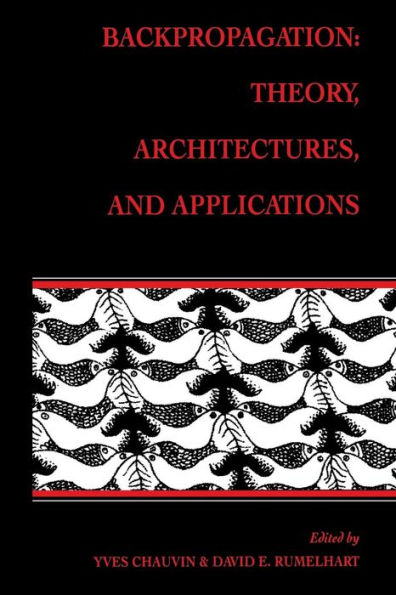
Backpropagation: Theory, Architectures, and Applications in Franklin, TN
Current price: $200.00
Barnes and Noble
Backpropagation: Theory, Architectures, and Applications in Franklin, TN
Current price: $200.00
Loading Inventory...
Size: Hardcover
Composed of three sections, this book presents the most popular training algorithm for neural networks: backpropagation. The first section presents the theory and principles behind backpropagation as seen from different perspectives such as statistics, machine learning, and dynamical systems. The second presents a number of network architectures that may be designed to match the general concepts of Parallel Distributed Processing with backpropagation learning. Finally, the third section shows how these principles can be applied to a number of different fields related to the cognitive sciences, including control, speech recognition, robotics, image processing, and cognitive psychology. The volume is designed to provide both a solid theoretical foundation and a set of examples that show the versatility of the concepts. Useful to experts in the field, it should also be most helpful to students seeking to understand the basic principles of connectionist learning and to engineers wanting to add neural networks in general and backpropagation in particular to their set of problem-solving methods.
Composed of three sections, this book presents the most popular training algorithm for neural networks: backpropagation. The first section presents the theory and principles behind backpropagation as seen from different perspectives such as statistics, machine learning, and dynamical systems. The second presents a number of network architectures that may be designed to match the general concepts of Parallel Distributed Processing with backpropagation learning. Finally, the third section shows how these principles can be applied to a number of different fields related to the cognitive sciences, including control, speech recognition, robotics, image processing, and cognitive psychology. The volume is designed to provide both a solid theoretical foundation and a set of examples that show the versatility of the concepts. Useful to experts in the field, it should also be most helpful to students seeking to understand the basic principles of connectionist learning and to engineers wanting to add neural networks in general and backpropagation in particular to their set of problem-solving methods.
You May Also Like











More About Barnes and Noble at CoolSprings Galleria
Barnes & Noble is the world’s largest retail bookseller and a leading retailer of content, digital media and educational products. Our Nook Digital business offers a lineup of NOOK® tablets and e-Readers and an expansive collection of digital reading content through the NOOK Store®. Barnes & Noble’s mission is to operate the best omni-channel specialty retail business in America, helping both our customers and booksellers reach their aspirations, while being a credit to the communities we serve.
1800 Galleria Blvd #1310, Franklin, TN 37067, United States
Find Barnes and Noble at CoolSprings Galleria in Franklin, TN
Visit Barnes and Noble at CoolSprings Galleria in Franklin, TN
