
Home
Better Sound from your Phonograph: How come? How-to!
Barnes and Noble
Loading Inventory...
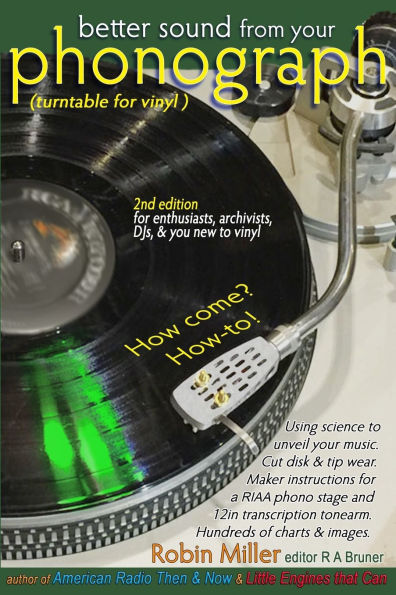
Better Sound from your Phonograph: How come? How-to! in Franklin, TN
Current price: $39.99
Barnes and Noble
Better Sound from your Phonograph: How come? How-to! in Franklin, TN
Current price: $39.99
Loading Inventory...
Size: OS
Preface 2
nd
edition: Science of "vinyl" and how-to reference
...records sound better than digital over-processing and
clipping
that breed distortion.
Level compression
empties digital's least significant bits, reducing dynamic range to 12
usable bits
(vinyl's equivalent). It gaslights shoppers to mistake immediately louder as better. Yet if you'd simply turn up play volume, recordings would be louder but also retain natural dynamics (loud v. soft), harmonic relationships (tone color,), and sound
better.
For many, over-compression artifacts are irritating. For others, artifacts are "brightness," possibly making up for deficiencies in their systems. Or the distortion becomes
habituated
, their
new normal,
though false - not
high fidelity!
Yet since the 1950s, analog vinyl still qualifies as high-fidelity.
Among many clarifications is the technical term "cutoff" in the chart on
p22
. It defines the
top
of any filter's cliff, not the bottom. Where the signal has only apparently fallen 3dB at a "cutoff frequency," f
3
. But it's not the end of the world at the bottom, down several tens of dB. For "vinyl," cutoff is the
onset of loss
of high frequencies (HF). The chart on
also speaks to the issue of vinyl v. digital. For example, a CD does not suffer in HF by end of disc - it has the same technical quality beginning to end, measurable in frequency response, distortion, and noise, the limitations of which engineers must heed mastering vinyl. Making test cuts, they check the sound with a "transparent" cartridge, finely aligned in its tonearm - the aim of this book for you
!
If trouble occurs while cutting the master, the side is scrapped and begun again. This diligence is one reason why vinyl now outsells CDs and downloads.
The new order follows the journey that begins with the engraved groove. For reader convenience, page referrals are in
green type
. Some readers may wish to save for later history stuff in
purple
, or higher-tech stuff
brown
. Some redundancy remains for readers' convenience, or for emphasis.
Again, the styli in micro-photo posters stand in for comparable products of other makers - it's not possible to include every tip by every manufacturer. They all share the science you will soon know in this book. In buying audio, seek honest specifications as cited throughout, and know how to compare.
Most digital devices are 'plug-'n-play,' but warn "No user-serviceable parts inside."
This book encourages turntable users to delve inside.
Because most anomalies can be minimized by readers, either hobbyists who like tinkering and science, or professionals who need optimal performance. By those who like music and other content on disk that will sound better after optimization. New micro-photo posters are key to choosing styli by performance and wear of your records and themselves. New context about other components in an audio system, and about who mastered the "loudest record ever recorded." For easy reading, the gnarliest math is in the footnotes. Let's turn the page...
nd
edition: Science of "vinyl" and how-to reference
...records sound better than digital over-processing and
clipping
that breed distortion.
Level compression
empties digital's least significant bits, reducing dynamic range to 12
usable bits
(vinyl's equivalent). It gaslights shoppers to mistake immediately louder as better. Yet if you'd simply turn up play volume, recordings would be louder but also retain natural dynamics (loud v. soft), harmonic relationships (tone color,), and sound
better.
For many, over-compression artifacts are irritating. For others, artifacts are "brightness," possibly making up for deficiencies in their systems. Or the distortion becomes
habituated
, their
new normal,
though false - not
high fidelity!
Yet since the 1950s, analog vinyl still qualifies as high-fidelity.
Among many clarifications is the technical term "cutoff" in the chart on
p22
. It defines the
top
of any filter's cliff, not the bottom. Where the signal has only apparently fallen 3dB at a "cutoff frequency," f
3
. But it's not the end of the world at the bottom, down several tens of dB. For "vinyl," cutoff is the
onset of loss
of high frequencies (HF). The chart on
also speaks to the issue of vinyl v. digital. For example, a CD does not suffer in HF by end of disc - it has the same technical quality beginning to end, measurable in frequency response, distortion, and noise, the limitations of which engineers must heed mastering vinyl. Making test cuts, they check the sound with a "transparent" cartridge, finely aligned in its tonearm - the aim of this book for you
!
If trouble occurs while cutting the master, the side is scrapped and begun again. This diligence is one reason why vinyl now outsells CDs and downloads.
The new order follows the journey that begins with the engraved groove. For reader convenience, page referrals are in
green type
. Some readers may wish to save for later history stuff in
purple
, or higher-tech stuff
brown
. Some redundancy remains for readers' convenience, or for emphasis.
Again, the styli in micro-photo posters stand in for comparable products of other makers - it's not possible to include every tip by every manufacturer. They all share the science you will soon know in this book. In buying audio, seek honest specifications as cited throughout, and know how to compare.
Most digital devices are 'plug-'n-play,' but warn "No user-serviceable parts inside."
This book encourages turntable users to delve inside.
Because most anomalies can be minimized by readers, either hobbyists who like tinkering and science, or professionals who need optimal performance. By those who like music and other content on disk that will sound better after optimization. New micro-photo posters are key to choosing styli by performance and wear of your records and themselves. New context about other components in an audio system, and about who mastered the "loudest record ever recorded." For easy reading, the gnarliest math is in the footnotes. Let's turn the page...
Preface 2
nd
edition: Science of "vinyl" and how-to reference
...records sound better than digital over-processing and
clipping
that breed distortion.
Level compression
empties digital's least significant bits, reducing dynamic range to 12
usable bits
(vinyl's equivalent). It gaslights shoppers to mistake immediately louder as better. Yet if you'd simply turn up play volume, recordings would be louder but also retain natural dynamics (loud v. soft), harmonic relationships (tone color,), and sound
better.
For many, over-compression artifacts are irritating. For others, artifacts are "brightness," possibly making up for deficiencies in their systems. Or the distortion becomes
habituated
, their
new normal,
though false - not
high fidelity!
Yet since the 1950s, analog vinyl still qualifies as high-fidelity.
Among many clarifications is the technical term "cutoff" in the chart on
p22
. It defines the
top
of any filter's cliff, not the bottom. Where the signal has only apparently fallen 3dB at a "cutoff frequency," f
3
. But it's not the end of the world at the bottom, down several tens of dB. For "vinyl," cutoff is the
onset of loss
of high frequencies (HF). The chart on
also speaks to the issue of vinyl v. digital. For example, a CD does not suffer in HF by end of disc - it has the same technical quality beginning to end, measurable in frequency response, distortion, and noise, the limitations of which engineers must heed mastering vinyl. Making test cuts, they check the sound with a "transparent" cartridge, finely aligned in its tonearm - the aim of this book for you
!
If trouble occurs while cutting the master, the side is scrapped and begun again. This diligence is one reason why vinyl now outsells CDs and downloads.
The new order follows the journey that begins with the engraved groove. For reader convenience, page referrals are in
green type
. Some readers may wish to save for later history stuff in
purple
, or higher-tech stuff
brown
. Some redundancy remains for readers' convenience, or for emphasis.
Again, the styli in micro-photo posters stand in for comparable products of other makers - it's not possible to include every tip by every manufacturer. They all share the science you will soon know in this book. In buying audio, seek honest specifications as cited throughout, and know how to compare.
Most digital devices are 'plug-'n-play,' but warn "No user-serviceable parts inside."
This book encourages turntable users to delve inside.
Because most anomalies can be minimized by readers, either hobbyists who like tinkering and science, or professionals who need optimal performance. By those who like music and other content on disk that will sound better after optimization. New micro-photo posters are key to choosing styli by performance and wear of your records and themselves. New context about other components in an audio system, and about who mastered the "loudest record ever recorded." For easy reading, the gnarliest math is in the footnotes. Let's turn the page...
nd
edition: Science of "vinyl" and how-to reference
...records sound better than digital over-processing and
clipping
that breed distortion.
Level compression
empties digital's least significant bits, reducing dynamic range to 12
usable bits
(vinyl's equivalent). It gaslights shoppers to mistake immediately louder as better. Yet if you'd simply turn up play volume, recordings would be louder but also retain natural dynamics (loud v. soft), harmonic relationships (tone color,), and sound
better.
For many, over-compression artifacts are irritating. For others, artifacts are "brightness," possibly making up for deficiencies in their systems. Or the distortion becomes
habituated
, their
new normal,
though false - not
high fidelity!
Yet since the 1950s, analog vinyl still qualifies as high-fidelity.
Among many clarifications is the technical term "cutoff" in the chart on
p22
. It defines the
top
of any filter's cliff, not the bottom. Where the signal has only apparently fallen 3dB at a "cutoff frequency," f
3
. But it's not the end of the world at the bottom, down several tens of dB. For "vinyl," cutoff is the
onset of loss
of high frequencies (HF). The chart on
also speaks to the issue of vinyl v. digital. For example, a CD does not suffer in HF by end of disc - it has the same technical quality beginning to end, measurable in frequency response, distortion, and noise, the limitations of which engineers must heed mastering vinyl. Making test cuts, they check the sound with a "transparent" cartridge, finely aligned in its tonearm - the aim of this book for you
!
If trouble occurs while cutting the master, the side is scrapped and begun again. This diligence is one reason why vinyl now outsells CDs and downloads.
The new order follows the journey that begins with the engraved groove. For reader convenience, page referrals are in
green type
. Some readers may wish to save for later history stuff in
purple
, or higher-tech stuff
brown
. Some redundancy remains for readers' convenience, or for emphasis.
Again, the styli in micro-photo posters stand in for comparable products of other makers - it's not possible to include every tip by every manufacturer. They all share the science you will soon know in this book. In buying audio, seek honest specifications as cited throughout, and know how to compare.
Most digital devices are 'plug-'n-play,' but warn "No user-serviceable parts inside."
This book encourages turntable users to delve inside.
Because most anomalies can be minimized by readers, either hobbyists who like tinkering and science, or professionals who need optimal performance. By those who like music and other content on disk that will sound better after optimization. New micro-photo posters are key to choosing styli by performance and wear of your records and themselves. New context about other components in an audio system, and about who mastered the "loudest record ever recorded." For easy reading, the gnarliest math is in the footnotes. Let's turn the page...
You May Also Like


















More About Barnes and Noble at CoolSprings Galleria
Barnes & Noble is the world’s largest retail bookseller and a leading retailer of content, digital media and educational products. Our Nook Digital business offers a lineup of NOOK® tablets and e-Readers and an expansive collection of digital reading content through the NOOK Store®. Barnes & Noble’s mission is to operate the best omni-channel specialty retail business in America, helping both our customers and booksellers reach their aspirations, while being a credit to the communities we serve.
1800 Galleria Blvd #1310, Franklin, TN 37067, United States
Find Barnes and Noble at CoolSprings Galleria in Franklin, TN
Visit Barnes and Noble at CoolSprings Galleria in Franklin, TN
