
Home
Bigidi mè pa tonbé! (Totter but never fall): Educational Publication Vol. 2
Barnes and Noble
Loading Inventory...
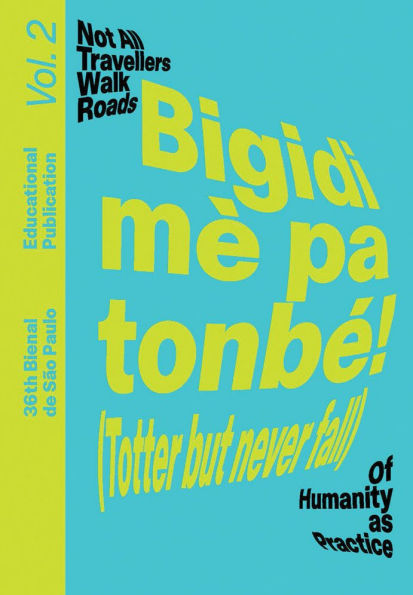
Bigidi mè pa tonbé! (Totter but never fall): Educational Publication Vol. 2 in Franklin, TN
Current price: $18.00
Barnes and Noble
Bigidi mè pa tonbé! (Totter but never fall): Educational Publication Vol. 2 in Franklin, TN
Current price: $18.00
Loading Inventory...
Size: OS
Linking dance to a life philosophy that embraces impermanence and adaptability as forms of survival and cultural resistance
This second in a series of four educational publications of the 36th Bienal de São Paulo centers on the Invocation held in Les Abymes, Guadeloupe, exploring the intelligence of bodily movements as they navigate rupture and adaptation to maintain balance amid crises. By reflecting on resilience and the dynamics of movement, this volume aims to deepen understanding of how physicality and adaptability intersect with broader cultural and social challenges. The concept stems from
bigidi
, a core element of the Guadeloupean dance
gwoka,
characterized by improvisation and alternating between moments of rupture and continuity in a constant effort to maintain balance. Léna Blou, a leading authority on this tradition, identifies
and its mode of moving as the essential nature of the Caribbean being, which, in her words, "knows how to stabilize instability and transform disharmony into harmony."
This book was published in association with Fundação Bienal de São Paulo.
This second in a series of four educational publications of the 36th Bienal de São Paulo centers on the Invocation held in Les Abymes, Guadeloupe, exploring the intelligence of bodily movements as they navigate rupture and adaptation to maintain balance amid crises. By reflecting on resilience and the dynamics of movement, this volume aims to deepen understanding of how physicality and adaptability intersect with broader cultural and social challenges. The concept stems from
bigidi
, a core element of the Guadeloupean dance
gwoka,
characterized by improvisation and alternating between moments of rupture and continuity in a constant effort to maintain balance. Léna Blou, a leading authority on this tradition, identifies
and its mode of moving as the essential nature of the Caribbean being, which, in her words, "knows how to stabilize instability and transform disharmony into harmony."
This book was published in association with Fundação Bienal de São Paulo.
Linking dance to a life philosophy that embraces impermanence and adaptability as forms of survival and cultural resistance
This second in a series of four educational publications of the 36th Bienal de São Paulo centers on the Invocation held in Les Abymes, Guadeloupe, exploring the intelligence of bodily movements as they navigate rupture and adaptation to maintain balance amid crises. By reflecting on resilience and the dynamics of movement, this volume aims to deepen understanding of how physicality and adaptability intersect with broader cultural and social challenges. The concept stems from
bigidi
, a core element of the Guadeloupean dance
gwoka,
characterized by improvisation and alternating between moments of rupture and continuity in a constant effort to maintain balance. Léna Blou, a leading authority on this tradition, identifies
and its mode of moving as the essential nature of the Caribbean being, which, in her words, "knows how to stabilize instability and transform disharmony into harmony."
This book was published in association with Fundação Bienal de São Paulo.
This second in a series of four educational publications of the 36th Bienal de São Paulo centers on the Invocation held in Les Abymes, Guadeloupe, exploring the intelligence of bodily movements as they navigate rupture and adaptation to maintain balance amid crises. By reflecting on resilience and the dynamics of movement, this volume aims to deepen understanding of how physicality and adaptability intersect with broader cultural and social challenges. The concept stems from
bigidi
, a core element of the Guadeloupean dance
gwoka,
characterized by improvisation and alternating between moments of rupture and continuity in a constant effort to maintain balance. Léna Blou, a leading authority on this tradition, identifies
and its mode of moving as the essential nature of the Caribbean being, which, in her words, "knows how to stabilize instability and transform disharmony into harmony."
This book was published in association with Fundação Bienal de São Paulo.
You May Also Like


















More About Barnes and Noble at CoolSprings Galleria
Barnes & Noble is the world’s largest retail bookseller and a leading retailer of content, digital media and educational products. Our Nook Digital business offers a lineup of NOOK® tablets and e-Readers and an expansive collection of digital reading content through the NOOK Store®. Barnes & Noble’s mission is to operate the best omni-channel specialty retail business in America, helping both our customers and booksellers reach their aspirations, while being a credit to the communities we serve.
1800 Galleria Blvd #1310, Franklin, TN 37067, United States
Find Barnes and Noble at CoolSprings Galleria in Franklin, TN
Visit Barnes and Noble at CoolSprings Galleria in Franklin, TN
