
Home
Biology and Breeding of Crucifers
Barnes and Noble
Loading Inventory...
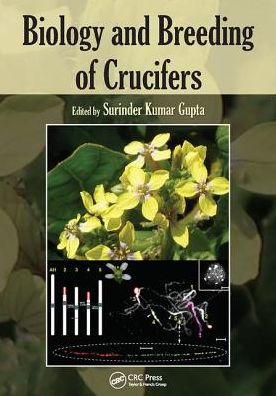
Biology and Breeding of Crucifers in Franklin, TN
Current price: $99.99
Barnes and Noble
Biology and Breeding of Crucifers in Franklin, TN
Current price: $99.99
Loading Inventory...
Size: Paperback
Considerable interest has developed in recent years in crucifers and particularly in their wild relatives, as they contain genetic material that may be utilized for further evolution of superior crop varieties through introgression and distant hybridization. Until now, there has been no single volume that focuses exclusively on the biology and breeding aspects of the wild
brassica
species. Bringing together contributions of leading international experts,
Biology and Breeding of Crucifers
provides a unique perspective on this species which is so important to research in crop genetics.
This treatise begins by exploring the systematics and phylogenies of wild crucifers. Supported by sharp close-up photos and descriptions to assist in identification of wild crucifers, the book further examines breeding methods, self-incompatibility, male sterility, germination, viability of seeds, and plant-insect interactions. Detailed accounts of comparative cytogenetics, distant hybridization, and the role of phytoalexins are also presented.
The book contains comprehensive discussions on floral variations, biotechnology, and haploidy breeding. Reflecting the concern of botanists and plant genetic engineers in enhancing rapeseed-mustard production, the contributors also examine genetic improvement of vegetable crucifers, industrial products from wild crucifers, and the preservation and maintenance of plant genetic resources.
The information contained in this text will assist researchers in developing ways to increase genetic variability among
brassicas,
improve crop productivity and quality, and adopt synergistic approaches to ensure food and nutritional security worldwide.
brassica
species. Bringing together contributions of leading international experts,
Biology and Breeding of Crucifers
provides a unique perspective on this species which is so important to research in crop genetics.
This treatise begins by exploring the systematics and phylogenies of wild crucifers. Supported by sharp close-up photos and descriptions to assist in identification of wild crucifers, the book further examines breeding methods, self-incompatibility, male sterility, germination, viability of seeds, and plant-insect interactions. Detailed accounts of comparative cytogenetics, distant hybridization, and the role of phytoalexins are also presented.
The book contains comprehensive discussions on floral variations, biotechnology, and haploidy breeding. Reflecting the concern of botanists and plant genetic engineers in enhancing rapeseed-mustard production, the contributors also examine genetic improvement of vegetable crucifers, industrial products from wild crucifers, and the preservation and maintenance of plant genetic resources.
The information contained in this text will assist researchers in developing ways to increase genetic variability among
brassicas,
improve crop productivity and quality, and adopt synergistic approaches to ensure food and nutritional security worldwide.
Considerable interest has developed in recent years in crucifers and particularly in their wild relatives, as they contain genetic material that may be utilized for further evolution of superior crop varieties through introgression and distant hybridization. Until now, there has been no single volume that focuses exclusively on the biology and breeding aspects of the wild
brassica
species. Bringing together contributions of leading international experts,
Biology and Breeding of Crucifers
provides a unique perspective on this species which is so important to research in crop genetics.
This treatise begins by exploring the systematics and phylogenies of wild crucifers. Supported by sharp close-up photos and descriptions to assist in identification of wild crucifers, the book further examines breeding methods, self-incompatibility, male sterility, germination, viability of seeds, and plant-insect interactions. Detailed accounts of comparative cytogenetics, distant hybridization, and the role of phytoalexins are also presented.
The book contains comprehensive discussions on floral variations, biotechnology, and haploidy breeding. Reflecting the concern of botanists and plant genetic engineers in enhancing rapeseed-mustard production, the contributors also examine genetic improvement of vegetable crucifers, industrial products from wild crucifers, and the preservation and maintenance of plant genetic resources.
The information contained in this text will assist researchers in developing ways to increase genetic variability among
brassicas,
improve crop productivity and quality, and adopt synergistic approaches to ensure food and nutritional security worldwide.
brassica
species. Bringing together contributions of leading international experts,
Biology and Breeding of Crucifers
provides a unique perspective on this species which is so important to research in crop genetics.
This treatise begins by exploring the systematics and phylogenies of wild crucifers. Supported by sharp close-up photos and descriptions to assist in identification of wild crucifers, the book further examines breeding methods, self-incompatibility, male sterility, germination, viability of seeds, and plant-insect interactions. Detailed accounts of comparative cytogenetics, distant hybridization, and the role of phytoalexins are also presented.
The book contains comprehensive discussions on floral variations, biotechnology, and haploidy breeding. Reflecting the concern of botanists and plant genetic engineers in enhancing rapeseed-mustard production, the contributors also examine genetic improvement of vegetable crucifers, industrial products from wild crucifers, and the preservation and maintenance of plant genetic resources.
The information contained in this text will assist researchers in developing ways to increase genetic variability among
brassicas,
improve crop productivity and quality, and adopt synergistic approaches to ensure food and nutritional security worldwide.
You May Also Like









More About Barnes and Noble at CoolSprings Galleria
Barnes & Noble is the world’s largest retail bookseller and a leading retailer of content, digital media and educational products. Our Nook Digital business offers a lineup of NOOK® tablets and e-Readers and an expansive collection of digital reading content through the NOOK Store®. Barnes & Noble’s mission is to operate the best omni-channel specialty retail business in America, helping both our customers and booksellers reach their aspirations, while being a credit to the communities we serve.
1800 Galleria Blvd #1310, Franklin, TN 37067, United States
Find Barnes and Noble at CoolSprings Galleria in Franklin, TN
Visit Barnes and Noble at CoolSprings Galleria in Franklin, TN
