
Home
Biophilic Urbanism: Designing Resilient Communities for the Future
Barnes and Noble
Loading Inventory...
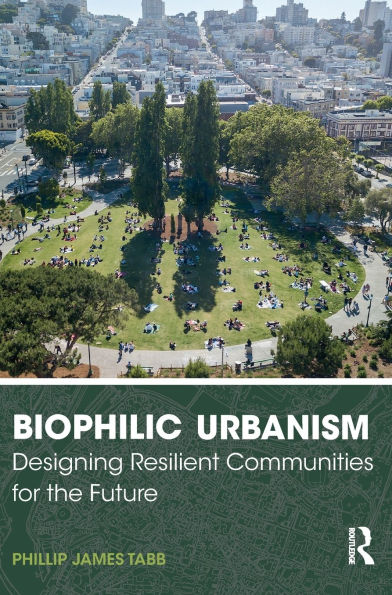
Biophilic Urbanism: Designing Resilient Communities for the Future in Franklin, TN
Current price: $190.00
Barnes and Noble
Biophilic Urbanism: Designing Resilient Communities for the Future in Franklin, TN
Current price: $190.00
Loading Inventory...
Size: Hardcover
Biophilic Urbanism
provides readers with the tools to create more nature-based urban environments that are climate positive, sustainable, and healthy. The principles of biophilia are intended to support appreciation and direct engagement with nature, to responsibly utilize on-site natural resources, and to plan according to climatic conditions and local ecological processes. It seeks to create resilient and equitable human places capable of providing critical life-support functions and a strong sense of community, and to foster experiences that raise the human spirit creating a sense of awe. Twenty-five pattern attributes are defined and explored, each of which contributes to these goals.
Because of the dire necessity to respond to the COVID-19 pandemic,
includes discussion of our need for connections, both to nature and one another, and the physical characteristics of cities and buildings relative to the contagious qualities of the air-borne virus.
Case studies, found throughout the world, are presented illustrating detailed biophilic planning and design strategies. The book will be of use to practitioners and students in the fields of natural and social sciences, behavioral science and psychology, environmental engineering, health and wellness professionals, architecture, landscape architecture, interior architecture, and planning.
provides readers with the tools to create more nature-based urban environments that are climate positive, sustainable, and healthy. The principles of biophilia are intended to support appreciation and direct engagement with nature, to responsibly utilize on-site natural resources, and to plan according to climatic conditions and local ecological processes. It seeks to create resilient and equitable human places capable of providing critical life-support functions and a strong sense of community, and to foster experiences that raise the human spirit creating a sense of awe. Twenty-five pattern attributes are defined and explored, each of which contributes to these goals.
Because of the dire necessity to respond to the COVID-19 pandemic,
includes discussion of our need for connections, both to nature and one another, and the physical characteristics of cities and buildings relative to the contagious qualities of the air-borne virus.
Case studies, found throughout the world, are presented illustrating detailed biophilic planning and design strategies. The book will be of use to practitioners and students in the fields of natural and social sciences, behavioral science and psychology, environmental engineering, health and wellness professionals, architecture, landscape architecture, interior architecture, and planning.
Biophilic Urbanism
provides readers with the tools to create more nature-based urban environments that are climate positive, sustainable, and healthy. The principles of biophilia are intended to support appreciation and direct engagement with nature, to responsibly utilize on-site natural resources, and to plan according to climatic conditions and local ecological processes. It seeks to create resilient and equitable human places capable of providing critical life-support functions and a strong sense of community, and to foster experiences that raise the human spirit creating a sense of awe. Twenty-five pattern attributes are defined and explored, each of which contributes to these goals.
Because of the dire necessity to respond to the COVID-19 pandemic,
includes discussion of our need for connections, both to nature and one another, and the physical characteristics of cities and buildings relative to the contagious qualities of the air-borne virus.
Case studies, found throughout the world, are presented illustrating detailed biophilic planning and design strategies. The book will be of use to practitioners and students in the fields of natural and social sciences, behavioral science and psychology, environmental engineering, health and wellness professionals, architecture, landscape architecture, interior architecture, and planning.
provides readers with the tools to create more nature-based urban environments that are climate positive, sustainable, and healthy. The principles of biophilia are intended to support appreciation and direct engagement with nature, to responsibly utilize on-site natural resources, and to plan according to climatic conditions and local ecological processes. It seeks to create resilient and equitable human places capable of providing critical life-support functions and a strong sense of community, and to foster experiences that raise the human spirit creating a sense of awe. Twenty-five pattern attributes are defined and explored, each of which contributes to these goals.
Because of the dire necessity to respond to the COVID-19 pandemic,
includes discussion of our need for connections, both to nature and one another, and the physical characteristics of cities and buildings relative to the contagious qualities of the air-borne virus.
Case studies, found throughout the world, are presented illustrating detailed biophilic planning and design strategies. The book will be of use to practitioners and students in the fields of natural and social sciences, behavioral science and psychology, environmental engineering, health and wellness professionals, architecture, landscape architecture, interior architecture, and planning.
You May Also Like











More About Barnes and Noble at CoolSprings Galleria
Barnes & Noble is the world’s largest retail bookseller and a leading retailer of content, digital media and educational products. Our Nook Digital business offers a lineup of NOOK® tablets and e-Readers and an expansive collection of digital reading content through the NOOK Store®. Barnes & Noble’s mission is to operate the best omni-channel specialty retail business in America, helping both our customers and booksellers reach their aspirations, while being a credit to the communities we serve.
1800 Galleria Blvd #1310, Franklin, TN 37067, United States
Find Barnes and Noble at CoolSprings Galleria in Franklin, TN
Visit Barnes and Noble at CoolSprings Galleria in Franklin, TN
