
Home
Biopolymers: Reuse, Recycling, and Disposal
Barnes and Noble
Loading Inventory...
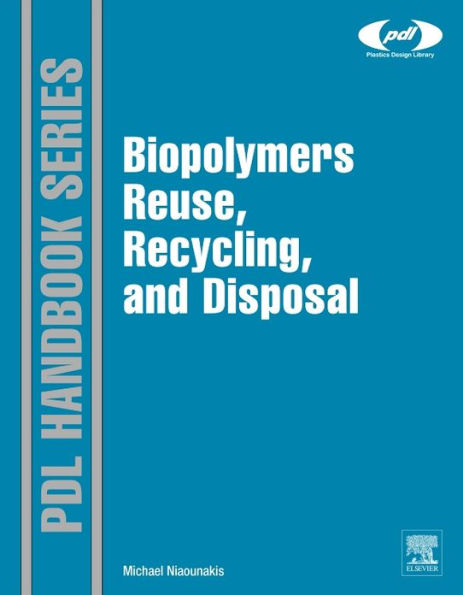
Biopolymers: Reuse, Recycling, and Disposal in Franklin, TN
Current price: $199.00
Barnes and Noble
Biopolymers: Reuse, Recycling, and Disposal in Franklin, TN
Current price: $199.00
Loading Inventory...
Size: Hardcover
Biopolymers Reuse, Recycling and Disposal
is the first book covering all aspects of biopolymer waste management and post-usage scenarios, embracing existing technologies, applications, and the behavior of biopolymers in various waste streams.
The book investigates the benefits and weaknesses, social, economic and environmental impacts, and regulatory aspects of each technology. It covers different types of recycling and degradation, as well as life cycle analysis, all supported by case studies, literature references, and detailed information about global patents. Patents in particular—comprising 80% of published technical literature in this emerging field, widely scattered, and often available in Japanese only—are a key source of information.
Dr. Niaounakis draws on disciplines such as polymer science, management, biology and microbiology, organic chemistry, environmental chemistry, and patent law to produce a reference guide for engineers, scientists and other professionals involved in the development and production of biopolymers, waste management, and recycling. This information is also valuable for regulators, patent attorneys and academics working in this field.
is the first book covering all aspects of biopolymer waste management and post-usage scenarios, embracing existing technologies, applications, and the behavior of biopolymers in various waste streams.
The book investigates the benefits and weaknesses, social, economic and environmental impacts, and regulatory aspects of each technology. It covers different types of recycling and degradation, as well as life cycle analysis, all supported by case studies, literature references, and detailed information about global patents. Patents in particular—comprising 80% of published technical literature in this emerging field, widely scattered, and often available in Japanese only—are a key source of information.
Dr. Niaounakis draws on disciplines such as polymer science, management, biology and microbiology, organic chemistry, environmental chemistry, and patent law to produce a reference guide for engineers, scientists and other professionals involved in the development and production of biopolymers, waste management, and recycling. This information is also valuable for regulators, patent attorneys and academics working in this field.
Biopolymers Reuse, Recycling and Disposal
is the first book covering all aspects of biopolymer waste management and post-usage scenarios, embracing existing technologies, applications, and the behavior of biopolymers in various waste streams.
The book investigates the benefits and weaknesses, social, economic and environmental impacts, and regulatory aspects of each technology. It covers different types of recycling and degradation, as well as life cycle analysis, all supported by case studies, literature references, and detailed information about global patents. Patents in particular—comprising 80% of published technical literature in this emerging field, widely scattered, and often available in Japanese only—are a key source of information.
Dr. Niaounakis draws on disciplines such as polymer science, management, biology and microbiology, organic chemistry, environmental chemistry, and patent law to produce a reference guide for engineers, scientists and other professionals involved in the development and production of biopolymers, waste management, and recycling. This information is also valuable for regulators, patent attorneys and academics working in this field.
is the first book covering all aspects of biopolymer waste management and post-usage scenarios, embracing existing technologies, applications, and the behavior of biopolymers in various waste streams.
The book investigates the benefits and weaknesses, social, economic and environmental impacts, and regulatory aspects of each technology. It covers different types of recycling and degradation, as well as life cycle analysis, all supported by case studies, literature references, and detailed information about global patents. Patents in particular—comprising 80% of published technical literature in this emerging field, widely scattered, and often available in Japanese only—are a key source of information.
Dr. Niaounakis draws on disciplines such as polymer science, management, biology and microbiology, organic chemistry, environmental chemistry, and patent law to produce a reference guide for engineers, scientists and other professionals involved in the development and production of biopolymers, waste management, and recycling. This information is also valuable for regulators, patent attorneys and academics working in this field.
You May Also Like








More About Barnes and Noble at CoolSprings Galleria
Barnes & Noble is the world’s largest retail bookseller and a leading retailer of content, digital media and educational products. Our Nook Digital business offers a lineup of NOOK® tablets and e-Readers and an expansive collection of digital reading content through the NOOK Store®. Barnes & Noble’s mission is to operate the best omni-channel specialty retail business in America, helping both our customers and booksellers reach their aspirations, while being a credit to the communities we serve.
1800 Galleria Blvd #1310, Franklin, TN 37067, United States
Find Barnes and Noble at CoolSprings Galleria in Franklin, TN
Visit Barnes and Noble at CoolSprings Galleria in Franklin, TN
