
Home
Black Well-Being: Health and Selfhood in Antebellum Black Literature
Barnes and Noble
Loading Inventory...
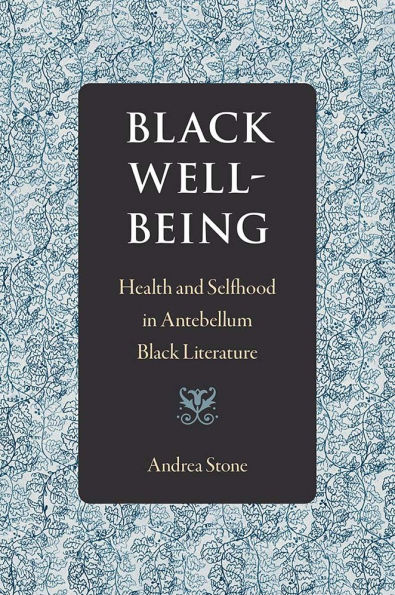
Black Well-Being: Health and Selfhood in Antebellum Black Literature in Franklin, TN
Current price: $28.00
Barnes and Noble
Black Well-Being: Health and Selfhood in Antebellum Black Literature in Franklin, TN
Current price: $28.00
Loading Inventory...
Size: OS
Canadian Association for American Studies Robert K. Martin Book Prize
Analyzing slave narratives, emigration polemics, a murder trial, and blackauthored fiction, Andrea Stone highlights the central role physical and mental health and wellbeing played in antebellum black literary constructions of selfhood. At a time when political and medical theorists emphasized black wellbeing in their arguments for or against slavery, African American men and women developed their own theories about what it means to be healthy and well in contexts of injury, illness, sexual abuse, disease, and disability.
Such portrayals of the healthy black self in early black print culture created a nineteenthcentury politics of wellbeing that spanned continents. Even in conditions of painful labor, severely limited resources, and physical and mental brutality, these writers counter stereotypes and circumstances by representing and claiming the totality of bodily existence.
Publication of the paperback edition made possible by a Sustaining the Humanities through the American Rescue Plan grant from the National Endowment for the Humanities.
Analyzing slave narratives, emigration polemics, a murder trial, and blackauthored fiction, Andrea Stone highlights the central role physical and mental health and wellbeing played in antebellum black literary constructions of selfhood. At a time when political and medical theorists emphasized black wellbeing in their arguments for or against slavery, African American men and women developed their own theories about what it means to be healthy and well in contexts of injury, illness, sexual abuse, disease, and disability.
Such portrayals of the healthy black self in early black print culture created a nineteenthcentury politics of wellbeing that spanned continents. Even in conditions of painful labor, severely limited resources, and physical and mental brutality, these writers counter stereotypes and circumstances by representing and claiming the totality of bodily existence.
Publication of the paperback edition made possible by a Sustaining the Humanities through the American Rescue Plan grant from the National Endowment for the Humanities.
Canadian Association for American Studies Robert K. Martin Book Prize
Analyzing slave narratives, emigration polemics, a murder trial, and blackauthored fiction, Andrea Stone highlights the central role physical and mental health and wellbeing played in antebellum black literary constructions of selfhood. At a time when political and medical theorists emphasized black wellbeing in their arguments for or against slavery, African American men and women developed their own theories about what it means to be healthy and well in contexts of injury, illness, sexual abuse, disease, and disability.
Such portrayals of the healthy black self in early black print culture created a nineteenthcentury politics of wellbeing that spanned continents. Even in conditions of painful labor, severely limited resources, and physical and mental brutality, these writers counter stereotypes and circumstances by representing and claiming the totality of bodily existence.
Publication of the paperback edition made possible by a Sustaining the Humanities through the American Rescue Plan grant from the National Endowment for the Humanities.
Analyzing slave narratives, emigration polemics, a murder trial, and blackauthored fiction, Andrea Stone highlights the central role physical and mental health and wellbeing played in antebellum black literary constructions of selfhood. At a time when political and medical theorists emphasized black wellbeing in their arguments for or against slavery, African American men and women developed their own theories about what it means to be healthy and well in contexts of injury, illness, sexual abuse, disease, and disability.
Such portrayals of the healthy black self in early black print culture created a nineteenthcentury politics of wellbeing that spanned continents. Even in conditions of painful labor, severely limited resources, and physical and mental brutality, these writers counter stereotypes and circumstances by representing and claiming the totality of bodily existence.
Publication of the paperback edition made possible by a Sustaining the Humanities through the American Rescue Plan grant from the National Endowment for the Humanities.
You May Also Like








More About Barnes and Noble at CoolSprings Galleria
Barnes & Noble is the world’s largest retail bookseller and a leading retailer of content, digital media and educational products. Our Nook Digital business offers a lineup of NOOK® tablets and e-Readers and an expansive collection of digital reading content through the NOOK Store®. Barnes & Noble’s mission is to operate the best omni-channel specialty retail business in America, helping both our customers and booksellers reach their aspirations, while being a credit to the communities we serve.
1800 Galleria Blvd #1310, Franklin, TN 37067, United States
Find Barnes and Noble at CoolSprings Galleria in Franklin, TN
Visit Barnes and Noble at CoolSprings Galleria in Franklin, TN