
Home
Bootlegged Aliens: Immigration Politics on America's Northern Border
Barnes and Noble
Loading Inventory...
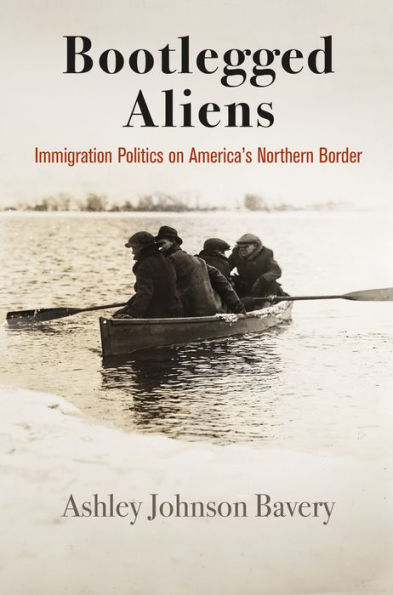
Bootlegged Aliens: Immigration Politics on America's Northern Border in Franklin, TN
Current price: $49.95
Barnes and Noble
Bootlegged Aliens: Immigration Politics on America's Northern Border in Franklin, TN
Current price: $49.95
Loading Inventory...
Size: Hardcover
In contemporary discourse, much of the discussion of U.S. border politics focuses on the Southwest. In
Bootlegged Aliens
, however, Ashley Johnson Bavery considers the North as a borderlands region, demonstrating how this often-overlooked border influenced government policies toward illegal immigration, business and labor union practices around migrant labor, and the experience of being an illegal immigrant in early twentieth-century industrial America. Bavery examines how immigrants, politicians, and employers helped shape national policies toward noncitizen laborers. In the process, she uncovers the northern industrial origins of an exploitative system that emerged on America's border with Canada, whose legacy remains central to debates about America's borders today.
Bavery begins in the 1920s to explore how that decade's immigration restrictions launched an era of policing and profiling that excluded America's foreign born from the benefits of citizenship. On the border between Detroit and Windsor, Canada, this process turned certain Europeans into undocumented immigrants, a group the press and policymakers referred to as bootlegged aliens. Over the next decade, deportation and policing practices stigmatized entire communities of ethnic Europeans regardless of their legal status. Moreover, restrictive laws allowed manufacturers to exploit workers in new ways. By the Great Depression, citizenship had become an invisible boundary that excluded hundreds of thousands of laborers from New Deal entitlements. Accepted wisdom suggests that the 1924 Immigration Act had allowed ethnic Europeans to shed ties to their homelands and assimilate into the "melting pot" of American culture by the 1930s. Bavery challenges this perspective, finding that, instead of forging a common culture with their fellow workers, European immigrants coming through Canada to Detroit faced statewide registration drives, exclusion from key labor unions, and disqualification from the Works Progress Administration, the cornerstone of America's nascent welfare state. In the heart of industrial America,
reveals, citizenship was highly contingent.
Bootlegged Aliens
, however, Ashley Johnson Bavery considers the North as a borderlands region, demonstrating how this often-overlooked border influenced government policies toward illegal immigration, business and labor union practices around migrant labor, and the experience of being an illegal immigrant in early twentieth-century industrial America. Bavery examines how immigrants, politicians, and employers helped shape national policies toward noncitizen laborers. In the process, she uncovers the northern industrial origins of an exploitative system that emerged on America's border with Canada, whose legacy remains central to debates about America's borders today.
Bavery begins in the 1920s to explore how that decade's immigration restrictions launched an era of policing and profiling that excluded America's foreign born from the benefits of citizenship. On the border between Detroit and Windsor, Canada, this process turned certain Europeans into undocumented immigrants, a group the press and policymakers referred to as bootlegged aliens. Over the next decade, deportation and policing practices stigmatized entire communities of ethnic Europeans regardless of their legal status. Moreover, restrictive laws allowed manufacturers to exploit workers in new ways. By the Great Depression, citizenship had become an invisible boundary that excluded hundreds of thousands of laborers from New Deal entitlements. Accepted wisdom suggests that the 1924 Immigration Act had allowed ethnic Europeans to shed ties to their homelands and assimilate into the "melting pot" of American culture by the 1930s. Bavery challenges this perspective, finding that, instead of forging a common culture with their fellow workers, European immigrants coming through Canada to Detroit faced statewide registration drives, exclusion from key labor unions, and disqualification from the Works Progress Administration, the cornerstone of America's nascent welfare state. In the heart of industrial America,
reveals, citizenship was highly contingent.
In contemporary discourse, much of the discussion of U.S. border politics focuses on the Southwest. In
Bootlegged Aliens
, however, Ashley Johnson Bavery considers the North as a borderlands region, demonstrating how this often-overlooked border influenced government policies toward illegal immigration, business and labor union practices around migrant labor, and the experience of being an illegal immigrant in early twentieth-century industrial America. Bavery examines how immigrants, politicians, and employers helped shape national policies toward noncitizen laborers. In the process, she uncovers the northern industrial origins of an exploitative system that emerged on America's border with Canada, whose legacy remains central to debates about America's borders today.
Bavery begins in the 1920s to explore how that decade's immigration restrictions launched an era of policing and profiling that excluded America's foreign born from the benefits of citizenship. On the border between Detroit and Windsor, Canada, this process turned certain Europeans into undocumented immigrants, a group the press and policymakers referred to as bootlegged aliens. Over the next decade, deportation and policing practices stigmatized entire communities of ethnic Europeans regardless of their legal status. Moreover, restrictive laws allowed manufacturers to exploit workers in new ways. By the Great Depression, citizenship had become an invisible boundary that excluded hundreds of thousands of laborers from New Deal entitlements. Accepted wisdom suggests that the 1924 Immigration Act had allowed ethnic Europeans to shed ties to their homelands and assimilate into the "melting pot" of American culture by the 1930s. Bavery challenges this perspective, finding that, instead of forging a common culture with their fellow workers, European immigrants coming through Canada to Detroit faced statewide registration drives, exclusion from key labor unions, and disqualification from the Works Progress Administration, the cornerstone of America's nascent welfare state. In the heart of industrial America,
reveals, citizenship was highly contingent.
Bootlegged Aliens
, however, Ashley Johnson Bavery considers the North as a borderlands region, demonstrating how this often-overlooked border influenced government policies toward illegal immigration, business and labor union practices around migrant labor, and the experience of being an illegal immigrant in early twentieth-century industrial America. Bavery examines how immigrants, politicians, and employers helped shape national policies toward noncitizen laborers. In the process, she uncovers the northern industrial origins of an exploitative system that emerged on America's border with Canada, whose legacy remains central to debates about America's borders today.
Bavery begins in the 1920s to explore how that decade's immigration restrictions launched an era of policing and profiling that excluded America's foreign born from the benefits of citizenship. On the border between Detroit and Windsor, Canada, this process turned certain Europeans into undocumented immigrants, a group the press and policymakers referred to as bootlegged aliens. Over the next decade, deportation and policing practices stigmatized entire communities of ethnic Europeans regardless of their legal status. Moreover, restrictive laws allowed manufacturers to exploit workers in new ways. By the Great Depression, citizenship had become an invisible boundary that excluded hundreds of thousands of laborers from New Deal entitlements. Accepted wisdom suggests that the 1924 Immigration Act had allowed ethnic Europeans to shed ties to their homelands and assimilate into the "melting pot" of American culture by the 1930s. Bavery challenges this perspective, finding that, instead of forging a common culture with their fellow workers, European immigrants coming through Canada to Detroit faced statewide registration drives, exclusion from key labor unions, and disqualification from the Works Progress Administration, the cornerstone of America's nascent welfare state. In the heart of industrial America,
reveals, citizenship was highly contingent.
You May Also Like










More About Barnes and Noble at CoolSprings Galleria
Barnes & Noble is the world’s largest retail bookseller and a leading retailer of content, digital media and educational products. Our Nook Digital business offers a lineup of NOOK® tablets and e-Readers and an expansive collection of digital reading content through the NOOK Store®. Barnes & Noble’s mission is to operate the best omni-channel specialty retail business in America, helping both our customers and booksellers reach their aspirations, while being a credit to the communities we serve.
1800 Galleria Blvd #1310, Franklin, TN 37067, United States
Find Barnes and Noble at CoolSprings Galleria in Franklin, TN
Visit Barnes and Noble at CoolSprings Galleria in Franklin, TN
