
Home
British Policy Towards the Indian States 1905-1939
Barnes and Noble
Loading Inventory...
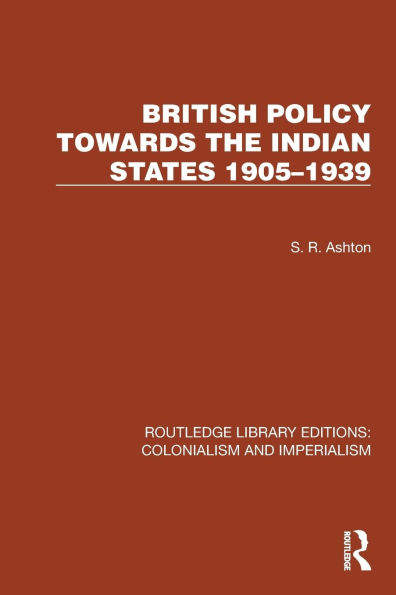
British Policy Towards the Indian States 1905-1939 in Franklin, TN
Current price: $130.00
Barnes and Noble
British Policy Towards the Indian States 1905-1939 in Franklin, TN
Current price: $130.00
Loading Inventory...
Size: Hardcover
British Policy Towards the Indian States
(1982) examines the concept of indirect rule in terms of both its application and consequences in the princely states of India during the first four decades of the twentieth century. The author first deals with the political geography and diversity of the princely states and the legacy of the Mughal emperors, and then proceeds to discuss the nature and consequences of the alliances established between the paramount power of the British Raj and the princes at the beginning of the twentieth century. The impact of the non-interference policy is assessed and a full consideration is given to the failure of that policy.
(1982) examines the concept of indirect rule in terms of both its application and consequences in the princely states of India during the first four decades of the twentieth century. The author first deals with the political geography and diversity of the princely states and the legacy of the Mughal emperors, and then proceeds to discuss the nature and consequences of the alliances established between the paramount power of the British Raj and the princes at the beginning of the twentieth century. The impact of the non-interference policy is assessed and a full consideration is given to the failure of that policy.
British Policy Towards the Indian States
(1982) examines the concept of indirect rule in terms of both its application and consequences in the princely states of India during the first four decades of the twentieth century. The author first deals with the political geography and diversity of the princely states and the legacy of the Mughal emperors, and then proceeds to discuss the nature and consequences of the alliances established between the paramount power of the British Raj and the princes at the beginning of the twentieth century. The impact of the non-interference policy is assessed and a full consideration is given to the failure of that policy.
(1982) examines the concept of indirect rule in terms of both its application and consequences in the princely states of India during the first four decades of the twentieth century. The author first deals with the political geography and diversity of the princely states and the legacy of the Mughal emperors, and then proceeds to discuss the nature and consequences of the alliances established between the paramount power of the British Raj and the princes at the beginning of the twentieth century. The impact of the non-interference policy is assessed and a full consideration is given to the failure of that policy.
You May Also Like









More About Barnes and Noble at CoolSprings Galleria
Barnes & Noble is the world’s largest retail bookseller and a leading retailer of content, digital media and educational products. Our Nook Digital business offers a lineup of NOOK® tablets and e-Readers and an expansive collection of digital reading content through the NOOK Store®. Barnes & Noble’s mission is to operate the best omni-channel specialty retail business in America, helping both our customers and booksellers reach their aspirations, while being a credit to the communities we serve.
1800 Galleria Blvd #1310, Franklin, TN 37067, United States
Find Barnes and Noble at CoolSprings Galleria in Franklin, TN
Visit Barnes and Noble at CoolSprings Galleria in Franklin, TN
