
Home
British Railways Freight Terminals Since 1960
Barnes and Noble
Loading Inventory...
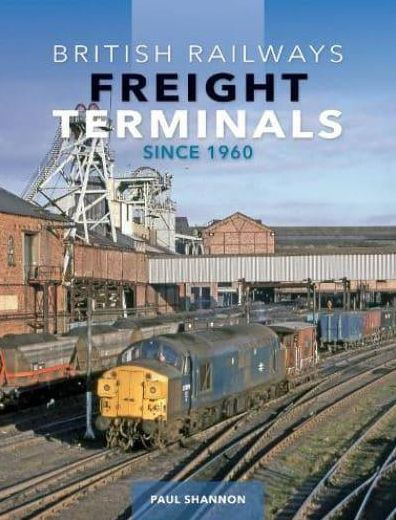
British Railways Freight Terminals Since 1960 in Franklin, TN
Current price: $29.95
Barnes and Noble
British Railways Freight Terminals Since 1960 in Franklin, TN
Current price: $29.95
Loading Inventory...
Size: OS
Arguably, since the 1920s but markedly since the 1960s, the railways have been fighting a losing battle with the road transport to retain their share of freight traffic. Gone are the days when almost every British passenger station had its own goods yard, handling all kinds of freight in wagonload quantities for distribution in the local area. That network of general freight terminals was gradually reduced and, eventually, eliminated, as the railway lost out to its main competitor, the lorry, with British Rail effectively throwing in the towel in relation to wagonload traffic with the demise of the Speedlink network in the 1990s.
At the same time, rail freight has developed new markets for heavy trainload operations. That growth has led to the setting up of specialised terminals for aggregates, cement, steel, deepsea containers and other bulk cargoes. The move from traditional wagonload traffic to lengthy and heavy block trains conveying only type of freight has been fully accomplished.
This book illustrates and describes the huge transition that has taken place across the British railway network over the last 60 years in relation to the handling of goods traffic. It provides views of longforgotten operations forming a stark contrast with the streamlined facilities of today. The book also looks at the range of traction and rollingstock which was used to handle the nation's railway freight traffic over the decades ranging from steamhauled pickup goods trains to today's uniform loads of 2,000 tonnes and more.
At the same time, rail freight has developed new markets for heavy trainload operations. That growth has led to the setting up of specialised terminals for aggregates, cement, steel, deepsea containers and other bulk cargoes. The move from traditional wagonload traffic to lengthy and heavy block trains conveying only type of freight has been fully accomplished.
This book illustrates and describes the huge transition that has taken place across the British railway network over the last 60 years in relation to the handling of goods traffic. It provides views of longforgotten operations forming a stark contrast with the streamlined facilities of today. The book also looks at the range of traction and rollingstock which was used to handle the nation's railway freight traffic over the decades ranging from steamhauled pickup goods trains to today's uniform loads of 2,000 tonnes and more.
Arguably, since the 1920s but markedly since the 1960s, the railways have been fighting a losing battle with the road transport to retain their share of freight traffic. Gone are the days when almost every British passenger station had its own goods yard, handling all kinds of freight in wagonload quantities for distribution in the local area. That network of general freight terminals was gradually reduced and, eventually, eliminated, as the railway lost out to its main competitor, the lorry, with British Rail effectively throwing in the towel in relation to wagonload traffic with the demise of the Speedlink network in the 1990s.
At the same time, rail freight has developed new markets for heavy trainload operations. That growth has led to the setting up of specialised terminals for aggregates, cement, steel, deepsea containers and other bulk cargoes. The move from traditional wagonload traffic to lengthy and heavy block trains conveying only type of freight has been fully accomplished.
This book illustrates and describes the huge transition that has taken place across the British railway network over the last 60 years in relation to the handling of goods traffic. It provides views of longforgotten operations forming a stark contrast with the streamlined facilities of today. The book also looks at the range of traction and rollingstock which was used to handle the nation's railway freight traffic over the decades ranging from steamhauled pickup goods trains to today's uniform loads of 2,000 tonnes and more.
At the same time, rail freight has developed new markets for heavy trainload operations. That growth has led to the setting up of specialised terminals for aggregates, cement, steel, deepsea containers and other bulk cargoes. The move from traditional wagonload traffic to lengthy and heavy block trains conveying only type of freight has been fully accomplished.
This book illustrates and describes the huge transition that has taken place across the British railway network over the last 60 years in relation to the handling of goods traffic. It provides views of longforgotten operations forming a stark contrast with the streamlined facilities of today. The book also looks at the range of traction and rollingstock which was used to handle the nation's railway freight traffic over the decades ranging from steamhauled pickup goods trains to today's uniform loads of 2,000 tonnes and more.
You May Also Like












More About Barnes and Noble at CoolSprings Galleria
Barnes & Noble is the world’s largest retail bookseller and a leading retailer of content, digital media and educational products. Our Nook Digital business offers a lineup of NOOK® tablets and e-Readers and an expansive collection of digital reading content through the NOOK Store®. Barnes & Noble’s mission is to operate the best omni-channel specialty retail business in America, helping both our customers and booksellers reach their aspirations, while being a credit to the communities we serve.
1800 Galleria Blvd #1310, Franklin, TN 37067, United States
Find Barnes and Noble at CoolSprings Galleria in Franklin, TN
Visit Barnes and Noble at CoolSprings Galleria in Franklin, TN
