
Home
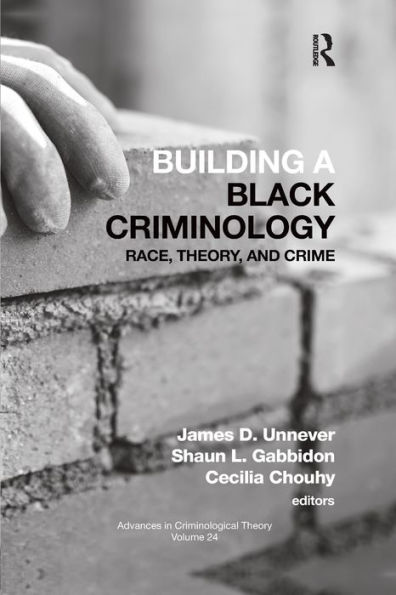
Building a Black Criminology, Volume 24: Race, Theory, and Crime
Barnes and Noble
Loading Inventory...
Building a Black Criminology, Volume 24: Race, Theory, and Crime in Franklin, TN
Current price: $54.99
Barnes and Noble
Building a Black Criminology, Volume 24: Race, Theory, and Crime in Franklin, TN
Current price: $54.99
Loading Inventory...
Size: Paperback
In light of the Black Lives Matter movement and protests in many cities, race plays an ever more salient role in crime and justice. Within theoretical criminology, however, race has oddly remained on the periphery. It is often introduced as a control variable in tests of theories and is rarely incorporated as a central construct in mainstream paradigms (e.g., control, social learning, and strain theories). When race is discussed, the standard approach is to embrace the racial invariance thesis, which argues that any racial differences in crime are due to African Americans being exposed to the same criminogenic risk factors as are Whites, just more of them. An alternative perspective has emerged that seeks to identify the unique, racially specific conditions that only Blacks experience. Within the United States, these conditions are rooted in the historical racial oppression experienced by African Americans, whose contemporary legacy includes concentrated disadvantage in segregated communities, racial socialization by parents, experiences with and perceptions of racial discrimination, and disproportionate involvement in and unjust treatment by the criminal justice system.
Importantly, racial invariance and race specificity are not mutually exclusive perspectives. Evidence exists that Blacks and Whites commit crimes for both the same reasons (invariance) and for different reasons (race-specific). A full understanding of race and crime thus must involve demarcating both the general and specific causes of crime, the latter embedded in what it means to be "Black" in the United States. This volume seeks to explore these theoretical issues in a depth and breadth that is not common under one cover. Again, given the salience of race and crime, this volume should be of interest to a wide range of criminologists and have the potential to be used in graduate seminars and upper-level undergraduate courses.
Importantly, racial invariance and race specificity are not mutually exclusive perspectives. Evidence exists that Blacks and Whites commit crimes for both the same reasons (invariance) and for different reasons (race-specific). A full understanding of race and crime thus must involve demarcating both the general and specific causes of crime, the latter embedded in what it means to be "Black" in the United States. This volume seeks to explore these theoretical issues in a depth and breadth that is not common under one cover. Again, given the salience of race and crime, this volume should be of interest to a wide range of criminologists and have the potential to be used in graduate seminars and upper-level undergraduate courses.
In light of the Black Lives Matter movement and protests in many cities, race plays an ever more salient role in crime and justice. Within theoretical criminology, however, race has oddly remained on the periphery. It is often introduced as a control variable in tests of theories and is rarely incorporated as a central construct in mainstream paradigms (e.g., control, social learning, and strain theories). When race is discussed, the standard approach is to embrace the racial invariance thesis, which argues that any racial differences in crime are due to African Americans being exposed to the same criminogenic risk factors as are Whites, just more of them. An alternative perspective has emerged that seeks to identify the unique, racially specific conditions that only Blacks experience. Within the United States, these conditions are rooted in the historical racial oppression experienced by African Americans, whose contemporary legacy includes concentrated disadvantage in segregated communities, racial socialization by parents, experiences with and perceptions of racial discrimination, and disproportionate involvement in and unjust treatment by the criminal justice system.
Importantly, racial invariance and race specificity are not mutually exclusive perspectives. Evidence exists that Blacks and Whites commit crimes for both the same reasons (invariance) and for different reasons (race-specific). A full understanding of race and crime thus must involve demarcating both the general and specific causes of crime, the latter embedded in what it means to be "Black" in the United States. This volume seeks to explore these theoretical issues in a depth and breadth that is not common under one cover. Again, given the salience of race and crime, this volume should be of interest to a wide range of criminologists and have the potential to be used in graduate seminars and upper-level undergraduate courses.
Importantly, racial invariance and race specificity are not mutually exclusive perspectives. Evidence exists that Blacks and Whites commit crimes for both the same reasons (invariance) and for different reasons (race-specific). A full understanding of race and crime thus must involve demarcating both the general and specific causes of crime, the latter embedded in what it means to be "Black" in the United States. This volume seeks to explore these theoretical issues in a depth and breadth that is not common under one cover. Again, given the salience of race and crime, this volume should be of interest to a wide range of criminologists and have the potential to be used in graduate seminars and upper-level undergraduate courses.
You May Also Like













More About Barnes and Noble at CoolSprings Galleria
Barnes & Noble is the world’s largest retail bookseller and a leading retailer of content, digital media and educational products. Our Nook Digital business offers a lineup of NOOK® tablets and e-Readers and an expansive collection of digital reading content through the NOOK Store®. Barnes & Noble’s mission is to operate the best omni-channel specialty retail business in America, helping both our customers and booksellers reach their aspirations, while being a credit to the communities we serve.
1800 Galleria Blvd #1310, Franklin, TN 37067, United States
Find Barnes and Noble at CoolSprings Galleria in Franklin, TN
Visit Barnes and Noble at CoolSprings Galleria in Franklin, TN