
Home
Building a Consensus Forecast for Crude Oil Prices
Barnes and Noble
Loading Inventory...
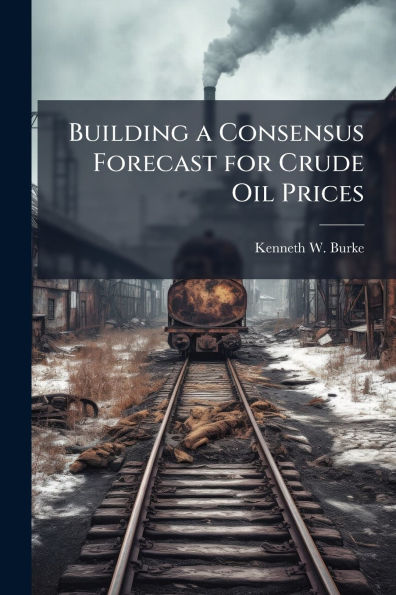
Building a Consensus Forecast for Crude Oil Prices in Franklin, TN
Current price: $29.95
Barnes and Noble
Building a Consensus Forecast for Crude Oil Prices in Franklin, TN
Current price: $29.95
Loading Inventory...
Size: Hardcover
Skyrocketing fuel prices have stressed the Department of Defense's budget in recent years. In 2001 the DoD spent $4.7 Billion on fuel with the Air Force consuming $ 2.7 Billion (GAO, 2001). These figures have grown over due to these increases as well as the increased flying ours to support the Global War On Terror. In fact, the Fiscal Year 2007 budget has already been increased by $1.1 billion, or 1% of the total budget, to accommodate the increased price of fuel (SAF/FMB, 2006). Current forecasts of this resource have yielded poor results, impairing the DoD's ability to budget this critical expense. Further because the forecast are poor, strategic hedging strategies cannot be effectively employed. Because fuel is a significant portion of aircraft operations and maintenance cost it should be considered in the acquisition of new systems, but the current forecast have not provided the accurate data required. Current forecast available to the DOD were examined, and compared to two econometric structural forecast models. The performance of these structural models was then compared to the benchmark forecasts for energy provided by the Energy Information Agency. A consensus price forecast was constructed from these alternative forecasts.
This work has been selected by scholars as being culturally important, and is part of the knowledge base of civilization as we know it. This work was reproduced from the original artifact, and remains as true to the original work as possible. Therefore, you will see the original copyright references, library stamps (as most of these works have been housed in our most important libraries around the world), and other notations in the work.
This work is in the public domain in the United States of America, and possibly other nations. Within the United States, you may freely copy and distribute this work, as no entity (individual or corporate) has a copyright on the body of the work.
As a reproduction of a historical artifact, this work may contain missing or blurred pages, poor pictures, errant marks, etc. Scholars believe, and we concur, that this work is important enough to be preserved, reproduced, and made generally available to the public. We appreciate your support of the preservation process, and thank you for being an important part of keeping this knowledge alive and relevant.
This work has been selected by scholars as being culturally important, and is part of the knowledge base of civilization as we know it. This work was reproduced from the original artifact, and remains as true to the original work as possible. Therefore, you will see the original copyright references, library stamps (as most of these works have been housed in our most important libraries around the world), and other notations in the work.
This work is in the public domain in the United States of America, and possibly other nations. Within the United States, you may freely copy and distribute this work, as no entity (individual or corporate) has a copyright on the body of the work.
As a reproduction of a historical artifact, this work may contain missing or blurred pages, poor pictures, errant marks, etc. Scholars believe, and we concur, that this work is important enough to be preserved, reproduced, and made generally available to the public. We appreciate your support of the preservation process, and thank you for being an important part of keeping this knowledge alive and relevant.
Skyrocketing fuel prices have stressed the Department of Defense's budget in recent years. In 2001 the DoD spent $4.7 Billion on fuel with the Air Force consuming $ 2.7 Billion (GAO, 2001). These figures have grown over due to these increases as well as the increased flying ours to support the Global War On Terror. In fact, the Fiscal Year 2007 budget has already been increased by $1.1 billion, or 1% of the total budget, to accommodate the increased price of fuel (SAF/FMB, 2006). Current forecasts of this resource have yielded poor results, impairing the DoD's ability to budget this critical expense. Further because the forecast are poor, strategic hedging strategies cannot be effectively employed. Because fuel is a significant portion of aircraft operations and maintenance cost it should be considered in the acquisition of new systems, but the current forecast have not provided the accurate data required. Current forecast available to the DOD were examined, and compared to two econometric structural forecast models. The performance of these structural models was then compared to the benchmark forecasts for energy provided by the Energy Information Agency. A consensus price forecast was constructed from these alternative forecasts.
This work has been selected by scholars as being culturally important, and is part of the knowledge base of civilization as we know it. This work was reproduced from the original artifact, and remains as true to the original work as possible. Therefore, you will see the original copyright references, library stamps (as most of these works have been housed in our most important libraries around the world), and other notations in the work.
This work is in the public domain in the United States of America, and possibly other nations. Within the United States, you may freely copy and distribute this work, as no entity (individual or corporate) has a copyright on the body of the work.
As a reproduction of a historical artifact, this work may contain missing or blurred pages, poor pictures, errant marks, etc. Scholars believe, and we concur, that this work is important enough to be preserved, reproduced, and made generally available to the public. We appreciate your support of the preservation process, and thank you for being an important part of keeping this knowledge alive and relevant.
This work has been selected by scholars as being culturally important, and is part of the knowledge base of civilization as we know it. This work was reproduced from the original artifact, and remains as true to the original work as possible. Therefore, you will see the original copyright references, library stamps (as most of these works have been housed in our most important libraries around the world), and other notations in the work.
This work is in the public domain in the United States of America, and possibly other nations. Within the United States, you may freely copy and distribute this work, as no entity (individual or corporate) has a copyright on the body of the work.
As a reproduction of a historical artifact, this work may contain missing or blurred pages, poor pictures, errant marks, etc. Scholars believe, and we concur, that this work is important enough to be preserved, reproduced, and made generally available to the public. We appreciate your support of the preservation process, and thank you for being an important part of keeping this knowledge alive and relevant.
You May Also Like










More About Barnes and Noble at CoolSprings Galleria
Barnes & Noble is the world’s largest retail bookseller and a leading retailer of content, digital media and educational products. Our Nook Digital business offers a lineup of NOOK® tablets and e-Readers and an expansive collection of digital reading content through the NOOK Store®. Barnes & Noble’s mission is to operate the best omni-channel specialty retail business in America, helping both our customers and booksellers reach their aspirations, while being a credit to the communities we serve.
1800 Galleria Blvd #1310, Franklin, TN 37067, United States
Find Barnes and Noble at CoolSprings Galleria in Franklin, TN
Visit Barnes and Noble at CoolSprings Galleria in Franklin, TN