
Home
By Product Synergy Analysis
Barnes and Noble
Loading Inventory...
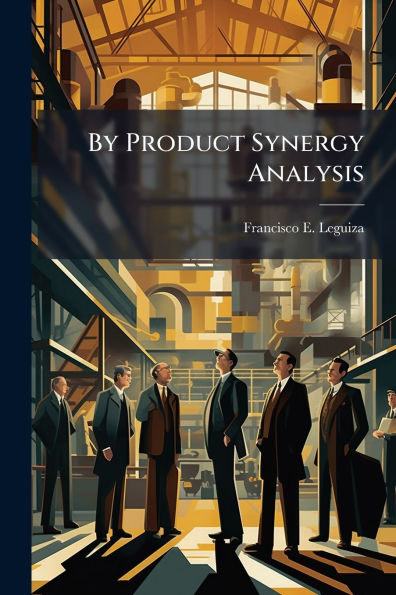
By Product Synergy Analysis in Franklin, TN
Current price: $15.95
Barnes and Noble
By Product Synergy Analysis in Franklin, TN
Current price: $15.95
Loading Inventory...
Size: OS
The United States Air Forces generates various waste during the repair and overhaul activities. These wastes can involve hazardous material. Depending on the material, technologies exist or could be readily developed to convert wastes into feed-stock for other processes The old concept of managing material from cradle-to-grave now has evolved into cradle-to-cradle. This concept goes beyond the disposal of waste and can be even more cost-effective than recycling. The objective is to generate "food" by identifying and developing other processes to use current wastes in its own production processes. By shifting from waste disposal to an endless reusing model improves cost efficiency and reduces the overall environmental impact (not limited to landfill space, water consumption and carbon footprint). This research will develop a methodology to employ state-of-the-art commercial practices to analyze depot waste production processes. The goal is to identify and classify waste generated by volume, hazard, and costs, then analyze the environmental flow by comparing government and commercial users of by-products in a synergy model. Optimal solutions for current product flow will be identified, along with potential areas for investment in by-product technologies. Solutions are mutually beneficial for both parties not only economically but also from social and environmental concerns.
This work has been selected by scholars as being culturally important, and is part of the knowledge base of civilization as we know it. This work was reproduced from the original artifact, and remains as true to the original work as possible. Therefore, you will see the original copyright references, library stamps (as most of these works have been housed in our most important libraries around the world), and other notations in the work.
This work is in the public domain in the United States of America, and possibly other nations. Within the United States, you may freely copy and distribute this work, as no entity (individual or corporate) has a copyright on the body of the work.
As a reproduction of a historical artifact, this work may contain missing or blurred pages, poor pictures, errant marks, etc. Scholars believe, and we concur, that this work is important enough to be preserved, reproduced, and made generally available to the public. We appreciate your support of the preservation process, and thank you for being an important part of keeping this knowledge alive and relevant.
This work has been selected by scholars as being culturally important, and is part of the knowledge base of civilization as we know it. This work was reproduced from the original artifact, and remains as true to the original work as possible. Therefore, you will see the original copyright references, library stamps (as most of these works have been housed in our most important libraries around the world), and other notations in the work.
This work is in the public domain in the United States of America, and possibly other nations. Within the United States, you may freely copy and distribute this work, as no entity (individual or corporate) has a copyright on the body of the work.
As a reproduction of a historical artifact, this work may contain missing or blurred pages, poor pictures, errant marks, etc. Scholars believe, and we concur, that this work is important enough to be preserved, reproduced, and made generally available to the public. We appreciate your support of the preservation process, and thank you for being an important part of keeping this knowledge alive and relevant.
The United States Air Forces generates various waste during the repair and overhaul activities. These wastes can involve hazardous material. Depending on the material, technologies exist or could be readily developed to convert wastes into feed-stock for other processes The old concept of managing material from cradle-to-grave now has evolved into cradle-to-cradle. This concept goes beyond the disposal of waste and can be even more cost-effective than recycling. The objective is to generate "food" by identifying and developing other processes to use current wastes in its own production processes. By shifting from waste disposal to an endless reusing model improves cost efficiency and reduces the overall environmental impact (not limited to landfill space, water consumption and carbon footprint). This research will develop a methodology to employ state-of-the-art commercial practices to analyze depot waste production processes. The goal is to identify and classify waste generated by volume, hazard, and costs, then analyze the environmental flow by comparing government and commercial users of by-products in a synergy model. Optimal solutions for current product flow will be identified, along with potential areas for investment in by-product technologies. Solutions are mutually beneficial for both parties not only economically but also from social and environmental concerns.
This work has been selected by scholars as being culturally important, and is part of the knowledge base of civilization as we know it. This work was reproduced from the original artifact, and remains as true to the original work as possible. Therefore, you will see the original copyright references, library stamps (as most of these works have been housed in our most important libraries around the world), and other notations in the work.
This work is in the public domain in the United States of America, and possibly other nations. Within the United States, you may freely copy and distribute this work, as no entity (individual or corporate) has a copyright on the body of the work.
As a reproduction of a historical artifact, this work may contain missing or blurred pages, poor pictures, errant marks, etc. Scholars believe, and we concur, that this work is important enough to be preserved, reproduced, and made generally available to the public. We appreciate your support of the preservation process, and thank you for being an important part of keeping this knowledge alive and relevant.
This work has been selected by scholars as being culturally important, and is part of the knowledge base of civilization as we know it. This work was reproduced from the original artifact, and remains as true to the original work as possible. Therefore, you will see the original copyright references, library stamps (as most of these works have been housed in our most important libraries around the world), and other notations in the work.
This work is in the public domain in the United States of America, and possibly other nations. Within the United States, you may freely copy and distribute this work, as no entity (individual or corporate) has a copyright on the body of the work.
As a reproduction of a historical artifact, this work may contain missing or blurred pages, poor pictures, errant marks, etc. Scholars believe, and we concur, that this work is important enough to be preserved, reproduced, and made generally available to the public. We appreciate your support of the preservation process, and thank you for being an important part of keeping this knowledge alive and relevant.
You May Also Like










More About Barnes and Noble at CoolSprings Galleria
Barnes & Noble is the world’s largest retail bookseller and a leading retailer of content, digital media and educational products. Our Nook Digital business offers a lineup of NOOK® tablets and e-Readers and an expansive collection of digital reading content through the NOOK Store®. Barnes & Noble’s mission is to operate the best omni-channel specialty retail business in America, helping both our customers and booksellers reach their aspirations, while being a credit to the communities we serve.
1800 Galleria Blvd #1310, Franklin, TN 37067, United States
Find Barnes and Noble at CoolSprings Galleria in Franklin, TN
Visit Barnes and Noble at CoolSprings Galleria in Franklin, TN
