
Home
Carbon Capture Utilization and Storage: Law, Policy Standardization Perspectives
Barnes and Noble
Loading Inventory...
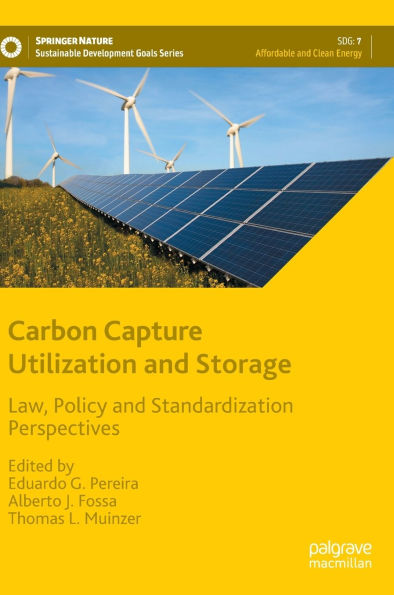
Carbon Capture Utilization and Storage: Law, Policy Standardization Perspectives in Franklin, TN
Current price: $179.99
Barnes and Noble
Carbon Capture Utilization and Storage: Law, Policy Standardization Perspectives in Franklin, TN
Current price: $179.99
Loading Inventory...
Size: Hardcover
This book delves into how carbon capture, utilization, and storage (CCUS) technologies might help accelerate the worldwide transition to sustainable energy while meeting Paris Agreement targets. This comprehensive handbook examines how governments, businesses, and society may effectively implement CCUS programs to cut carbon emissions and promote economic development.
The book begins with basic ideas and exposes readers to CCUS technologies and their critical role in reaching net-zero emissions by 2050. It investigates successful CCUS installations from various countries and suggests prospects for host governments and energy firms.
The book combines technical innovation and carbon neutrality initiatives, while also addressing regulatory frameworks and normative factors that are critical for wider acceptance. With climate change mitigation at its core, the book offers pragmatic recommendations for policymakers and industry leaders on how to employ CCUS for sustainable development, making it a valuable resource for environmental researchers, energy professionals, and policymakers working toward a low-carbon economy.
The book begins with basic ideas and exposes readers to CCUS technologies and their critical role in reaching net-zero emissions by 2050. It investigates successful CCUS installations from various countries and suggests prospects for host governments and energy firms.
The book combines technical innovation and carbon neutrality initiatives, while also addressing regulatory frameworks and normative factors that are critical for wider acceptance. With climate change mitigation at its core, the book offers pragmatic recommendations for policymakers and industry leaders on how to employ CCUS for sustainable development, making it a valuable resource for environmental researchers, energy professionals, and policymakers working toward a low-carbon economy.
This book delves into how carbon capture, utilization, and storage (CCUS) technologies might help accelerate the worldwide transition to sustainable energy while meeting Paris Agreement targets. This comprehensive handbook examines how governments, businesses, and society may effectively implement CCUS programs to cut carbon emissions and promote economic development.
The book begins with basic ideas and exposes readers to CCUS technologies and their critical role in reaching net-zero emissions by 2050. It investigates successful CCUS installations from various countries and suggests prospects for host governments and energy firms.
The book combines technical innovation and carbon neutrality initiatives, while also addressing regulatory frameworks and normative factors that are critical for wider acceptance. With climate change mitigation at its core, the book offers pragmatic recommendations for policymakers and industry leaders on how to employ CCUS for sustainable development, making it a valuable resource for environmental researchers, energy professionals, and policymakers working toward a low-carbon economy.
The book begins with basic ideas and exposes readers to CCUS technologies and their critical role in reaching net-zero emissions by 2050. It investigates successful CCUS installations from various countries and suggests prospects for host governments and energy firms.
The book combines technical innovation and carbon neutrality initiatives, while also addressing regulatory frameworks and normative factors that are critical for wider acceptance. With climate change mitigation at its core, the book offers pragmatic recommendations for policymakers and industry leaders on how to employ CCUS for sustainable development, making it a valuable resource for environmental researchers, energy professionals, and policymakers working toward a low-carbon economy.
You May Also Like









More About Barnes and Noble at CoolSprings Galleria
Barnes & Noble is the world’s largest retail bookseller and a leading retailer of content, digital media and educational products. Our Nook Digital business offers a lineup of NOOK® tablets and e-Readers and an expansive collection of digital reading content through the NOOK Store®. Barnes & Noble’s mission is to operate the best omni-channel specialty retail business in America, helping both our customers and booksellers reach their aspirations, while being a credit to the communities we serve.
1800 Galleria Blvd #1310, Franklin, TN 37067, United States
Find Barnes and Noble at CoolSprings Galleria in Franklin, TN
Visit Barnes and Noble at CoolSprings Galleria in Franklin, TN
