
Home
Charles Witt and Alabama Gibson: Pioneers of Hamilton County Tennessee
Barnes and Noble
Loading Inventory...
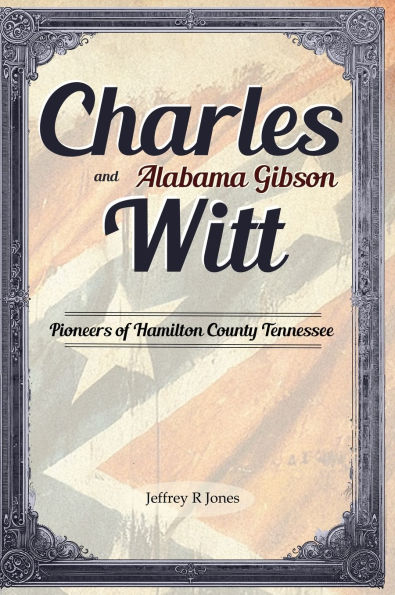
Charles Witt and Alabama Gibson: Pioneers of Hamilton County Tennessee in Franklin, TN
Current price: $35.00
Barnes and Noble
Charles Witt and Alabama Gibson: Pioneers of Hamilton County Tennessee in Franklin, TN
Current price: $35.00
Loading Inventory...
Size: OS
Charles Witt and Alabama (Gibson) Witt were among the early settlers of Hamilton County, Tennessee, shaping the region in the early 19th century. Their journey reflects the broader story of westward expansion, as they moved from Knox County to establish a homestead in what was then a frontier community. Through perseverance, they built a life that would influence generations to come.
By the time of the Civil War, the Witt family had spread far beyond Tennessee, settling in Arkansas, Georgia, Alabama, Kentucky, Missouri, and Texas. Some remained near Chattanooga, but others found themselves in distant regions with shifting loyalties. The war tore the family apart, with sons and grandsons enlisting on both sides-some fighting for the Confederacy in Tennessee cavalry regiments, while others joined Union forces in Kentucky and Missouri. The Witt family's experience embodies the "brother vs. brother" reality of the war, as close relatives unknowingly found themselves on opposite sides of battlefields across the South and Midwest.
At the heart of this division was Tennessee itself, a deeply contested border state where loyalty was shaped by geography, economic ties, and personal conviction. Several of Alabama and Charles's sons fought in key battles, including Chickamauga, Vicksburg, and Franklin. Some endured harsh conditions in prison camps, while others never returned home. The brutality of these battles meant family members may have unknowingly fought against each other. In some cases, they suffered in the same prison camps under equally dire conditions, regardless of which side they chose.
Despite the war's devastation, those who survived helped rebuild their communities, contributing to governance, commerce, and religious life in Tennessee and beyond. Some remained in the South, while others pushed further west, seeking new opportunities in Texas and Missouri. The Reconstruction era brought additional challenges, as former Confederates adjusted to military occupation and Union supporters faced resentment in their communities. For those like George Varner, a Union loyalist, their sacrifices were often ignored both by neighbors and the federal government.
This book explores these themes through historical records, military documents, and family accounts, offering a deeper understanding of frontier life, westward migration, and the Civil War's profound impact on families. It reconstructs the lives of Charles and Alabama's descendants with as much accuracy as possible, presenting the difficult realities they faced. The war shaped their futures, their movements, and their family dynamics. Some carried physical wounds, while others bore the psychological scars of choosing the wrong side in the eyes of their community.
Ultimately, the Witts' experience is a microcosm of the American experience during this turbulent period. Their story highlights deep family divisions, the resilience required to rebuild, and the lasting consequences of war. Whether they fought for the Union or the Confederacy, they all had to come to terms with the war's aftermath, forging new paths in a nation forever changed.
By the time of the Civil War, the Witt family had spread far beyond Tennessee, settling in Arkansas, Georgia, Alabama, Kentucky, Missouri, and Texas. Some remained near Chattanooga, but others found themselves in distant regions with shifting loyalties. The war tore the family apart, with sons and grandsons enlisting on both sides-some fighting for the Confederacy in Tennessee cavalry regiments, while others joined Union forces in Kentucky and Missouri. The Witt family's experience embodies the "brother vs. brother" reality of the war, as close relatives unknowingly found themselves on opposite sides of battlefields across the South and Midwest.
At the heart of this division was Tennessee itself, a deeply contested border state where loyalty was shaped by geography, economic ties, and personal conviction. Several of Alabama and Charles's sons fought in key battles, including Chickamauga, Vicksburg, and Franklin. Some endured harsh conditions in prison camps, while others never returned home. The brutality of these battles meant family members may have unknowingly fought against each other. In some cases, they suffered in the same prison camps under equally dire conditions, regardless of which side they chose.
Despite the war's devastation, those who survived helped rebuild their communities, contributing to governance, commerce, and religious life in Tennessee and beyond. Some remained in the South, while others pushed further west, seeking new opportunities in Texas and Missouri. The Reconstruction era brought additional challenges, as former Confederates adjusted to military occupation and Union supporters faced resentment in their communities. For those like George Varner, a Union loyalist, their sacrifices were often ignored both by neighbors and the federal government.
This book explores these themes through historical records, military documents, and family accounts, offering a deeper understanding of frontier life, westward migration, and the Civil War's profound impact on families. It reconstructs the lives of Charles and Alabama's descendants with as much accuracy as possible, presenting the difficult realities they faced. The war shaped their futures, their movements, and their family dynamics. Some carried physical wounds, while others bore the psychological scars of choosing the wrong side in the eyes of their community.
Ultimately, the Witts' experience is a microcosm of the American experience during this turbulent period. Their story highlights deep family divisions, the resilience required to rebuild, and the lasting consequences of war. Whether they fought for the Union or the Confederacy, they all had to come to terms with the war's aftermath, forging new paths in a nation forever changed.
Charles Witt and Alabama (Gibson) Witt were among the early settlers of Hamilton County, Tennessee, shaping the region in the early 19th century. Their journey reflects the broader story of westward expansion, as they moved from Knox County to establish a homestead in what was then a frontier community. Through perseverance, they built a life that would influence generations to come.
By the time of the Civil War, the Witt family had spread far beyond Tennessee, settling in Arkansas, Georgia, Alabama, Kentucky, Missouri, and Texas. Some remained near Chattanooga, but others found themselves in distant regions with shifting loyalties. The war tore the family apart, with sons and grandsons enlisting on both sides-some fighting for the Confederacy in Tennessee cavalry regiments, while others joined Union forces in Kentucky and Missouri. The Witt family's experience embodies the "brother vs. brother" reality of the war, as close relatives unknowingly found themselves on opposite sides of battlefields across the South and Midwest.
At the heart of this division was Tennessee itself, a deeply contested border state where loyalty was shaped by geography, economic ties, and personal conviction. Several of Alabama and Charles's sons fought in key battles, including Chickamauga, Vicksburg, and Franklin. Some endured harsh conditions in prison camps, while others never returned home. The brutality of these battles meant family members may have unknowingly fought against each other. In some cases, they suffered in the same prison camps under equally dire conditions, regardless of which side they chose.
Despite the war's devastation, those who survived helped rebuild their communities, contributing to governance, commerce, and religious life in Tennessee and beyond. Some remained in the South, while others pushed further west, seeking new opportunities in Texas and Missouri. The Reconstruction era brought additional challenges, as former Confederates adjusted to military occupation and Union supporters faced resentment in their communities. For those like George Varner, a Union loyalist, their sacrifices were often ignored both by neighbors and the federal government.
This book explores these themes through historical records, military documents, and family accounts, offering a deeper understanding of frontier life, westward migration, and the Civil War's profound impact on families. It reconstructs the lives of Charles and Alabama's descendants with as much accuracy as possible, presenting the difficult realities they faced. The war shaped their futures, their movements, and their family dynamics. Some carried physical wounds, while others bore the psychological scars of choosing the wrong side in the eyes of their community.
Ultimately, the Witts' experience is a microcosm of the American experience during this turbulent period. Their story highlights deep family divisions, the resilience required to rebuild, and the lasting consequences of war. Whether they fought for the Union or the Confederacy, they all had to come to terms with the war's aftermath, forging new paths in a nation forever changed.
By the time of the Civil War, the Witt family had spread far beyond Tennessee, settling in Arkansas, Georgia, Alabama, Kentucky, Missouri, and Texas. Some remained near Chattanooga, but others found themselves in distant regions with shifting loyalties. The war tore the family apart, with sons and grandsons enlisting on both sides-some fighting for the Confederacy in Tennessee cavalry regiments, while others joined Union forces in Kentucky and Missouri. The Witt family's experience embodies the "brother vs. brother" reality of the war, as close relatives unknowingly found themselves on opposite sides of battlefields across the South and Midwest.
At the heart of this division was Tennessee itself, a deeply contested border state where loyalty was shaped by geography, economic ties, and personal conviction. Several of Alabama and Charles's sons fought in key battles, including Chickamauga, Vicksburg, and Franklin. Some endured harsh conditions in prison camps, while others never returned home. The brutality of these battles meant family members may have unknowingly fought against each other. In some cases, they suffered in the same prison camps under equally dire conditions, regardless of which side they chose.
Despite the war's devastation, those who survived helped rebuild their communities, contributing to governance, commerce, and religious life in Tennessee and beyond. Some remained in the South, while others pushed further west, seeking new opportunities in Texas and Missouri. The Reconstruction era brought additional challenges, as former Confederates adjusted to military occupation and Union supporters faced resentment in their communities. For those like George Varner, a Union loyalist, their sacrifices were often ignored both by neighbors and the federal government.
This book explores these themes through historical records, military documents, and family accounts, offering a deeper understanding of frontier life, westward migration, and the Civil War's profound impact on families. It reconstructs the lives of Charles and Alabama's descendants with as much accuracy as possible, presenting the difficult realities they faced. The war shaped their futures, their movements, and their family dynamics. Some carried physical wounds, while others bore the psychological scars of choosing the wrong side in the eyes of their community.
Ultimately, the Witts' experience is a microcosm of the American experience during this turbulent period. Their story highlights deep family divisions, the resilience required to rebuild, and the lasting consequences of war. Whether they fought for the Union or the Confederacy, they all had to come to terms with the war's aftermath, forging new paths in a nation forever changed.
You May Also Like










More About Barnes and Noble at CoolSprings Galleria
Barnes & Noble is the world’s largest retail bookseller and a leading retailer of content, digital media and educational products. Our Nook Digital business offers a lineup of NOOK® tablets and e-Readers and an expansive collection of digital reading content through the NOOK Store®. Barnes & Noble’s mission is to operate the best omni-channel specialty retail business in America, helping both our customers and booksellers reach their aspirations, while being a credit to the communities we serve.
1800 Galleria Blvd #1310, Franklin, TN 37067, United States
Find Barnes and Noble at CoolSprings Galleria in Franklin, TN
Visit Barnes and Noble at CoolSprings Galleria in Franklin, TN
