
Home
CIA and British Mercenaries in Angola, 1975-1976: From Operation IA/FEATURE to Massacre at Maquela
Barnes and Noble
Loading Inventory...
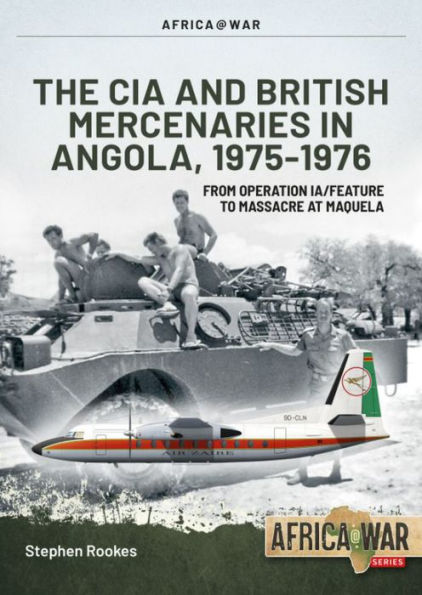
CIA and British Mercenaries in Angola, 1975-1976: From Operation IA/FEATURE to Massacre at Maquela in Franklin, TN
Current price: $29.95
Barnes and Noble
CIA and British Mercenaries in Angola, 1975-1976: From Operation IA/FEATURE to Massacre at Maquela in Franklin, TN
Current price: $29.95
Loading Inventory...
Size: OS
The 1974 Carnation Revolution came as a blessing for independence movements in Portugal's African colonies: Angola, Mozambique and Portuguese Guinea. As had been the case in a number of subSaharan countries suddenly finding themselves free of the colonial yoke, the political vacuum left behind by a previously omnipresent power gave different factions the opportunity to impose their own form of rule. Angola was no different: civil war broke out in 1975 and was to last until 2002.
In some ways the Angolan civil war bore similarities to the one which had taken place in neighboring DRC. Too much was at stake for the West not to intervene in some shape or form and in July 1975 President Ford authorized the CIA to provide covert assistance to the National Liberation Front of Angola (FNLA) and the National Union for the Total Independence of Angola (UNITA). With South Africa providing military support against a Cubanbacked Popular Movement for the Liberation of Angola (MPLA), another southwestern African nation became the battleground for a war of ideologies. In 19751976, no fewer than nine different armed forces were involved in the fighting. In addition, a large group of British mercenaries were recruited to train FNLA soldiers. The role of these soldiers of fortune would end in ignominy, death and legislative changes intended to rid mercenaries from conflict forever.
From Operation IA/FEATURE to Massacre at Maquela
examines the dynamics of the Angolan civil war and takes the reader into the inner workings of geopolitical interests, of CIA covert operations and mercenary recruitment. It examines clandestine arms and money laundering networks; takes us from the heart of the Vietnam War to Australian banks, and takes us into dealings between the US and British governments in operations far removed from, but connected to, the Angolan Civil War.
In some ways the Angolan civil war bore similarities to the one which had taken place in neighboring DRC. Too much was at stake for the West not to intervene in some shape or form and in July 1975 President Ford authorized the CIA to provide covert assistance to the National Liberation Front of Angola (FNLA) and the National Union for the Total Independence of Angola (UNITA). With South Africa providing military support against a Cubanbacked Popular Movement for the Liberation of Angola (MPLA), another southwestern African nation became the battleground for a war of ideologies. In 19751976, no fewer than nine different armed forces were involved in the fighting. In addition, a large group of British mercenaries were recruited to train FNLA soldiers. The role of these soldiers of fortune would end in ignominy, death and legislative changes intended to rid mercenaries from conflict forever.
From Operation IA/FEATURE to Massacre at Maquela
examines the dynamics of the Angolan civil war and takes the reader into the inner workings of geopolitical interests, of CIA covert operations and mercenary recruitment. It examines clandestine arms and money laundering networks; takes us from the heart of the Vietnam War to Australian banks, and takes us into dealings between the US and British governments in operations far removed from, but connected to, the Angolan Civil War.
The 1974 Carnation Revolution came as a blessing for independence movements in Portugal's African colonies: Angola, Mozambique and Portuguese Guinea. As had been the case in a number of subSaharan countries suddenly finding themselves free of the colonial yoke, the political vacuum left behind by a previously omnipresent power gave different factions the opportunity to impose their own form of rule. Angola was no different: civil war broke out in 1975 and was to last until 2002.
In some ways the Angolan civil war bore similarities to the one which had taken place in neighboring DRC. Too much was at stake for the West not to intervene in some shape or form and in July 1975 President Ford authorized the CIA to provide covert assistance to the National Liberation Front of Angola (FNLA) and the National Union for the Total Independence of Angola (UNITA). With South Africa providing military support against a Cubanbacked Popular Movement for the Liberation of Angola (MPLA), another southwestern African nation became the battleground for a war of ideologies. In 19751976, no fewer than nine different armed forces were involved in the fighting. In addition, a large group of British mercenaries were recruited to train FNLA soldiers. The role of these soldiers of fortune would end in ignominy, death and legislative changes intended to rid mercenaries from conflict forever.
From Operation IA/FEATURE to Massacre at Maquela
examines the dynamics of the Angolan civil war and takes the reader into the inner workings of geopolitical interests, of CIA covert operations and mercenary recruitment. It examines clandestine arms and money laundering networks; takes us from the heart of the Vietnam War to Australian banks, and takes us into dealings between the US and British governments in operations far removed from, but connected to, the Angolan Civil War.
In some ways the Angolan civil war bore similarities to the one which had taken place in neighboring DRC. Too much was at stake for the West not to intervene in some shape or form and in July 1975 President Ford authorized the CIA to provide covert assistance to the National Liberation Front of Angola (FNLA) and the National Union for the Total Independence of Angola (UNITA). With South Africa providing military support against a Cubanbacked Popular Movement for the Liberation of Angola (MPLA), another southwestern African nation became the battleground for a war of ideologies. In 19751976, no fewer than nine different armed forces were involved in the fighting. In addition, a large group of British mercenaries were recruited to train FNLA soldiers. The role of these soldiers of fortune would end in ignominy, death and legislative changes intended to rid mercenaries from conflict forever.
From Operation IA/FEATURE to Massacre at Maquela
examines the dynamics of the Angolan civil war and takes the reader into the inner workings of geopolitical interests, of CIA covert operations and mercenary recruitment. It examines clandestine arms and money laundering networks; takes us from the heart of the Vietnam War to Australian banks, and takes us into dealings between the US and British governments in operations far removed from, but connected to, the Angolan Civil War.
You May Also Like





![One Step From The Blues [Blue Vinyl] [Barnes & Noble Exclusive]](https://prodimage.images-bn.com/pimages/0888072643321_p0_v1_s600x595.jpg)








More About Barnes and Noble at CoolSprings Galleria
Barnes & Noble is the world’s largest retail bookseller and a leading retailer of content, digital media and educational products. Our Nook Digital business offers a lineup of NOOK® tablets and e-Readers and an expansive collection of digital reading content through the NOOK Store®. Barnes & Noble’s mission is to operate the best omni-channel specialty retail business in America, helping both our customers and booksellers reach their aspirations, while being a credit to the communities we serve.
1800 Galleria Blvd #1310, Franklin, TN 37067, United States
Find Barnes and Noble at CoolSprings Galleria in Franklin, TN
Visit Barnes and Noble at CoolSprings Galleria in Franklin, TN
