
Home
Clever Girls: Autoethnographies of Class, Gender and Ethnicity
Barnes and Noble
Loading Inventory...
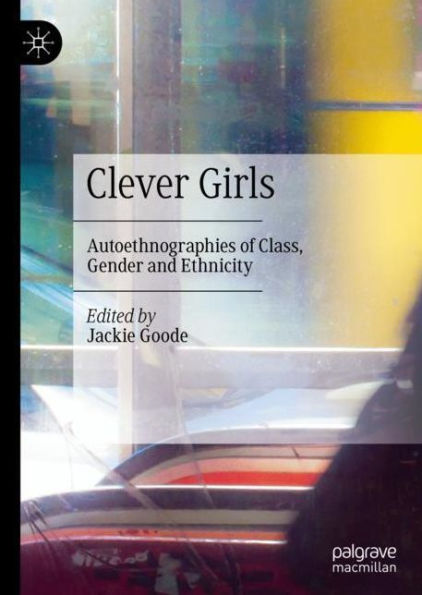
Clever Girls: Autoethnographies of Class, Gender and Ethnicity in Franklin, TN
Current price: $119.99
Barnes and Noble
Clever Girls: Autoethnographies of Class, Gender and Ethnicity in Franklin, TN
Current price: $119.99
Loading Inventory...
Size: Hardcover
Winner of the Working-Class Studies Association's "Jake Ryan and Charles Sackrey Award for a Book about the Working-Class Academic Experience"
This collection by three generations of women from predominantly working-class backgrounds explores the production of the classed, gendered and racialized subject with powerful, engaging, funny and moving stories of transitions through family relationships, education, friendships and work. The developments that take place across a life in processes of ‘becoming’ are examined through the fifteen autoethnographies that form the core of the book, set within an elaboration of the social, educational and geo-political developments that constitute the backdrop to contributors’ lives.
Clever Girls
discusses the status of personal experience as ‘research data’ and the memory work that goes into the making of autoethnography-as-poiesis. The collection illustrates the huge potential of autoethnography as research method, mode of inquiry and creative practice to illuminate the specificities and commonalities of experiences of growing up as ‘clever girls’ and to sound a ‘call to action’ against inequality and discrimination.
This collection by three generations of women from predominantly working-class backgrounds explores the production of the classed, gendered and racialized subject with powerful, engaging, funny and moving stories of transitions through family relationships, education, friendships and work. The developments that take place across a life in processes of ‘becoming’ are examined through the fifteen autoethnographies that form the core of the book, set within an elaboration of the social, educational and geo-political developments that constitute the backdrop to contributors’ lives.
Clever Girls
discusses the status of personal experience as ‘research data’ and the memory work that goes into the making of autoethnography-as-poiesis. The collection illustrates the huge potential of autoethnography as research method, mode of inquiry and creative practice to illuminate the specificities and commonalities of experiences of growing up as ‘clever girls’ and to sound a ‘call to action’ against inequality and discrimination.
Winner of the Working-Class Studies Association's "Jake Ryan and Charles Sackrey Award for a Book about the Working-Class Academic Experience"
This collection by three generations of women from predominantly working-class backgrounds explores the production of the classed, gendered and racialized subject with powerful, engaging, funny and moving stories of transitions through family relationships, education, friendships and work. The developments that take place across a life in processes of ‘becoming’ are examined through the fifteen autoethnographies that form the core of the book, set within an elaboration of the social, educational and geo-political developments that constitute the backdrop to contributors’ lives.
Clever Girls
discusses the status of personal experience as ‘research data’ and the memory work that goes into the making of autoethnography-as-poiesis. The collection illustrates the huge potential of autoethnography as research method, mode of inquiry and creative practice to illuminate the specificities and commonalities of experiences of growing up as ‘clever girls’ and to sound a ‘call to action’ against inequality and discrimination.
This collection by three generations of women from predominantly working-class backgrounds explores the production of the classed, gendered and racialized subject with powerful, engaging, funny and moving stories of transitions through family relationships, education, friendships and work. The developments that take place across a life in processes of ‘becoming’ are examined through the fifteen autoethnographies that form the core of the book, set within an elaboration of the social, educational and geo-political developments that constitute the backdrop to contributors’ lives.
Clever Girls
discusses the status of personal experience as ‘research data’ and the memory work that goes into the making of autoethnography-as-poiesis. The collection illustrates the huge potential of autoethnography as research method, mode of inquiry and creative practice to illuminate the specificities and commonalities of experiences of growing up as ‘clever girls’ and to sound a ‘call to action’ against inequality and discrimination.
You May Also Like











More About Barnes and Noble at CoolSprings Galleria
Barnes & Noble is the world’s largest retail bookseller and a leading retailer of content, digital media and educational products. Our Nook Digital business offers a lineup of NOOK® tablets and e-Readers and an expansive collection of digital reading content through the NOOK Store®. Barnes & Noble’s mission is to operate the best omni-channel specialty retail business in America, helping both our customers and booksellers reach their aspirations, while being a credit to the communities we serve.
1800 Galleria Blvd #1310, Franklin, TN 37067, United States
Find Barnes and Noble at CoolSprings Galleria in Franklin, TN
Visit Barnes and Noble at CoolSprings Galleria in Franklin, TN
