
Home
Cold War Correspondents: Soviet and American Reporters on the Ideological Frontlines
Barnes and Noble
Loading Inventory...
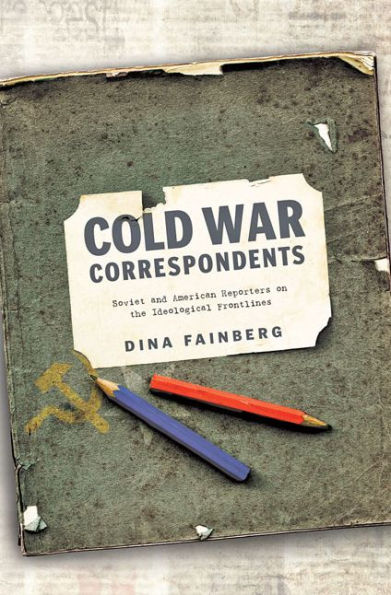
Cold War Correspondents: Soviet and American Reporters on the Ideological Frontlines in Franklin, TN
Current price: $67.95
Barnes and Noble
Cold War Correspondents: Soviet and American Reporters on the Ideological Frontlines in Franklin, TN
Current price: $67.95
Loading Inventory...
Size: Hardcover
Foreign correspondents played a crucial role in promoting the ideas and values of the Cold War. As they brought the foreign world to their Soviet and American readers, these journalists projected their own ideologies onto their reporting.
In an age of mutual acrimony and closed borders, journalists were among the few individuals who crossed the Iron Curtain. Their reporting strongly influenced the ways that policy makers, pundits, and ordinary people came to understand the American or the Soviet "other." In
Cold War Correspondents
, Dina Fainberg examines how Soviet and American journalists covered the rival superpower and how two distinctive sets of truth systems, professional practices, and political cultures shaped international reporting.
Fainberg explores private and public interactions among multiple groups that shaped coverage of the Cold War adversary, including journalists and their sources, editors, news media executives, government officials, diplomats, American pundits, Soviet censors, and audiences on both sides. Foreign correspondents, Fainberg argues, were keen analytical observers who aspired to understand their host country and probe its depths. At the same time, they were fundamentally shaped by their cultural and institutional backgrounds—to the point that their views of the rival superpower were refracted through values of their own culture. International reporting grounded and personalized the differences between the two nations, describing the other side in readily recognizable, self-referential terms.
Fundamentally, Fainberg demonstrates, Americans and Soviets during the Cold War came to understand themselves through the creation of images of each other. Drawing on interviews with veteran journalists and Soviet dissidents,
also uses previously unexamined Soviet and US government records, newspaper and news agency archives, rare Soviet cartoons, and individual correspondents' personal papers, letters, diaries, books, and articles. Striking black-and-white photos depict foreign correspondents in action. Taken together, these sources illuminate a rich history of private and professional lives at the heart of the superpower conflict.
In an age of mutual acrimony and closed borders, journalists were among the few individuals who crossed the Iron Curtain. Their reporting strongly influenced the ways that policy makers, pundits, and ordinary people came to understand the American or the Soviet "other." In
Cold War Correspondents
, Dina Fainberg examines how Soviet and American journalists covered the rival superpower and how two distinctive sets of truth systems, professional practices, and political cultures shaped international reporting.
Fainberg explores private and public interactions among multiple groups that shaped coverage of the Cold War adversary, including journalists and their sources, editors, news media executives, government officials, diplomats, American pundits, Soviet censors, and audiences on both sides. Foreign correspondents, Fainberg argues, were keen analytical observers who aspired to understand their host country and probe its depths. At the same time, they were fundamentally shaped by their cultural and institutional backgrounds—to the point that their views of the rival superpower were refracted through values of their own culture. International reporting grounded and personalized the differences between the two nations, describing the other side in readily recognizable, self-referential terms.
Fundamentally, Fainberg demonstrates, Americans and Soviets during the Cold War came to understand themselves through the creation of images of each other. Drawing on interviews with veteran journalists and Soviet dissidents,
also uses previously unexamined Soviet and US government records, newspaper and news agency archives, rare Soviet cartoons, and individual correspondents' personal papers, letters, diaries, books, and articles. Striking black-and-white photos depict foreign correspondents in action. Taken together, these sources illuminate a rich history of private and professional lives at the heart of the superpower conflict.
Foreign correspondents played a crucial role in promoting the ideas and values of the Cold War. As they brought the foreign world to their Soviet and American readers, these journalists projected their own ideologies onto their reporting.
In an age of mutual acrimony and closed borders, journalists were among the few individuals who crossed the Iron Curtain. Their reporting strongly influenced the ways that policy makers, pundits, and ordinary people came to understand the American or the Soviet "other." In
Cold War Correspondents
, Dina Fainberg examines how Soviet and American journalists covered the rival superpower and how two distinctive sets of truth systems, professional practices, and political cultures shaped international reporting.
Fainberg explores private and public interactions among multiple groups that shaped coverage of the Cold War adversary, including journalists and their sources, editors, news media executives, government officials, diplomats, American pundits, Soviet censors, and audiences on both sides. Foreign correspondents, Fainberg argues, were keen analytical observers who aspired to understand their host country and probe its depths. At the same time, they were fundamentally shaped by their cultural and institutional backgrounds—to the point that their views of the rival superpower were refracted through values of their own culture. International reporting grounded and personalized the differences between the two nations, describing the other side in readily recognizable, self-referential terms.
Fundamentally, Fainberg demonstrates, Americans and Soviets during the Cold War came to understand themselves through the creation of images of each other. Drawing on interviews with veteran journalists and Soviet dissidents,
also uses previously unexamined Soviet and US government records, newspaper and news agency archives, rare Soviet cartoons, and individual correspondents' personal papers, letters, diaries, books, and articles. Striking black-and-white photos depict foreign correspondents in action. Taken together, these sources illuminate a rich history of private and professional lives at the heart of the superpower conflict.
In an age of mutual acrimony and closed borders, journalists were among the few individuals who crossed the Iron Curtain. Their reporting strongly influenced the ways that policy makers, pundits, and ordinary people came to understand the American or the Soviet "other." In
Cold War Correspondents
, Dina Fainberg examines how Soviet and American journalists covered the rival superpower and how two distinctive sets of truth systems, professional practices, and political cultures shaped international reporting.
Fainberg explores private and public interactions among multiple groups that shaped coverage of the Cold War adversary, including journalists and their sources, editors, news media executives, government officials, diplomats, American pundits, Soviet censors, and audiences on both sides. Foreign correspondents, Fainberg argues, were keen analytical observers who aspired to understand their host country and probe its depths. At the same time, they were fundamentally shaped by their cultural and institutional backgrounds—to the point that their views of the rival superpower were refracted through values of their own culture. International reporting grounded and personalized the differences between the two nations, describing the other side in readily recognizable, self-referential terms.
Fundamentally, Fainberg demonstrates, Americans and Soviets during the Cold War came to understand themselves through the creation of images of each other. Drawing on interviews with veteran journalists and Soviet dissidents,
also uses previously unexamined Soviet and US government records, newspaper and news agency archives, rare Soviet cartoons, and individual correspondents' personal papers, letters, diaries, books, and articles. Striking black-and-white photos depict foreign correspondents in action. Taken together, these sources illuminate a rich history of private and professional lives at the heart of the superpower conflict.
You May Also Like








More About Barnes and Noble at CoolSprings Galleria
Barnes & Noble is the world’s largest retail bookseller and a leading retailer of content, digital media and educational products. Our Nook Digital business offers a lineup of NOOK® tablets and e-Readers and an expansive collection of digital reading content through the NOOK Store®. Barnes & Noble’s mission is to operate the best omni-channel specialty retail business in America, helping both our customers and booksellers reach their aspirations, while being a credit to the communities we serve.
1800 Galleria Blvd #1310, Franklin, TN 37067, United States
Find Barnes and Noble at CoolSprings Galleria in Franklin, TN
Visit Barnes and Noble at CoolSprings Galleria in Franklin, TN