
Home
Competition Second Language Classrooms: Causes, Consequences, and Implications
Barnes and Noble
Loading Inventory...
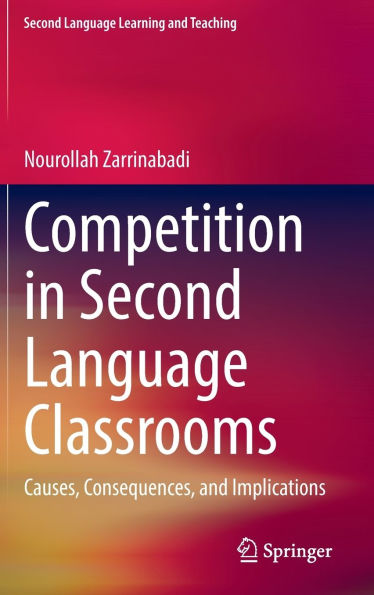
Competition Second Language Classrooms: Causes, Consequences, and Implications in Franklin, TN
Current price: $169.99
Barnes and Noble
Competition Second Language Classrooms: Causes, Consequences, and Implications in Franklin, TN
Current price: $169.99
Loading Inventory...
Size: Hardcover
This book offers an in-depth exploration of the causes and consequences of competition among language learners, with a particular focus on understanding the intricate relationships between competitiveness, beliefs about competition, and other psychological variables pertinent to language learning, such as motivation, anxiety, and mindsets. The initial chapters provide a comprehensive review of various competition theories and the latest empirical research on competition across diverse domains, including education and the workplace. Subsequently, the book qualitatively investigates the linguistic, psychological, educational, cultural, and contextual factors that contribute to competition in English language classrooms. It also delves into the potential psychological, educational, and personal outcomes of such competition in second language (L2) learning environments. Furthermore, this monograph scrutinizes the interplay between competition-related variables and the motivational and emotional dimensions of L2 learning. In its concluding sections, the book offers practical insights for language educators, guiding them on how to effectively manage competition among students to mitigate its adverse effects while leveraging its potential to enhance language learning and development.
This book offers an in-depth exploration of the causes and consequences of competition among language learners, with a particular focus on understanding the intricate relationships between competitiveness, beliefs about competition, and other psychological variables pertinent to language learning, such as motivation, anxiety, and mindsets. The initial chapters provide a comprehensive review of various competition theories and the latest empirical research on competition across diverse domains, including education and the workplace. Subsequently, the book qualitatively investigates the linguistic, psychological, educational, cultural, and contextual factors that contribute to competition in English language classrooms. It also delves into the potential psychological, educational, and personal outcomes of such competition in second language (L2) learning environments. Furthermore, this monograph scrutinizes the interplay between competition-related variables and the motivational and emotional dimensions of L2 learning. In its concluding sections, the book offers practical insights for language educators, guiding them on how to effectively manage competition among students to mitigate its adverse effects while leveraging its potential to enhance language learning and development.
You May Also Like
















More About Barnes and Noble at CoolSprings Galleria
Barnes & Noble is the world’s largest retail bookseller and a leading retailer of content, digital media and educational products. Our Nook Digital business offers a lineup of NOOK® tablets and e-Readers and an expansive collection of digital reading content through the NOOK Store®. Barnes & Noble’s mission is to operate the best omni-channel specialty retail business in America, helping both our customers and booksellers reach their aspirations, while being a credit to the communities we serve.
1800 Galleria Blvd #1310, Franklin, TN 37067, United States
Find Barnes and Noble at CoolSprings Galleria in Franklin, TN
Visit Barnes and Noble at CoolSprings Galleria in Franklin, TN
