
Home
Compressive Sensing for Urban Radar
Barnes and Noble
Loading Inventory...
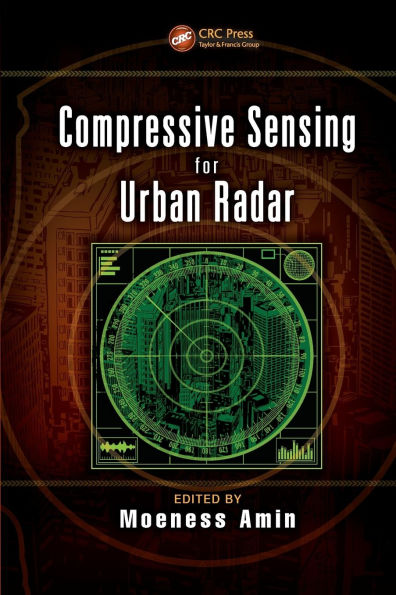
Compressive Sensing for Urban Radar in Franklin, TN
Current price: $270.00
Barnes and Noble
Compressive Sensing for Urban Radar in Franklin, TN
Current price: $270.00
Loading Inventory...
Size: Hardcover
With the emergence of compressive sensing and sparse signal reconstruction, approaches to urban radar have shifted toward relaxed constraints on signal sampling schemes in time and space, and to effectively address logistic difficulties in data acquisition. Traditionally, these challenges have hindered high resolution imaging by restricting both bandwidth and aperture, and by imposing uniformity and bounds on sampling rates.
Compressive Sensing for Urban Radar is the first book to focus on a hybrid of two key areas: compressive sensing and urban sensing. It explains how reliable imaging, tracking, and localization of indoor targets can be achieved using compressed observations that amount to a tiny percentage of the entire data volume. Capturing the latest and most important advances in the field, this state-of-the-art text:
Covers both ground-based and airborne synthetic aperture radar (SAR) and uses different signal waveforms
Demonstrates successful applications of compressive sensing for target detection and revealing building interiors
Describes problems facing urban radar and highlights sparse reconstruction techniques applicable to urban environments
Deals with both stationary and moving indoor targets in the presence of wall clutter and multipath exploitation
Provides numerous supporting examples using real data and computational electromagnetic modeling
Featuring 13 chapters written by leading researchers and experts,
Compressive Sensing for Urban Radar
is a useful and authoritative reference for radar engineers and defense contractors, as well as a seminal work for graduate students and academia.
Compressive Sensing for Urban Radar is the first book to focus on a hybrid of two key areas: compressive sensing and urban sensing. It explains how reliable imaging, tracking, and localization of indoor targets can be achieved using compressed observations that amount to a tiny percentage of the entire data volume. Capturing the latest and most important advances in the field, this state-of-the-art text:
Covers both ground-based and airborne synthetic aperture radar (SAR) and uses different signal waveforms
Demonstrates successful applications of compressive sensing for target detection and revealing building interiors
Describes problems facing urban radar and highlights sparse reconstruction techniques applicable to urban environments
Deals with both stationary and moving indoor targets in the presence of wall clutter and multipath exploitation
Provides numerous supporting examples using real data and computational electromagnetic modeling
Featuring 13 chapters written by leading researchers and experts,
Compressive Sensing for Urban Radar
is a useful and authoritative reference for radar engineers and defense contractors, as well as a seminal work for graduate students and academia.
With the emergence of compressive sensing and sparse signal reconstruction, approaches to urban radar have shifted toward relaxed constraints on signal sampling schemes in time and space, and to effectively address logistic difficulties in data acquisition. Traditionally, these challenges have hindered high resolution imaging by restricting both bandwidth and aperture, and by imposing uniformity and bounds on sampling rates.
Compressive Sensing for Urban Radar is the first book to focus on a hybrid of two key areas: compressive sensing and urban sensing. It explains how reliable imaging, tracking, and localization of indoor targets can be achieved using compressed observations that amount to a tiny percentage of the entire data volume. Capturing the latest and most important advances in the field, this state-of-the-art text:
Covers both ground-based and airborne synthetic aperture radar (SAR) and uses different signal waveforms
Demonstrates successful applications of compressive sensing for target detection and revealing building interiors
Describes problems facing urban radar and highlights sparse reconstruction techniques applicable to urban environments
Deals with both stationary and moving indoor targets in the presence of wall clutter and multipath exploitation
Provides numerous supporting examples using real data and computational electromagnetic modeling
Featuring 13 chapters written by leading researchers and experts,
Compressive Sensing for Urban Radar
is a useful and authoritative reference for radar engineers and defense contractors, as well as a seminal work for graduate students and academia.
Compressive Sensing for Urban Radar is the first book to focus on a hybrid of two key areas: compressive sensing and urban sensing. It explains how reliable imaging, tracking, and localization of indoor targets can be achieved using compressed observations that amount to a tiny percentage of the entire data volume. Capturing the latest and most important advances in the field, this state-of-the-art text:
Covers both ground-based and airborne synthetic aperture radar (SAR) and uses different signal waveforms
Demonstrates successful applications of compressive sensing for target detection and revealing building interiors
Describes problems facing urban radar and highlights sparse reconstruction techniques applicable to urban environments
Deals with both stationary and moving indoor targets in the presence of wall clutter and multipath exploitation
Provides numerous supporting examples using real data and computational electromagnetic modeling
Featuring 13 chapters written by leading researchers and experts,
Compressive Sensing for Urban Radar
is a useful and authoritative reference for radar engineers and defense contractors, as well as a seminal work for graduate students and academia.
You May Also Like











More About Barnes and Noble at CoolSprings Galleria
Barnes & Noble is the world’s largest retail bookseller and a leading retailer of content, digital media and educational products. Our Nook Digital business offers a lineup of NOOK® tablets and e-Readers and an expansive collection of digital reading content through the NOOK Store®. Barnes & Noble’s mission is to operate the best omni-channel specialty retail business in America, helping both our customers and booksellers reach their aspirations, while being a credit to the communities we serve.
1800 Galleria Blvd #1310, Franklin, TN 37067, United States
Find Barnes and Noble at CoolSprings Galleria in Franklin, TN
Visit Barnes and Noble at CoolSprings Galleria in Franklin, TN
