
Home
Controversial Reasoning Indian Philosophy: Major Texts and Arguments on Arthâpatti
Barnes and Noble
Loading Inventory...
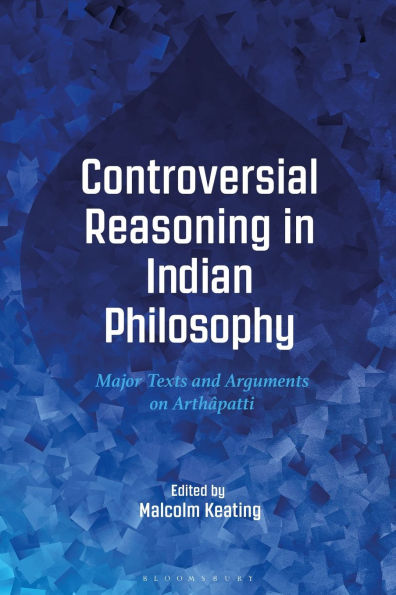
Controversial Reasoning Indian Philosophy: Major Texts and Arguments on Arthâpatti in Franklin, TN
Current price: $54.95
Barnes and Noble
Controversial Reasoning Indian Philosophy: Major Texts and Arguments on Arthâpatti in Franklin, TN
Current price: $54.95
Loading Inventory...
Size: Paperback
Arthâpatti
is a pervasive form of reasoning investigated by Indian philosophers in order to think about unseen causes and interpret ordinary and religious language. Its nature is a point of controversy among Mimamsa, Nyaya, and Buddhist philosophers, yet, to date, it has received less attention than perception, inference, and testimony.
This collection presents a one-of-a-kind reference resource for understanding this form of reasoning studied in Indian philosophy. Assembling translations of central primary texts together with newly-commissioned essays on research topics, it features a significant introductory essay. Readable translations of Sanskrit works are accompanied by critical notes that introduce
arthâpatti
, offer historical context, and clarify the philosophical debates surrounding it.
Showing how
is used as a way to reason about the basic unseen causes driving language use, cause-and-effect relationships, as well as to interpret ambiguous or figurative texts, this book demonstrates the importance of this epistemic instrument in both contemporary Anglo-analytic and classical Indian epistemology, language, and logic.
is a pervasive form of reasoning investigated by Indian philosophers in order to think about unseen causes and interpret ordinary and religious language. Its nature is a point of controversy among Mimamsa, Nyaya, and Buddhist philosophers, yet, to date, it has received less attention than perception, inference, and testimony.
This collection presents a one-of-a-kind reference resource for understanding this form of reasoning studied in Indian philosophy. Assembling translations of central primary texts together with newly-commissioned essays on research topics, it features a significant introductory essay. Readable translations of Sanskrit works are accompanied by critical notes that introduce
arthâpatti
, offer historical context, and clarify the philosophical debates surrounding it.
Showing how
is used as a way to reason about the basic unseen causes driving language use, cause-and-effect relationships, as well as to interpret ambiguous or figurative texts, this book demonstrates the importance of this epistemic instrument in both contemporary Anglo-analytic and classical Indian epistemology, language, and logic.
Arthâpatti
is a pervasive form of reasoning investigated by Indian philosophers in order to think about unseen causes and interpret ordinary and religious language. Its nature is a point of controversy among Mimamsa, Nyaya, and Buddhist philosophers, yet, to date, it has received less attention than perception, inference, and testimony.
This collection presents a one-of-a-kind reference resource for understanding this form of reasoning studied in Indian philosophy. Assembling translations of central primary texts together with newly-commissioned essays on research topics, it features a significant introductory essay. Readable translations of Sanskrit works are accompanied by critical notes that introduce
arthâpatti
, offer historical context, and clarify the philosophical debates surrounding it.
Showing how
is used as a way to reason about the basic unseen causes driving language use, cause-and-effect relationships, as well as to interpret ambiguous or figurative texts, this book demonstrates the importance of this epistemic instrument in both contemporary Anglo-analytic and classical Indian epistemology, language, and logic.
is a pervasive form of reasoning investigated by Indian philosophers in order to think about unseen causes and interpret ordinary and religious language. Its nature is a point of controversy among Mimamsa, Nyaya, and Buddhist philosophers, yet, to date, it has received less attention than perception, inference, and testimony.
This collection presents a one-of-a-kind reference resource for understanding this form of reasoning studied in Indian philosophy. Assembling translations of central primary texts together with newly-commissioned essays on research topics, it features a significant introductory essay. Readable translations of Sanskrit works are accompanied by critical notes that introduce
arthâpatti
, offer historical context, and clarify the philosophical debates surrounding it.
Showing how
is used as a way to reason about the basic unseen causes driving language use, cause-and-effect relationships, as well as to interpret ambiguous or figurative texts, this book demonstrates the importance of this epistemic instrument in both contemporary Anglo-analytic and classical Indian epistemology, language, and logic.
You May Also Like













More About Barnes and Noble at CoolSprings Galleria
Barnes & Noble is the world’s largest retail bookseller and a leading retailer of content, digital media and educational products. Our Nook Digital business offers a lineup of NOOK® tablets and e-Readers and an expansive collection of digital reading content through the NOOK Store®. Barnes & Noble’s mission is to operate the best omni-channel specialty retail business in America, helping both our customers and booksellers reach their aspirations, while being a credit to the communities we serve.
1800 Galleria Blvd #1310, Franklin, TN 37067, United States
Find Barnes and Noble at CoolSprings Galleria in Franklin, TN
Visit Barnes and Noble at CoolSprings Galleria in Franklin, TN