
Home
Democracy Without Justice Spain: The Politics of Forgetting
Barnes and Noble
Loading Inventory...
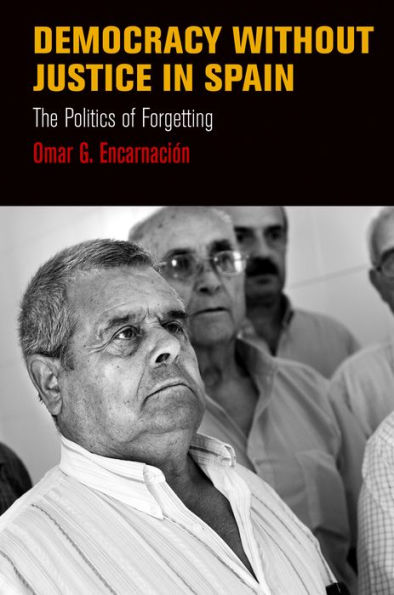
Democracy Without Justice Spain: The Politics of Forgetting in Franklin, TN
Current price: $74.95
Barnes and Noble
Democracy Without Justice Spain: The Politics of Forgetting in Franklin, TN
Current price: $74.95
Loading Inventory...
Size: Hardcover
Spain is a notable exception to the implicit rules of late twentieth-century democratization: after the death of General Francisco Franco in 1975, the recovering nation began to consolidate democracy without enacting any of the mechanisms promoted by the international transitional justice movement. There were no political trials, no truth and reconciliation commissions, no formal attributions of blame, and no apologies. Instead, Spain's national parties negotiated the Pact of Forgetting, an agreement intended to place the bloody Spanish Civil War and the authoritarian excesses of the Franco dictatorship firmly in the past, not to be revisited even in conversation. Formalized by an amnesty law in 1977, this agreement defies the conventional wisdom that considers retribution and reconciliation vital to rebuilding a stable nation. Although not without its dark side, such as the silence imposed upon the victims of the Civil War and the dictatorship, the Pact of Forgetting allowed for the peaceful emergence of a democratic state, one with remarkable political stability and even a reputation as a trailblazer for the national rights and protections of minority groups.
Omar G. Encarnación examines the factors in Spanish political history that made the Pact of Forgetting possible, tracing the challenges and consequences of sustaining the agreement until its dramatic reversal with the 2007 Law of Historical Memory. The combined forces of a collective will to avoid revisiting the traumas of a difficult and painful past and the reliance on the reformed political institutions of the old regime to anchor the democratic transition created a climate conducive to forgetting. At the same time, the political movement to forget encouraged the embrace of a new national identity as a modern and democratic European state. Demonstrating the surprising compatibility of forgetting and democracy,
Democratization Without Justice in Spain
offers a crucial counterexample to the transitional justice movement. The refusal to confront and redress the past did not inhibit the rise of a successful democracy in Spain; on the contrary, by leaving the past behind, Spain chose not to repeat it.
Omar G. Encarnación examines the factors in Spanish political history that made the Pact of Forgetting possible, tracing the challenges and consequences of sustaining the agreement until its dramatic reversal with the 2007 Law of Historical Memory. The combined forces of a collective will to avoid revisiting the traumas of a difficult and painful past and the reliance on the reformed political institutions of the old regime to anchor the democratic transition created a climate conducive to forgetting. At the same time, the political movement to forget encouraged the embrace of a new national identity as a modern and democratic European state. Demonstrating the surprising compatibility of forgetting and democracy,
Democratization Without Justice in Spain
offers a crucial counterexample to the transitional justice movement. The refusal to confront and redress the past did not inhibit the rise of a successful democracy in Spain; on the contrary, by leaving the past behind, Spain chose not to repeat it.
Spain is a notable exception to the implicit rules of late twentieth-century democratization: after the death of General Francisco Franco in 1975, the recovering nation began to consolidate democracy without enacting any of the mechanisms promoted by the international transitional justice movement. There were no political trials, no truth and reconciliation commissions, no formal attributions of blame, and no apologies. Instead, Spain's national parties negotiated the Pact of Forgetting, an agreement intended to place the bloody Spanish Civil War and the authoritarian excesses of the Franco dictatorship firmly in the past, not to be revisited even in conversation. Formalized by an amnesty law in 1977, this agreement defies the conventional wisdom that considers retribution and reconciliation vital to rebuilding a stable nation. Although not without its dark side, such as the silence imposed upon the victims of the Civil War and the dictatorship, the Pact of Forgetting allowed for the peaceful emergence of a democratic state, one with remarkable political stability and even a reputation as a trailblazer for the national rights and protections of minority groups.
Omar G. Encarnación examines the factors in Spanish political history that made the Pact of Forgetting possible, tracing the challenges and consequences of sustaining the agreement until its dramatic reversal with the 2007 Law of Historical Memory. The combined forces of a collective will to avoid revisiting the traumas of a difficult and painful past and the reliance on the reformed political institutions of the old regime to anchor the democratic transition created a climate conducive to forgetting. At the same time, the political movement to forget encouraged the embrace of a new national identity as a modern and democratic European state. Demonstrating the surprising compatibility of forgetting and democracy,
Democratization Without Justice in Spain
offers a crucial counterexample to the transitional justice movement. The refusal to confront and redress the past did not inhibit the rise of a successful democracy in Spain; on the contrary, by leaving the past behind, Spain chose not to repeat it.
Omar G. Encarnación examines the factors in Spanish political history that made the Pact of Forgetting possible, tracing the challenges and consequences of sustaining the agreement until its dramatic reversal with the 2007 Law of Historical Memory. The combined forces of a collective will to avoid revisiting the traumas of a difficult and painful past and the reliance on the reformed political institutions of the old regime to anchor the democratic transition created a climate conducive to forgetting. At the same time, the political movement to forget encouraged the embrace of a new national identity as a modern and democratic European state. Demonstrating the surprising compatibility of forgetting and democracy,
Democratization Without Justice in Spain
offers a crucial counterexample to the transitional justice movement. The refusal to confront and redress the past did not inhibit the rise of a successful democracy in Spain; on the contrary, by leaving the past behind, Spain chose not to repeat it.
You May Also Like












More About Barnes and Noble at CoolSprings Galleria
Barnes & Noble is the world’s largest retail bookseller and a leading retailer of content, digital media and educational products. Our Nook Digital business offers a lineup of NOOK® tablets and e-Readers and an expansive collection of digital reading content through the NOOK Store®. Barnes & Noble’s mission is to operate the best omni-channel specialty retail business in America, helping both our customers and booksellers reach their aspirations, while being a credit to the communities we serve.
1800 Galleria Blvd #1310, Franklin, TN 37067, United States
Find Barnes and Noble at CoolSprings Galleria in Franklin, TN
Visit Barnes and Noble at CoolSprings Galleria in Franklin, TN
