
Home
Douglas DC-3: The Airliner that Revolutionised Air Transport
Barnes and Noble
Loading Inventory...
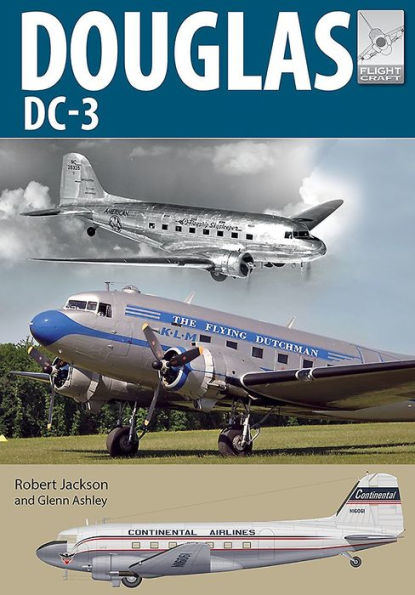
Douglas DC-3: The Airliner that Revolutionised Air Transport in Franklin, TN
Current price: $28.95
Barnes and Noble
Douglas DC-3: The Airliner that Revolutionised Air Transport in Franklin, TN
Current price: $28.95
Loading Inventory...
Size: Paperback
No airliner in the history of commercial aviation has had a more profound effect than the Douglas DC3. It was reliable, easy to maintain and carried passengers in greater comfort than ever before.
Its origins stem from a design by the Douglas Aircraft Company of Santa Monica, California. Known as the Douglas Commercial One, or DC1, this new aircraft was revolutionary in concept. It was quickly developed into the DC2, an airliner that lead to Douglas’ domination of the domestic air routes of the United States, and of half the world.
Experience with the DC2 led to the development of an improved version, the Douglas Sleeper Transport (DST), first flown on 17 December 1935. This in turn evolved into a 21seat variant, the DC3, featuring many improvements. The first American Airlines DC3 entered service in June 1936, and within three years of its introduction the aircraft accounted for a staggering 95 percent of all commercial air traffic in the United States. From commencement of service to the Japanese attack on Pearl Harbor, the DC3 increased domestic revenue passenger miles more than fivefold. Of the 322 aircraft operated by the country’s airlines in December 1941, 260 were DC3s. At the prewar peak, 30 foreign airlines operated the DC3. On the eve of war, the DC3’s scheduled flights represented 90 percent of international air traffic.
In addition to over 600 civil examples of the DC3, 10,048 military C47 variants were built, as well as 4,937 produced under license in the USSR as the Lisunov Li2 and 487 built by Showa and Nakajima in Japan as the L2D. After the war, thousands of surplus C47s, previously operated by several air forces, were converted for civilian use. These aircraft became the standard equipment of almost all the world's airlines, remaining in frontline service for many years. The ready availability of cheap, easily maintained exmilitary C47s, both large and fast by the standards of the day, jumpstarted the worldwide postwar air transport industry.
The full remarkable story of the DC3, and its ancestor, the DC2, is told in these pages, providing a wealth of information for the modeler and the enthusiast alike.
Its origins stem from a design by the Douglas Aircraft Company of Santa Monica, California. Known as the Douglas Commercial One, or DC1, this new aircraft was revolutionary in concept. It was quickly developed into the DC2, an airliner that lead to Douglas’ domination of the domestic air routes of the United States, and of half the world.
Experience with the DC2 led to the development of an improved version, the Douglas Sleeper Transport (DST), first flown on 17 December 1935. This in turn evolved into a 21seat variant, the DC3, featuring many improvements. The first American Airlines DC3 entered service in June 1936, and within three years of its introduction the aircraft accounted for a staggering 95 percent of all commercial air traffic in the United States. From commencement of service to the Japanese attack on Pearl Harbor, the DC3 increased domestic revenue passenger miles more than fivefold. Of the 322 aircraft operated by the country’s airlines in December 1941, 260 were DC3s. At the prewar peak, 30 foreign airlines operated the DC3. On the eve of war, the DC3’s scheduled flights represented 90 percent of international air traffic.
In addition to over 600 civil examples of the DC3, 10,048 military C47 variants were built, as well as 4,937 produced under license in the USSR as the Lisunov Li2 and 487 built by Showa and Nakajima in Japan as the L2D. After the war, thousands of surplus C47s, previously operated by several air forces, were converted for civilian use. These aircraft became the standard equipment of almost all the world's airlines, remaining in frontline service for many years. The ready availability of cheap, easily maintained exmilitary C47s, both large and fast by the standards of the day, jumpstarted the worldwide postwar air transport industry.
The full remarkable story of the DC3, and its ancestor, the DC2, is told in these pages, providing a wealth of information for the modeler and the enthusiast alike.
No airliner in the history of commercial aviation has had a more profound effect than the Douglas DC3. It was reliable, easy to maintain and carried passengers in greater comfort than ever before.
Its origins stem from a design by the Douglas Aircraft Company of Santa Monica, California. Known as the Douglas Commercial One, or DC1, this new aircraft was revolutionary in concept. It was quickly developed into the DC2, an airliner that lead to Douglas’ domination of the domestic air routes of the United States, and of half the world.
Experience with the DC2 led to the development of an improved version, the Douglas Sleeper Transport (DST), first flown on 17 December 1935. This in turn evolved into a 21seat variant, the DC3, featuring many improvements. The first American Airlines DC3 entered service in June 1936, and within three years of its introduction the aircraft accounted for a staggering 95 percent of all commercial air traffic in the United States. From commencement of service to the Japanese attack on Pearl Harbor, the DC3 increased domestic revenue passenger miles more than fivefold. Of the 322 aircraft operated by the country’s airlines in December 1941, 260 were DC3s. At the prewar peak, 30 foreign airlines operated the DC3. On the eve of war, the DC3’s scheduled flights represented 90 percent of international air traffic.
In addition to over 600 civil examples of the DC3, 10,048 military C47 variants were built, as well as 4,937 produced under license in the USSR as the Lisunov Li2 and 487 built by Showa and Nakajima in Japan as the L2D. After the war, thousands of surplus C47s, previously operated by several air forces, were converted for civilian use. These aircraft became the standard equipment of almost all the world's airlines, remaining in frontline service for many years. The ready availability of cheap, easily maintained exmilitary C47s, both large and fast by the standards of the day, jumpstarted the worldwide postwar air transport industry.
The full remarkable story of the DC3, and its ancestor, the DC2, is told in these pages, providing a wealth of information for the modeler and the enthusiast alike.
Its origins stem from a design by the Douglas Aircraft Company of Santa Monica, California. Known as the Douglas Commercial One, or DC1, this new aircraft was revolutionary in concept. It was quickly developed into the DC2, an airliner that lead to Douglas’ domination of the domestic air routes of the United States, and of half the world.
Experience with the DC2 led to the development of an improved version, the Douglas Sleeper Transport (DST), first flown on 17 December 1935. This in turn evolved into a 21seat variant, the DC3, featuring many improvements. The first American Airlines DC3 entered service in June 1936, and within three years of its introduction the aircraft accounted for a staggering 95 percent of all commercial air traffic in the United States. From commencement of service to the Japanese attack on Pearl Harbor, the DC3 increased domestic revenue passenger miles more than fivefold. Of the 322 aircraft operated by the country’s airlines in December 1941, 260 were DC3s. At the prewar peak, 30 foreign airlines operated the DC3. On the eve of war, the DC3’s scheduled flights represented 90 percent of international air traffic.
In addition to over 600 civil examples of the DC3, 10,048 military C47 variants were built, as well as 4,937 produced under license in the USSR as the Lisunov Li2 and 487 built by Showa and Nakajima in Japan as the L2D. After the war, thousands of surplus C47s, previously operated by several air forces, were converted for civilian use. These aircraft became the standard equipment of almost all the world's airlines, remaining in frontline service for many years. The ready availability of cheap, easily maintained exmilitary C47s, both large and fast by the standards of the day, jumpstarted the worldwide postwar air transport industry.
The full remarkable story of the DC3, and its ancestor, the DC2, is told in these pages, providing a wealth of information for the modeler and the enthusiast alike.
You May Also Like













More About Barnes and Noble at CoolSprings Galleria
Barnes & Noble is the world’s largest retail bookseller and a leading retailer of content, digital media and educational products. Our Nook Digital business offers a lineup of NOOK® tablets and e-Readers and an expansive collection of digital reading content through the NOOK Store®. Barnes & Noble’s mission is to operate the best omni-channel specialty retail business in America, helping both our customers and booksellers reach their aspirations, while being a credit to the communities we serve.
1800 Galleria Blvd #1310, Franklin, TN 37067, United States
Find Barnes and Noble at CoolSprings Galleria in Franklin, TN
Visit Barnes and Noble at CoolSprings Galleria in Franklin, TN
