
Home
Dreams of Archives Unfolded: Absence and Caribbean Life Writing
Barnes and Noble
Loading Inventory...
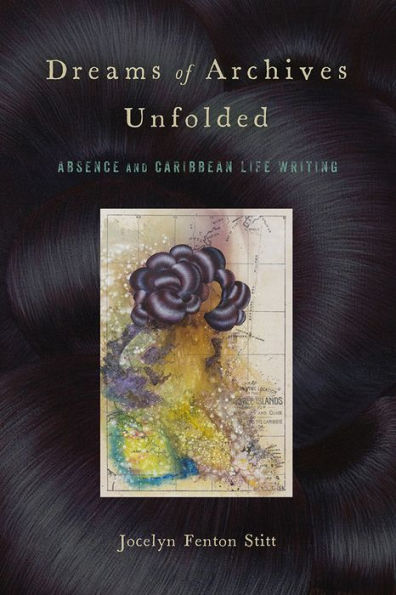
Dreams of Archives Unfolded: Absence and Caribbean Life Writing in Franklin, TN
Current price: $150.00
Barnes and Noble
Dreams of Archives Unfolded: Absence and Caribbean Life Writing in Franklin, TN
Current price: $150.00
Loading Inventory...
Size: Hardcover
The first book on pan-Caribbean life writing,
Dreams of Archives Unfolded
reveals the innovative formal practices used to write about historical absences within contemporary personal narratives. Although the premier genres of writing postcoloniality in the Caribbean have been understood to be fiction and poetry, established figures such as Erna Brodber, Maryse Condé, Lorna Goodison, Edwidge Danticat, Saidiya Hartmann, Ruth Behar, and Dionne Brand and emerging writers such as Yvonne Shorter Brown, and Gaiutra Bahadur use life writing to question the relationship between the past and the present. Stitt theorizes that the remarkable flowering of life writing by Caribbean women since 2000 is not an imitation of the “memoir boom” in North America and Europe; instead, it marks a different use of the genre born out of encountering gendered absences in archives and ancestral memory that cannot be filled with more research.
Dreams of Archives
makes a significant contribution to studies of Caribbean literature by demonstrating that women’s autobiographical narratives published in the past twenty years are feminist epistemological projects that rework Caribbean studies’ longstanding commitment to creating counter-archives.
Dreams of Archives Unfolded
reveals the innovative formal practices used to write about historical absences within contemporary personal narratives. Although the premier genres of writing postcoloniality in the Caribbean have been understood to be fiction and poetry, established figures such as Erna Brodber, Maryse Condé, Lorna Goodison, Edwidge Danticat, Saidiya Hartmann, Ruth Behar, and Dionne Brand and emerging writers such as Yvonne Shorter Brown, and Gaiutra Bahadur use life writing to question the relationship between the past and the present. Stitt theorizes that the remarkable flowering of life writing by Caribbean women since 2000 is not an imitation of the “memoir boom” in North America and Europe; instead, it marks a different use of the genre born out of encountering gendered absences in archives and ancestral memory that cannot be filled with more research.
Dreams of Archives
makes a significant contribution to studies of Caribbean literature by demonstrating that women’s autobiographical narratives published in the past twenty years are feminist epistemological projects that rework Caribbean studies’ longstanding commitment to creating counter-archives.
The first book on pan-Caribbean life writing,
Dreams of Archives Unfolded
reveals the innovative formal practices used to write about historical absences within contemporary personal narratives. Although the premier genres of writing postcoloniality in the Caribbean have been understood to be fiction and poetry, established figures such as Erna Brodber, Maryse Condé, Lorna Goodison, Edwidge Danticat, Saidiya Hartmann, Ruth Behar, and Dionne Brand and emerging writers such as Yvonne Shorter Brown, and Gaiutra Bahadur use life writing to question the relationship between the past and the present. Stitt theorizes that the remarkable flowering of life writing by Caribbean women since 2000 is not an imitation of the “memoir boom” in North America and Europe; instead, it marks a different use of the genre born out of encountering gendered absences in archives and ancestral memory that cannot be filled with more research.
Dreams of Archives
makes a significant contribution to studies of Caribbean literature by demonstrating that women’s autobiographical narratives published in the past twenty years are feminist epistemological projects that rework Caribbean studies’ longstanding commitment to creating counter-archives.
Dreams of Archives Unfolded
reveals the innovative formal practices used to write about historical absences within contemporary personal narratives. Although the premier genres of writing postcoloniality in the Caribbean have been understood to be fiction and poetry, established figures such as Erna Brodber, Maryse Condé, Lorna Goodison, Edwidge Danticat, Saidiya Hartmann, Ruth Behar, and Dionne Brand and emerging writers such as Yvonne Shorter Brown, and Gaiutra Bahadur use life writing to question the relationship between the past and the present. Stitt theorizes that the remarkable flowering of life writing by Caribbean women since 2000 is not an imitation of the “memoir boom” in North America and Europe; instead, it marks a different use of the genre born out of encountering gendered absences in archives and ancestral memory that cannot be filled with more research.
Dreams of Archives
makes a significant contribution to studies of Caribbean literature by demonstrating that women’s autobiographical narratives published in the past twenty years are feminist epistemological projects that rework Caribbean studies’ longstanding commitment to creating counter-archives.
You May Also Like










More About Barnes and Noble at CoolSprings Galleria
Barnes & Noble is the world’s largest retail bookseller and a leading retailer of content, digital media and educational products. Our Nook Digital business offers a lineup of NOOK® tablets and e-Readers and an expansive collection of digital reading content through the NOOK Store®. Barnes & Noble’s mission is to operate the best omni-channel specialty retail business in America, helping both our customers and booksellers reach their aspirations, while being a credit to the communities we serve.
1800 Galleria Blvd #1310, Franklin, TN 37067, United States
Find Barnes and Noble at CoolSprings Galleria in Franklin, TN
Visit Barnes and Noble at CoolSprings Galleria in Franklin, TN
