
Home
Ecocriticism and Chinese Literature: Imagined Landscapes Real Lived Spaces
Barnes and Noble
Loading Inventory...
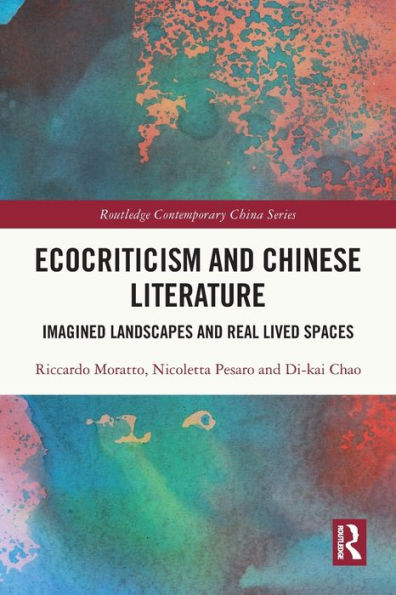
Ecocriticism and Chinese Literature: Imagined Landscapes Real Lived Spaces in Franklin, TN
Current price: $190.00
Barnes and Noble
Ecocriticism and Chinese Literature: Imagined Landscapes Real Lived Spaces in Franklin, TN
Current price: $190.00
Loading Inventory...
Size: Hardcover
Focusing on ecocritical aspects throughout Chinese literature, particularly modern and contemporary Chinese literature, the contributors to this book examine the environmental and ecological dimensions of notions such as
qing
(情) and
jing
(境).
Chinese modern and contemporary environmental writing offers a unique aesthetic perspective toward the natural world. Such a perspective is mainly ecological and allows human subjects to take a benign and nonutilitarian attitude toward nature. The contributors to this book demonstrate how Chinese literary ecology tends toward an ecological-systemic holism from which all human behaviors should be closely examined. They do so by examining a range of writers and genres, including Liu Cixin’s science fiction, Wu Ming-yi’s environmental fiction, and Zhang Chengzhi’s historical narratives.
This book provides valuable insights for scholars and students looking to understand how Chinese literature conceptualizes the relationship between humanity and nature, as well as our role and position within the natural realm.
qing
(情) and
jing
(境).
Chinese modern and contemporary environmental writing offers a unique aesthetic perspective toward the natural world. Such a perspective is mainly ecological and allows human subjects to take a benign and nonutilitarian attitude toward nature. The contributors to this book demonstrate how Chinese literary ecology tends toward an ecological-systemic holism from which all human behaviors should be closely examined. They do so by examining a range of writers and genres, including Liu Cixin’s science fiction, Wu Ming-yi’s environmental fiction, and Zhang Chengzhi’s historical narratives.
This book provides valuable insights for scholars and students looking to understand how Chinese literature conceptualizes the relationship between humanity and nature, as well as our role and position within the natural realm.
Focusing on ecocritical aspects throughout Chinese literature, particularly modern and contemporary Chinese literature, the contributors to this book examine the environmental and ecological dimensions of notions such as
qing
(情) and
jing
(境).
Chinese modern and contemporary environmental writing offers a unique aesthetic perspective toward the natural world. Such a perspective is mainly ecological and allows human subjects to take a benign and nonutilitarian attitude toward nature. The contributors to this book demonstrate how Chinese literary ecology tends toward an ecological-systemic holism from which all human behaviors should be closely examined. They do so by examining a range of writers and genres, including Liu Cixin’s science fiction, Wu Ming-yi’s environmental fiction, and Zhang Chengzhi’s historical narratives.
This book provides valuable insights for scholars and students looking to understand how Chinese literature conceptualizes the relationship between humanity and nature, as well as our role and position within the natural realm.
qing
(情) and
jing
(境).
Chinese modern and contemporary environmental writing offers a unique aesthetic perspective toward the natural world. Such a perspective is mainly ecological and allows human subjects to take a benign and nonutilitarian attitude toward nature. The contributors to this book demonstrate how Chinese literary ecology tends toward an ecological-systemic holism from which all human behaviors should be closely examined. They do so by examining a range of writers and genres, including Liu Cixin’s science fiction, Wu Ming-yi’s environmental fiction, and Zhang Chengzhi’s historical narratives.
This book provides valuable insights for scholars and students looking to understand how Chinese literature conceptualizes the relationship between humanity and nature, as well as our role and position within the natural realm.
You May Also Like









More About Barnes and Noble at CoolSprings Galleria
Barnes & Noble is the world’s largest retail bookseller and a leading retailer of content, digital media and educational products. Our Nook Digital business offers a lineup of NOOK® tablets and e-Readers and an expansive collection of digital reading content through the NOOK Store®. Barnes & Noble’s mission is to operate the best omni-channel specialty retail business in America, helping both our customers and booksellers reach their aspirations, while being a credit to the communities we serve.
1800 Galleria Blvd #1310, Franklin, TN 37067, United States
Find Barnes and Noble at CoolSprings Galleria in Franklin, TN
Visit Barnes and Noble at CoolSprings Galleria in Franklin, TN
