
Home
Ecological Technologies for Industrial Wastewater Management: Petrochemicals, Metals, Semi-Conductors, and Paper Industries
Barnes and Noble
Loading Inventory...
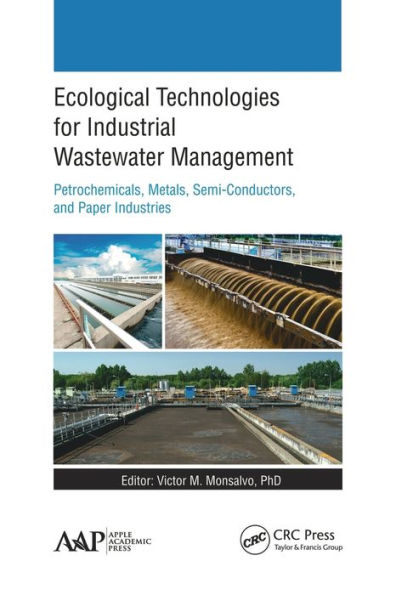
Ecological Technologies for Industrial Wastewater Management: Petrochemicals, Metals, Semi-Conductors, and Paper Industries in Franklin, TN
Current price: $99.00
Barnes and Noble
Ecological Technologies for Industrial Wastewater Management: Petrochemicals, Metals, Semi-Conductors, and Paper Industries in Franklin, TN
Current price: $99.00
Loading Inventory...
Size: OS
Water is essential to our planet’s life, and protecting our water resources is a prerequisite for building a sustainable future. Since water use is inextricably linked to energy use, however, we face significant challenges. Water plays an essential role in many, if not most, manufacturing facilities. In a world facing a water-scarcity crisis, much research and development currently focuses on decreasing industries’ water-use footprint.
This compendium volume looks briefly at several select industries and investigates various water treatment processes for each, including microbial biotechnologies, ozone-related processes, adsorption, and photochemical reactions, among others. The various industries are organized into four groups:
Industries that produce petrochemicals
Metal industries
The semi-conductor industry
The paper and pulp industries
Collected by a well-respected expert in the field, the studies gathered here are intended to be a starting point for further investigation by graduate students and other scientific researchers. Today's research, found in these chapters, can be expanded to create tomorrow's even wider frame of study.
This compendium volume looks briefly at several select industries and investigates various water treatment processes for each, including microbial biotechnologies, ozone-related processes, adsorption, and photochemical reactions, among others. The various industries are organized into four groups:
Industries that produce petrochemicals
Metal industries
The semi-conductor industry
The paper and pulp industries
Collected by a well-respected expert in the field, the studies gathered here are intended to be a starting point for further investigation by graduate students and other scientific researchers. Today's research, found in these chapters, can be expanded to create tomorrow's even wider frame of study.
Water is essential to our planet’s life, and protecting our water resources is a prerequisite for building a sustainable future. Since water use is inextricably linked to energy use, however, we face significant challenges. Water plays an essential role in many, if not most, manufacturing facilities. In a world facing a water-scarcity crisis, much research and development currently focuses on decreasing industries’ water-use footprint.
This compendium volume looks briefly at several select industries and investigates various water treatment processes for each, including microbial biotechnologies, ozone-related processes, adsorption, and photochemical reactions, among others. The various industries are organized into four groups:
Industries that produce petrochemicals
Metal industries
The semi-conductor industry
The paper and pulp industries
Collected by a well-respected expert in the field, the studies gathered here are intended to be a starting point for further investigation by graduate students and other scientific researchers. Today's research, found in these chapters, can be expanded to create tomorrow's even wider frame of study.
This compendium volume looks briefly at several select industries and investigates various water treatment processes for each, including microbial biotechnologies, ozone-related processes, adsorption, and photochemical reactions, among others. The various industries are organized into four groups:
Industries that produce petrochemicals
Metal industries
The semi-conductor industry
The paper and pulp industries
Collected by a well-respected expert in the field, the studies gathered here are intended to be a starting point for further investigation by graduate students and other scientific researchers. Today's research, found in these chapters, can be expanded to create tomorrow's even wider frame of study.
You May Also Like












More About Barnes and Noble at CoolSprings Galleria
Barnes & Noble is the world’s largest retail bookseller and a leading retailer of content, digital media and educational products. Our Nook Digital business offers a lineup of NOOK® tablets and e-Readers and an expansive collection of digital reading content through the NOOK Store®. Barnes & Noble’s mission is to operate the best omni-channel specialty retail business in America, helping both our customers and booksellers reach their aspirations, while being a credit to the communities we serve.
1800 Galleria Blvd #1310, Franklin, TN 37067, United States
Find Barnes and Noble at CoolSprings Galleria in Franklin, TN
Visit Barnes and Noble at CoolSprings Galleria in Franklin, TN
