
Home
Economic Agony in Uganda
Barnes and Noble
Loading Inventory...
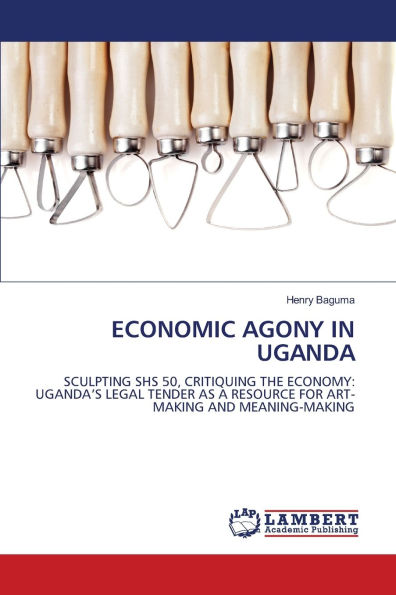
Economic Agony in Uganda in Franklin, TN
Current price: $63.00
Barnes and Noble
Economic Agony in Uganda in Franklin, TN
Current price: $63.00
Loading Inventory...
Size: OS
This study was based on the assumption that the point where the Shs50 mint coin (as a 'valueless' currency) gained new value as a pointed device that citizens can use to articulate their individual and collective demands for better governance was as political as it was culturally productive and could shape a sculptural project in which art-making as research and knowledge production begin to intersect. It addressed the following overarching question, namely: in what ways (if any) would a Shs50 coin, whose loss of value gaining new meaning as a device that citizens can redeploy to fight for better governance, be explored in the production of a studio sculptural project in which the production of art is as much about activism as it is about research, meaning-making and knowledge production? I respond to this question in six chapters: In Chapter One (the Introduction) I introduced the study. Chapter Two provided the Literature Review. Chapter Three presented the methodology I used in this study. Chapter Four had the research design. In Chapter Five I followed Lwanga's notion of making sculpture for purposes of [self-]awakening.
This study was based on the assumption that the point where the Shs50 mint coin (as a 'valueless' currency) gained new value as a pointed device that citizens can use to articulate their individual and collective demands for better governance was as political as it was culturally productive and could shape a sculptural project in which art-making as research and knowledge production begin to intersect. It addressed the following overarching question, namely: in what ways (if any) would a Shs50 coin, whose loss of value gaining new meaning as a device that citizens can redeploy to fight for better governance, be explored in the production of a studio sculptural project in which the production of art is as much about activism as it is about research, meaning-making and knowledge production? I respond to this question in six chapters: In Chapter One (the Introduction) I introduced the study. Chapter Two provided the Literature Review. Chapter Three presented the methodology I used in this study. Chapter Four had the research design. In Chapter Five I followed Lwanga's notion of making sculpture for purposes of [self-]awakening.
You May Also Like













More About Barnes and Noble at CoolSprings Galleria
Barnes & Noble is the world’s largest retail bookseller and a leading retailer of content, digital media and educational products. Our Nook Digital business offers a lineup of NOOK® tablets and e-Readers and an expansive collection of digital reading content through the NOOK Store®. Barnes & Noble’s mission is to operate the best omni-channel specialty retail business in America, helping both our customers and booksellers reach their aspirations, while being a credit to the communities we serve.
1800 Galleria Blvd #1310, Franklin, TN 37067, United States
Find Barnes and Noble at CoolSprings Galleria in Franklin, TN
Visit Barnes and Noble at CoolSprings Galleria in Franklin, TN
