
Home
Effects of Monetary Policy Shocks across Time and across Sectors
Barnes and Noble
Loading Inventory...
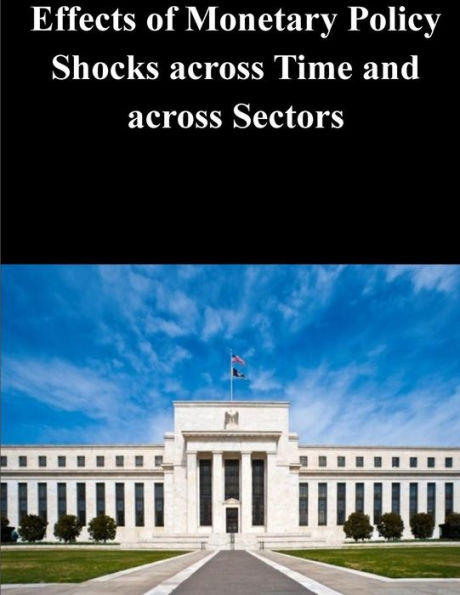
Effects of Monetary Policy Shocks across Time and across Sectors in Franklin, TN
Current price: $14.95
Barnes and Noble
Effects of Monetary Policy Shocks across Time and across Sectors in Franklin, TN
Current price: $14.95
Loading Inventory...
Size: OS
Recent empirical research by Olivei and Tenreyro (2007) demonstrates that the effect of monetary policy shocks on output and prices depends on the shock's timing: In the United States, a monetary policy shock that takes place in the first half of the year has a larger effect on output than on prices, while the opposite is true in the second half of the year. Olivei and Tenreyro argue that this finding reflects the fact that a greater fraction of wage rates are re-contracted in the second half of the year, implying that wages (and prices) are less flexible in the first half. In this paper, I assess this explanation in light of several additional empirical results. Most importantly, I demonstrate that within-year differences in the responses of output and prices following a monetary policy shock are not more pronounced in the service-producing sector, where labor costs represent a larger fraction of total production costs. I also find that movements in prices following a monetary shock tend to lead wage changes. These and other empirical results suggest that something other than uneven wage adjustment might be responsible for the differential within-year effect of monetary policy shocks that Olivei and Tenreyro document.
Recent empirical research by Olivei and Tenreyro (2007) demonstrates that the effect of monetary policy shocks on output and prices depends on the shock's timing: In the United States, a monetary policy shock that takes place in the first half of the year has a larger effect on output than on prices, while the opposite is true in the second half of the year. Olivei and Tenreyro argue that this finding reflects the fact that a greater fraction of wage rates are re-contracted in the second half of the year, implying that wages (and prices) are less flexible in the first half. In this paper, I assess this explanation in light of several additional empirical results. Most importantly, I demonstrate that within-year differences in the responses of output and prices following a monetary policy shock are not more pronounced in the service-producing sector, where labor costs represent a larger fraction of total production costs. I also find that movements in prices following a monetary shock tend to lead wage changes. These and other empirical results suggest that something other than uneven wage adjustment might be responsible for the differential within-year effect of monetary policy shocks that Olivei and Tenreyro document.
You May Also Like









More About Barnes and Noble at CoolSprings Galleria
Barnes & Noble is the world’s largest retail bookseller and a leading retailer of content, digital media and educational products. Our Nook Digital business offers a lineup of NOOK® tablets and e-Readers and an expansive collection of digital reading content through the NOOK Store®. Barnes & Noble’s mission is to operate the best omni-channel specialty retail business in America, helping both our customers and booksellers reach their aspirations, while being a credit to the communities we serve.
1800 Galleria Blvd #1310, Franklin, TN 37067, United States
Find Barnes and Noble at CoolSprings Galleria in Franklin, TN
Visit Barnes and Noble at CoolSprings Galleria in Franklin, TN
