
Home
Embodiment in Cross-Linguistic Studies: The 'Foot/Leg'
Barnes and Noble
Loading Inventory...
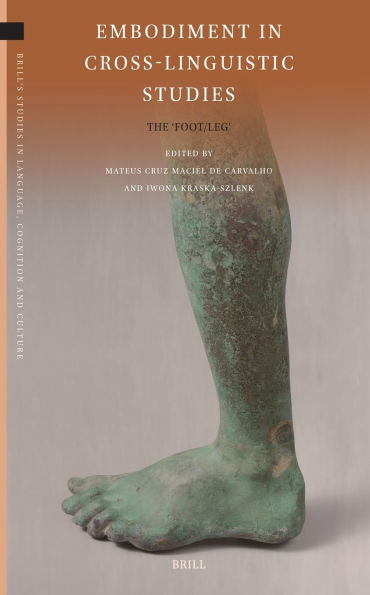
Embodiment in Cross-Linguistic Studies: The 'Foot/Leg' in Franklin, TN
Current price: $151.00
Barnes and Noble
Embodiment in Cross-Linguistic Studies: The 'Foot/Leg' in Franklin, TN
Current price: $151.00
Loading Inventory...
Size: OS
Over the past two decades, linguistic research into embodiment has paid considerable attention to the human body and its individual parts, particularly within typological and cognitively oriented studies. This volume continues that line of inquiry with a specific focus on the lower limb. It shows that, like other major body parts, the lower limb serves as a highly productive source domain for a wide range of conceptualisations across the world’s languages and cultures. More generally, the book contributes to the growing body of work at the intersection of cognition, language, and culture. It also engages with embodiment theory, which posits that human cognition and language are fundamentally grounded in sensory-motor experience.
Contributors are: Kelsie Pattillo, Jaime Peña, Gema Silva, Franklin Espinoza, Marleny Rodríguez, Małgorzata Waśniewska, Rosanna Tramutoli, Izabela Will, Joseph Jaoko Ochieng, Annika Tjuka, Cristina Martins Fargetti, Carmen Lúcia Reis Rodrigues, Judit Baranyiné Kóczy, Iwona Kraska-Szlenk, Yi Tie, Yongxian Luo, and Mateus Cruz Maciel de Carvalho.
Contributors are: Kelsie Pattillo, Jaime Peña, Gema Silva, Franklin Espinoza, Marleny Rodríguez, Małgorzata Waśniewska, Rosanna Tramutoli, Izabela Will, Joseph Jaoko Ochieng, Annika Tjuka, Cristina Martins Fargetti, Carmen Lúcia Reis Rodrigues, Judit Baranyiné Kóczy, Iwona Kraska-Szlenk, Yi Tie, Yongxian Luo, and Mateus Cruz Maciel de Carvalho.
Over the past two decades, linguistic research into embodiment has paid considerable attention to the human body and its individual parts, particularly within typological and cognitively oriented studies. This volume continues that line of inquiry with a specific focus on the lower limb. It shows that, like other major body parts, the lower limb serves as a highly productive source domain for a wide range of conceptualisations across the world’s languages and cultures. More generally, the book contributes to the growing body of work at the intersection of cognition, language, and culture. It also engages with embodiment theory, which posits that human cognition and language are fundamentally grounded in sensory-motor experience.
Contributors are: Kelsie Pattillo, Jaime Peña, Gema Silva, Franklin Espinoza, Marleny Rodríguez, Małgorzata Waśniewska, Rosanna Tramutoli, Izabela Will, Joseph Jaoko Ochieng, Annika Tjuka, Cristina Martins Fargetti, Carmen Lúcia Reis Rodrigues, Judit Baranyiné Kóczy, Iwona Kraska-Szlenk, Yi Tie, Yongxian Luo, and Mateus Cruz Maciel de Carvalho.
Contributors are: Kelsie Pattillo, Jaime Peña, Gema Silva, Franklin Espinoza, Marleny Rodríguez, Małgorzata Waśniewska, Rosanna Tramutoli, Izabela Will, Joseph Jaoko Ochieng, Annika Tjuka, Cristina Martins Fargetti, Carmen Lúcia Reis Rodrigues, Judit Baranyiné Kóczy, Iwona Kraska-Szlenk, Yi Tie, Yongxian Luo, and Mateus Cruz Maciel de Carvalho.
You May Also Like










More About Barnes and Noble at CoolSprings Galleria
Barnes & Noble is the world’s largest retail bookseller and a leading retailer of content, digital media and educational products. Our Nook Digital business offers a lineup of NOOK® tablets and e-Readers and an expansive collection of digital reading content through the NOOK Store®. Barnes & Noble’s mission is to operate the best omni-channel specialty retail business in America, helping both our customers and booksellers reach their aspirations, while being a credit to the communities we serve.
1800 Galleria Blvd #1310, Franklin, TN 37067, United States
Find Barnes and Noble at CoolSprings Galleria in Franklin, TN
Visit Barnes and Noble at CoolSprings Galleria in Franklin, TN
