
Home
Enhancing Evolution: The Ethical Case for Making Better People
Barnes and Noble
Loading Inventory...
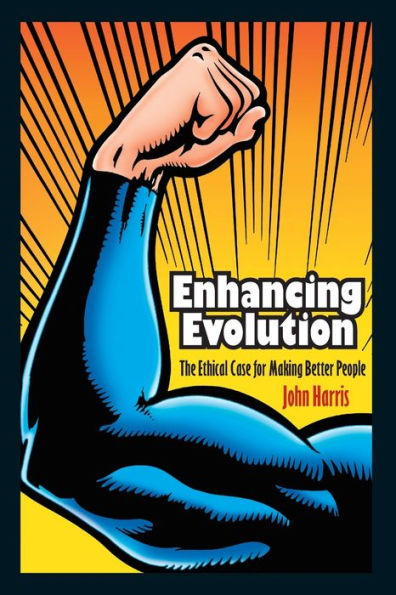
Enhancing Evolution: The Ethical Case for Making Better People in Franklin, TN
Current price: $31.00
Barnes and Noble
Enhancing Evolution: The Ethical Case for Making Better People in Franklin, TN
Current price: $31.00
Loading Inventory...
Size: Paperback
In
Enhancing Evolution
, leading bioethicist John Harris dismantles objections to genetic engineering, stem-cell research, designer babies, and cloning and makes an ethical case for biotechnology that is both forthright and rigorous. Human enhancement, Harris argues, is a good thinggood morally, good for individuals, good as social policy, and good for a genetic heritage that needs serious improvement.
defends biotechnological interventions that could allow us to live longer, healthier, and even happier lives by, for example, providing us with immunity from cancer and HIV/AIDS. Further, Harris champions the possibility of influencing the very course of evolution to give us increased mental and physical powersfrom reasoning, concentration, and memory to strength, stamina, and reaction speed. Indeed, he says, it's not only morally defensible to enhance ourselves; in some cases, it's morally obligatory.
In a new preface, Harris offers a glimpse at the new science and technology to come, equipping readers with the knowledge to assess the ethics and policy dimensions of future forms of human enhancement.
Enhancing Evolution
, leading bioethicist John Harris dismantles objections to genetic engineering, stem-cell research, designer babies, and cloning and makes an ethical case for biotechnology that is both forthright and rigorous. Human enhancement, Harris argues, is a good thinggood morally, good for individuals, good as social policy, and good for a genetic heritage that needs serious improvement.
defends biotechnological interventions that could allow us to live longer, healthier, and even happier lives by, for example, providing us with immunity from cancer and HIV/AIDS. Further, Harris champions the possibility of influencing the very course of evolution to give us increased mental and physical powersfrom reasoning, concentration, and memory to strength, stamina, and reaction speed. Indeed, he says, it's not only morally defensible to enhance ourselves; in some cases, it's morally obligatory.
In a new preface, Harris offers a glimpse at the new science and technology to come, equipping readers with the knowledge to assess the ethics and policy dimensions of future forms of human enhancement.
In
Enhancing Evolution
, leading bioethicist John Harris dismantles objections to genetic engineering, stem-cell research, designer babies, and cloning and makes an ethical case for biotechnology that is both forthright and rigorous. Human enhancement, Harris argues, is a good thinggood morally, good for individuals, good as social policy, and good for a genetic heritage that needs serious improvement.
defends biotechnological interventions that could allow us to live longer, healthier, and even happier lives by, for example, providing us with immunity from cancer and HIV/AIDS. Further, Harris champions the possibility of influencing the very course of evolution to give us increased mental and physical powersfrom reasoning, concentration, and memory to strength, stamina, and reaction speed. Indeed, he says, it's not only morally defensible to enhance ourselves; in some cases, it's morally obligatory.
In a new preface, Harris offers a glimpse at the new science and technology to come, equipping readers with the knowledge to assess the ethics and policy dimensions of future forms of human enhancement.
Enhancing Evolution
, leading bioethicist John Harris dismantles objections to genetic engineering, stem-cell research, designer babies, and cloning and makes an ethical case for biotechnology that is both forthright and rigorous. Human enhancement, Harris argues, is a good thinggood morally, good for individuals, good as social policy, and good for a genetic heritage that needs serious improvement.
defends biotechnological interventions that could allow us to live longer, healthier, and even happier lives by, for example, providing us with immunity from cancer and HIV/AIDS. Further, Harris champions the possibility of influencing the very course of evolution to give us increased mental and physical powersfrom reasoning, concentration, and memory to strength, stamina, and reaction speed. Indeed, he says, it's not only morally defensible to enhance ourselves; in some cases, it's morally obligatory.
In a new preface, Harris offers a glimpse at the new science and technology to come, equipping readers with the knowledge to assess the ethics and policy dimensions of future forms of human enhancement.
You May Also Like











More About Barnes and Noble at CoolSprings Galleria
Barnes & Noble is the world’s largest retail bookseller and a leading retailer of content, digital media and educational products. Our Nook Digital business offers a lineup of NOOK® tablets and e-Readers and an expansive collection of digital reading content through the NOOK Store®. Barnes & Noble’s mission is to operate the best omni-channel specialty retail business in America, helping both our customers and booksellers reach their aspirations, while being a credit to the communities we serve.
1800 Galleria Blvd #1310, Franklin, TN 37067, United States
Find Barnes and Noble at CoolSprings Galleria in Franklin, TN
Visit Barnes and Noble at CoolSprings Galleria in Franklin, TN
