
Home
Enterprise Architecture Function: A Pattern Language for Planning, Design and Execution
Barnes and Noble
Loading Inventory...
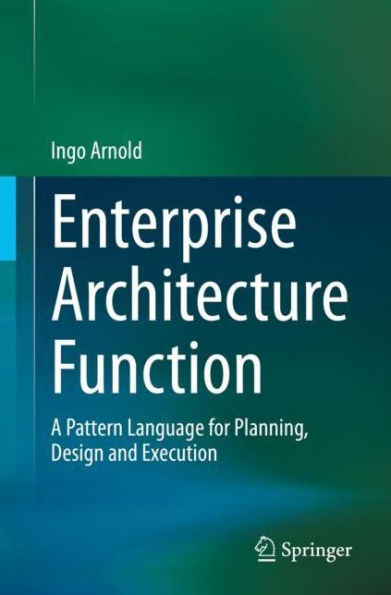
Enterprise Architecture Function: A Pattern Language for Planning, Design and Execution in Franklin, TN
Current price: $99.99
Barnes and Noble
Enterprise Architecture Function: A Pattern Language for Planning, Design and Execution in Franklin, TN
Current price: $99.99
Loading Inventory...
Size: OS
This book provides a method to plan, develop, validate, or evolve the design of an enterprise architecture function so that it fully meets the organization’s needs. The reader will benefit from this book in two ways. First, it provides a structured overview and orientation to the subject of architecture from an architecture function perspective. Second, it guides through the process of planning, building, and operating your own architecture organization based on a generic architecture function blueprint presented in the form of a pattern language offering a structured means for navigating, contextualizing, combining, and composing the architecture function patterns.
The book is structured in six chapters. Chapter 1 “Introduction” explains the starting position and objectives of the book and introduces key concepts that will be explained further in subsequent chapters. Chapter 2 “Architecture Function Pattern Language” introduces the concepts of pattern, pattern catalogue, pattern topology, and ontology and explains how these concepts are combined to form a pattern language for planning, designing, and operating an architecture function. Next, Chapter 3 “Architecture Function – Context“ introduces concepts that are crucial for understanding the challenges that an architecture function faces and presents a generic schema for the business organizations and value chain. Chapter 4 “Architecture Function – Challenge” looks at an architecture function from a black box perspective and outlines the expectations and requirements that companies place on architecture organizations. It discusses the building blocks of an architecture function, the services it provides along the enterprise value chain, and the quality attributes that enterprises expect from their functions. Chapter 5 “Architecture Function – Constitution” then shifts from a black-box perspective to a white-box perspective and outlines the generic design of an architecture function in order to realize functional and quality-related requirements. Chapter 6 “Pattern Catalogue“ eventually introduces the pattern catalogue with a total of 48 architecture function patterns. These patterns suggest designs for collaboration between the architecture function and enterprise organizations, for the elaboration and development of enterprise services along the enterprise value chain, or for aligning architecture governance with enterprise governance.
The book is intended for a broad readership, including enterprise, domain, and solution architects, lecturers and students, and anyone else interested in understanding the value proposition, responsibilities, outcomes, methods, and practices of architecture functions. It introduces the basic concepts and theories needed to understand the pattern language presented and the patterns it summarizes.
The book is structured in six chapters. Chapter 1 “Introduction” explains the starting position and objectives of the book and introduces key concepts that will be explained further in subsequent chapters. Chapter 2 “Architecture Function Pattern Language” introduces the concepts of pattern, pattern catalogue, pattern topology, and ontology and explains how these concepts are combined to form a pattern language for planning, designing, and operating an architecture function. Next, Chapter 3 “Architecture Function – Context“ introduces concepts that are crucial for understanding the challenges that an architecture function faces and presents a generic schema for the business organizations and value chain. Chapter 4 “Architecture Function – Challenge” looks at an architecture function from a black box perspective and outlines the expectations and requirements that companies place on architecture organizations. It discusses the building blocks of an architecture function, the services it provides along the enterprise value chain, and the quality attributes that enterprises expect from their functions. Chapter 5 “Architecture Function – Constitution” then shifts from a black-box perspective to a white-box perspective and outlines the generic design of an architecture function in order to realize functional and quality-related requirements. Chapter 6 “Pattern Catalogue“ eventually introduces the pattern catalogue with a total of 48 architecture function patterns. These patterns suggest designs for collaboration between the architecture function and enterprise organizations, for the elaboration and development of enterprise services along the enterprise value chain, or for aligning architecture governance with enterprise governance.
The book is intended for a broad readership, including enterprise, domain, and solution architects, lecturers and students, and anyone else interested in understanding the value proposition, responsibilities, outcomes, methods, and practices of architecture functions. It introduces the basic concepts and theories needed to understand the pattern language presented and the patterns it summarizes.
This book provides a method to plan, develop, validate, or evolve the design of an enterprise architecture function so that it fully meets the organization’s needs. The reader will benefit from this book in two ways. First, it provides a structured overview and orientation to the subject of architecture from an architecture function perspective. Second, it guides through the process of planning, building, and operating your own architecture organization based on a generic architecture function blueprint presented in the form of a pattern language offering a structured means for navigating, contextualizing, combining, and composing the architecture function patterns.
The book is structured in six chapters. Chapter 1 “Introduction” explains the starting position and objectives of the book and introduces key concepts that will be explained further in subsequent chapters. Chapter 2 “Architecture Function Pattern Language” introduces the concepts of pattern, pattern catalogue, pattern topology, and ontology and explains how these concepts are combined to form a pattern language for planning, designing, and operating an architecture function. Next, Chapter 3 “Architecture Function – Context“ introduces concepts that are crucial for understanding the challenges that an architecture function faces and presents a generic schema for the business organizations and value chain. Chapter 4 “Architecture Function – Challenge” looks at an architecture function from a black box perspective and outlines the expectations and requirements that companies place on architecture organizations. It discusses the building blocks of an architecture function, the services it provides along the enterprise value chain, and the quality attributes that enterprises expect from their functions. Chapter 5 “Architecture Function – Constitution” then shifts from a black-box perspective to a white-box perspective and outlines the generic design of an architecture function in order to realize functional and quality-related requirements. Chapter 6 “Pattern Catalogue“ eventually introduces the pattern catalogue with a total of 48 architecture function patterns. These patterns suggest designs for collaboration between the architecture function and enterprise organizations, for the elaboration and development of enterprise services along the enterprise value chain, or for aligning architecture governance with enterprise governance.
The book is intended for a broad readership, including enterprise, domain, and solution architects, lecturers and students, and anyone else interested in understanding the value proposition, responsibilities, outcomes, methods, and practices of architecture functions. It introduces the basic concepts and theories needed to understand the pattern language presented and the patterns it summarizes.
The book is structured in six chapters. Chapter 1 “Introduction” explains the starting position and objectives of the book and introduces key concepts that will be explained further in subsequent chapters. Chapter 2 “Architecture Function Pattern Language” introduces the concepts of pattern, pattern catalogue, pattern topology, and ontology and explains how these concepts are combined to form a pattern language for planning, designing, and operating an architecture function. Next, Chapter 3 “Architecture Function – Context“ introduces concepts that are crucial for understanding the challenges that an architecture function faces and presents a generic schema for the business organizations and value chain. Chapter 4 “Architecture Function – Challenge” looks at an architecture function from a black box perspective and outlines the expectations and requirements that companies place on architecture organizations. It discusses the building blocks of an architecture function, the services it provides along the enterprise value chain, and the quality attributes that enterprises expect from their functions. Chapter 5 “Architecture Function – Constitution” then shifts from a black-box perspective to a white-box perspective and outlines the generic design of an architecture function in order to realize functional and quality-related requirements. Chapter 6 “Pattern Catalogue“ eventually introduces the pattern catalogue with a total of 48 architecture function patterns. These patterns suggest designs for collaboration between the architecture function and enterprise organizations, for the elaboration and development of enterprise services along the enterprise value chain, or for aligning architecture governance with enterprise governance.
The book is intended for a broad readership, including enterprise, domain, and solution architects, lecturers and students, and anyone else interested in understanding the value proposition, responsibilities, outcomes, methods, and practices of architecture functions. It introduces the basic concepts and theories needed to understand the pattern language presented and the patterns it summarizes.
You May Also Like










More About Barnes and Noble at CoolSprings Galleria
Barnes & Noble is the world’s largest retail bookseller and a leading retailer of content, digital media and educational products. Our Nook Digital business offers a lineup of NOOK® tablets and e-Readers and an expansive collection of digital reading content through the NOOK Store®. Barnes & Noble’s mission is to operate the best omni-channel specialty retail business in America, helping both our customers and booksellers reach their aspirations, while being a credit to the communities we serve.
1800 Galleria Blvd #1310, Franklin, TN 37067, United States
Find Barnes and Noble at CoolSprings Galleria in Franklin, TN
Visit Barnes and Noble at CoolSprings Galleria in Franklin, TN
