
Home
European Unions: Labor's Quest for a Transnational Democracy
Barnes and Noble
Loading Inventory...
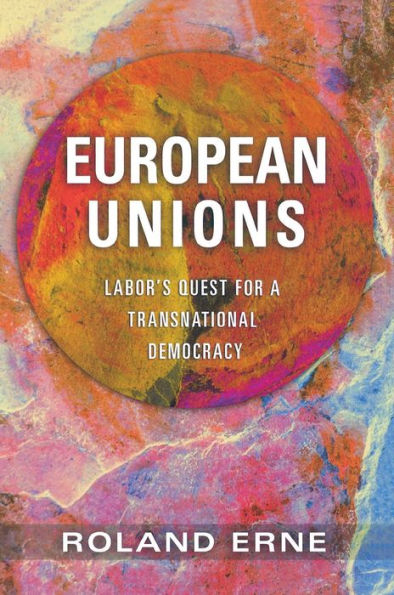
European Unions: Labor's Quest for a Transnational Democracy in Franklin, TN
Current price: $28.95
Barnes and Noble
European Unions: Labor's Quest for a Transnational Democracy in Franklin, TN
Current price: $28.95
Loading Inventory...
Size: Paperback
Roland Erne's view of transnational trade union networks challenges the assertion that no realistic prospect exists for remedying the European Union's democratic deficit—that is, its domination by corporate interests and lack of a cohesive European people.
His book describes the emergence of a European trade union movement that crosses national boundaries. Erne assesses national and EUlevel trade union politics in two core areas: wage bargaining in the European Monetary Union and job protection during transnational corporate mergers and restructuring. The wage coordination policies of the European metal and construction workers' unions and the unions' responses in the ABBAlstom Power and AlcanPechineyAlgroup merger cases, Erne finds, show that the activities of labor are not confined to the national level: labor's policies have undergone Europeanization. This crossnational borrowing of tactics is itself proof of the increasing integration of European states and societies.
European Unions
is based on an exceptionally wide range of research methods, including statistical analysis, participant observation, and interviews with EUlevel, national, and local trade unionists and works councilors. It also draws on a wide range of European, German, French, Italian, and Swiss union documents and a multilingual body of academic literature across several disciplines, including political science, sociology, and law. Erne's multilevel inquiry goes beyond countrybycountry comparisons of national cases and his book will prove of great relevance to readers interested in the future of labor, social justice, and democracy in an increasingly integrated world.
His book describes the emergence of a European trade union movement that crosses national boundaries. Erne assesses national and EUlevel trade union politics in two core areas: wage bargaining in the European Monetary Union and job protection during transnational corporate mergers and restructuring. The wage coordination policies of the European metal and construction workers' unions and the unions' responses in the ABBAlstom Power and AlcanPechineyAlgroup merger cases, Erne finds, show that the activities of labor are not confined to the national level: labor's policies have undergone Europeanization. This crossnational borrowing of tactics is itself proof of the increasing integration of European states and societies.
European Unions
is based on an exceptionally wide range of research methods, including statistical analysis, participant observation, and interviews with EUlevel, national, and local trade unionists and works councilors. It also draws on a wide range of European, German, French, Italian, and Swiss union documents and a multilingual body of academic literature across several disciplines, including political science, sociology, and law. Erne's multilevel inquiry goes beyond countrybycountry comparisons of national cases and his book will prove of great relevance to readers interested in the future of labor, social justice, and democracy in an increasingly integrated world.
Roland Erne's view of transnational trade union networks challenges the assertion that no realistic prospect exists for remedying the European Union's democratic deficit—that is, its domination by corporate interests and lack of a cohesive European people.
His book describes the emergence of a European trade union movement that crosses national boundaries. Erne assesses national and EUlevel trade union politics in two core areas: wage bargaining in the European Monetary Union and job protection during transnational corporate mergers and restructuring. The wage coordination policies of the European metal and construction workers' unions and the unions' responses in the ABBAlstom Power and AlcanPechineyAlgroup merger cases, Erne finds, show that the activities of labor are not confined to the national level: labor's policies have undergone Europeanization. This crossnational borrowing of tactics is itself proof of the increasing integration of European states and societies.
European Unions
is based on an exceptionally wide range of research methods, including statistical analysis, participant observation, and interviews with EUlevel, national, and local trade unionists and works councilors. It also draws on a wide range of European, German, French, Italian, and Swiss union documents and a multilingual body of academic literature across several disciplines, including political science, sociology, and law. Erne's multilevel inquiry goes beyond countrybycountry comparisons of national cases and his book will prove of great relevance to readers interested in the future of labor, social justice, and democracy in an increasingly integrated world.
His book describes the emergence of a European trade union movement that crosses national boundaries. Erne assesses national and EUlevel trade union politics in two core areas: wage bargaining in the European Monetary Union and job protection during transnational corporate mergers and restructuring. The wage coordination policies of the European metal and construction workers' unions and the unions' responses in the ABBAlstom Power and AlcanPechineyAlgroup merger cases, Erne finds, show that the activities of labor are not confined to the national level: labor's policies have undergone Europeanization. This crossnational borrowing of tactics is itself proof of the increasing integration of European states and societies.
European Unions
is based on an exceptionally wide range of research methods, including statistical analysis, participant observation, and interviews with EUlevel, national, and local trade unionists and works councilors. It also draws on a wide range of European, German, French, Italian, and Swiss union documents and a multilingual body of academic literature across several disciplines, including political science, sociology, and law. Erne's multilevel inquiry goes beyond countrybycountry comparisons of national cases and his book will prove of great relevance to readers interested in the future of labor, social justice, and democracy in an increasingly integrated world.
You May Also Like

















More About Barnes and Noble at CoolSprings Galleria
Barnes & Noble is the world’s largest retail bookseller and a leading retailer of content, digital media and educational products. Our Nook Digital business offers a lineup of NOOK® tablets and e-Readers and an expansive collection of digital reading content through the NOOK Store®. Barnes & Noble’s mission is to operate the best omni-channel specialty retail business in America, helping both our customers and booksellers reach their aspirations, while being a credit to the communities we serve.
1800 Galleria Blvd #1310, Franklin, TN 37067, United States
Find Barnes and Noble at CoolSprings Galleria in Franklin, TN
Visit Barnes and Noble at CoolSprings Galleria in Franklin, TN
