
Home
Excavating Women: The Archaeology of Leaders in Early Christianity
Barnes and Noble
Loading Inventory...
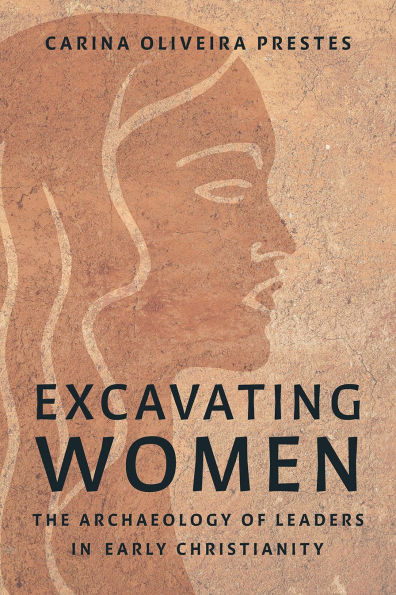
Excavating Women: The Archaeology of Leaders in Early Christianity in Franklin, TN
Current price: $79.00
Barnes and Noble
Excavating Women: The Archaeology of Leaders in Early Christianity in Franklin, TN
Current price: $79.00
Loading Inventory...
Size: OS
Modern readers often look at the past with distorted presuppositions about women's participation in early Christianity. However, women had a prominent role in society and in religious leadership in the Greco-Roman world.
Excavating Women
investigates the leadership of women in Christian churches during the first six centuries of the common era through a study of the archaeological remains.
Carina Prestes surveys the role of women in Greco-Roman society, highlighting their importance for Greek and Roman cults and examining funerary remains of the first centuries of the common era to better understand the role of women in Christian communities. The archaeological evidence is placed in historical and sociocultural context to avoid characteristic biases of certain media and to allow a nuanced perspective of the history.
also investigates some of the early Christian mosaics in their contexts based on the study of semiotics, the hierarchy of spaces, and biblical passages portrayed in them. These sources reveal a strong participation of women in the clerical leadership of early Christianity, in agreement with the funerary remains.
impacts the perception of women today, not only in Christian circles but also in society at large.
Excavating Women
investigates the leadership of women in Christian churches during the first six centuries of the common era through a study of the archaeological remains.
Carina Prestes surveys the role of women in Greco-Roman society, highlighting their importance for Greek and Roman cults and examining funerary remains of the first centuries of the common era to better understand the role of women in Christian communities. The archaeological evidence is placed in historical and sociocultural context to avoid characteristic biases of certain media and to allow a nuanced perspective of the history.
also investigates some of the early Christian mosaics in their contexts based on the study of semiotics, the hierarchy of spaces, and biblical passages portrayed in them. These sources reveal a strong participation of women in the clerical leadership of early Christianity, in agreement with the funerary remains.
impacts the perception of women today, not only in Christian circles but also in society at large.
Modern readers often look at the past with distorted presuppositions about women's participation in early Christianity. However, women had a prominent role in society and in religious leadership in the Greco-Roman world.
Excavating Women
investigates the leadership of women in Christian churches during the first six centuries of the common era through a study of the archaeological remains.
Carina Prestes surveys the role of women in Greco-Roman society, highlighting their importance for Greek and Roman cults and examining funerary remains of the first centuries of the common era to better understand the role of women in Christian communities. The archaeological evidence is placed in historical and sociocultural context to avoid characteristic biases of certain media and to allow a nuanced perspective of the history.
also investigates some of the early Christian mosaics in their contexts based on the study of semiotics, the hierarchy of spaces, and biblical passages portrayed in them. These sources reveal a strong participation of women in the clerical leadership of early Christianity, in agreement with the funerary remains.
impacts the perception of women today, not only in Christian circles but also in society at large.
Excavating Women
investigates the leadership of women in Christian churches during the first six centuries of the common era through a study of the archaeological remains.
Carina Prestes surveys the role of women in Greco-Roman society, highlighting their importance for Greek and Roman cults and examining funerary remains of the first centuries of the common era to better understand the role of women in Christian communities. The archaeological evidence is placed in historical and sociocultural context to avoid characteristic biases of certain media and to allow a nuanced perspective of the history.
also investigates some of the early Christian mosaics in their contexts based on the study of semiotics, the hierarchy of spaces, and biblical passages portrayed in them. These sources reveal a strong participation of women in the clerical leadership of early Christianity, in agreement with the funerary remains.
impacts the perception of women today, not only in Christian circles but also in society at large.
You May Also Like












More About Barnes and Noble at CoolSprings Galleria
Barnes & Noble is the world’s largest retail bookseller and a leading retailer of content, digital media and educational products. Our Nook Digital business offers a lineup of NOOK® tablets and e-Readers and an expansive collection of digital reading content through the NOOK Store®. Barnes & Noble’s mission is to operate the best omni-channel specialty retail business in America, helping both our customers and booksellers reach their aspirations, while being a credit to the communities we serve.
1800 Galleria Blvd #1310, Franklin, TN 37067, United States
Find Barnes and Noble at CoolSprings Galleria in Franklin, TN
Visit Barnes and Noble at CoolSprings Galleria in Franklin, TN
